Committee advances bill mandating dedicated municipal calendars after cities warn of prosecutorial breakdown
February 25, 2026 | 2026 Utah Legislature, Utah Legislature, Utah Legislative Branch, Utah
This article was created by AI summarizing key points discussed. AI makes mistakes, so for full details and context, please refer to the video of the full meeting. Please report any errors so we can fix them. Report an error »
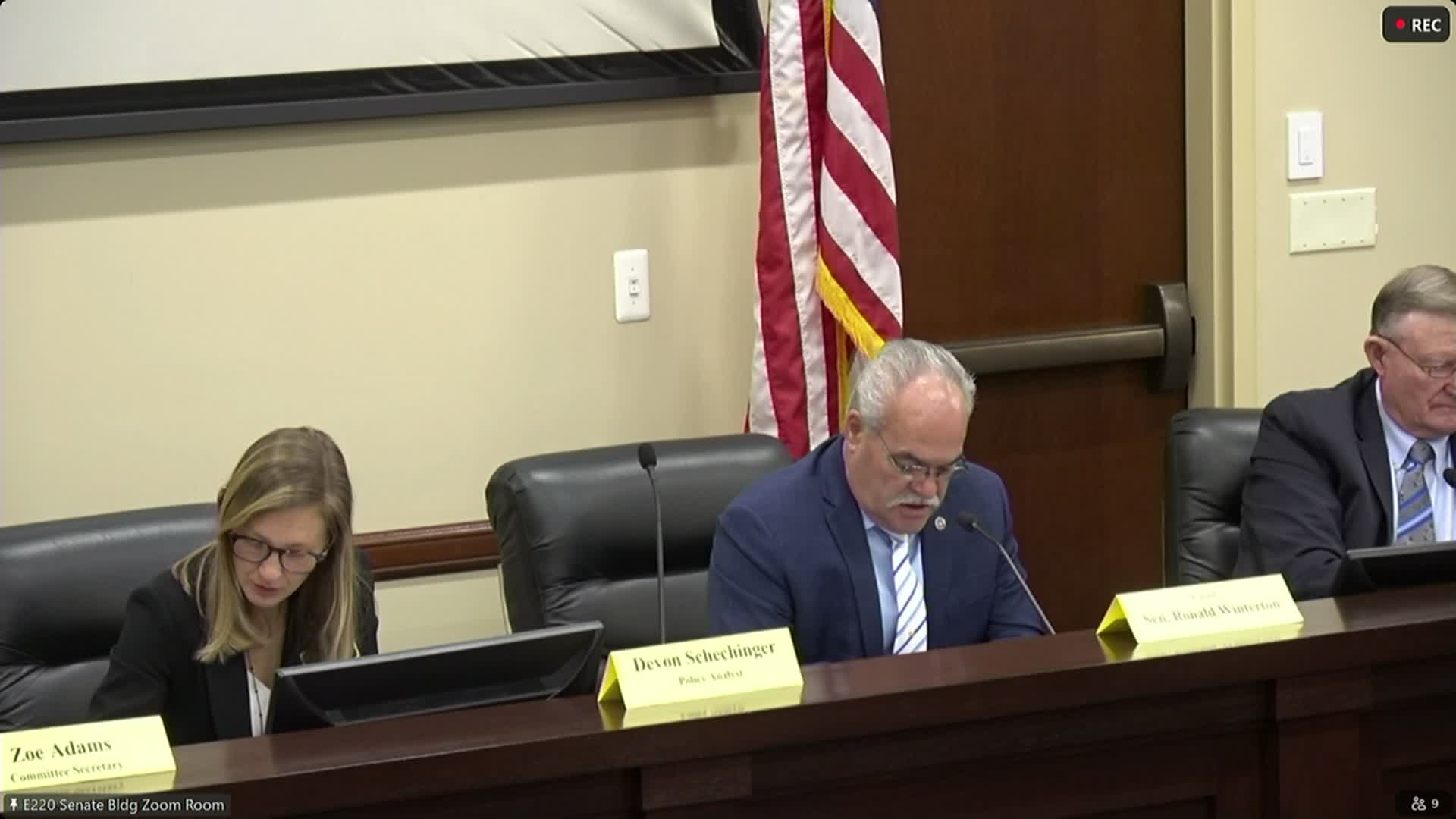
House Bill 366 was unanimously recommended by the Senate Government Operations Committee after a day of contentious testimony in which city prosecutors, public-defender representatives and court administrators described competing operational pressures.
Sponsor testimony framed the bill as a restoration of a longstanding accommodation: the requirement that presiding judges assign at least one district-court judge to hear municipal cases and that such cases be heard in the courthouse closest to the municipality unless there is good cause otherwise. Under the draft language discussed in committee, presiding judges would limit assignments to no more than one judge per 500 municipal cases per year and would assign a single judge to municipal appeals or de novo trials when practicable.
City prosecutors described the operational effects of recent reassignment practices. Ryan Robinson, West Valley City prosecutor and policy director for the Statewide Association of Prosecutors (SWAP), said that where courts formerly provided consolidated municipal calendars, a 2025 reassignment scattered cases among dozens of judges and multiple courthouses. "It is essentially a crisis for our office," Robinson told the committee, saying West Valley handles about 1,000 Class A misdemeanors in the Third District each year and cannot feasibly follow dozens of judges' calendars.
Several city prosecutors and defense representatives echoed that point: Orem stopped filing Class A offenses after the Fourth District reassigned its cases in August 2024; public defenders said $150-per-case payment rates and travel burdens undermine representation. The assistant state court administrator, identified in testimony as Michael, urged continued negotiation with the judiciary and cautioned lawmakers that directing court administration raises separation-of-powers concerns, saying going to the legislature with this dispute "is a separation of powers issue." He also described an alternative calendar proposal the judiciary offered and said courts handle a very large overall caseload.
Despite those cautions, committee members concluded the administration change had real effects on cities, victims and defendants and moved the bill forward. Senator McKell made the motion to favorably recommend; the committee reported HB 366 out of committee 6–0.
Sponsor testimony framed the bill as a restoration of a longstanding accommodation: the requirement that presiding judges assign at least one district-court judge to hear municipal cases and that such cases be heard in the courthouse closest to the municipality unless there is good cause otherwise. Under the draft language discussed in committee, presiding judges would limit assignments to no more than one judge per 500 municipal cases per year and would assign a single judge to municipal appeals or de novo trials when practicable.
City prosecutors described the operational effects of recent reassignment practices. Ryan Robinson, West Valley City prosecutor and policy director for the Statewide Association of Prosecutors (SWAP), said that where courts formerly provided consolidated municipal calendars, a 2025 reassignment scattered cases among dozens of judges and multiple courthouses. "It is essentially a crisis for our office," Robinson told the committee, saying West Valley handles about 1,000 Class A misdemeanors in the Third District each year and cannot feasibly follow dozens of judges' calendars.
Several city prosecutors and defense representatives echoed that point: Orem stopped filing Class A offenses after the Fourth District reassigned its cases in August 2024; public defenders said $150-per-case payment rates and travel burdens undermine representation. The assistant state court administrator, identified in testimony as Michael, urged continued negotiation with the judiciary and cautioned lawmakers that directing court administration raises separation-of-powers concerns, saying going to the legislature with this dispute "is a separation of powers issue." He also described an alternative calendar proposal the judiciary offered and said courts handle a very large overall caseload.
Despite those cautions, committee members concluded the administration change had real effects on cities, victims and defendants and moved the bill forward. Senator McKell made the motion to favorably recommend; the committee reported HB 366 out of committee 6–0.
View the Full Meeting & All Its Details
This article offers just a summary. Unlock complete video, transcripts, and insights as a Founder Member.
✓
Watch full, unedited meeting videos
✓
Search every word spoken in unlimited transcripts
✓
AI summaries & real-time alerts (all government levels)
✓
Permanent access to expanding government content
30-day money-back guarantee
