Utah Senate advances dozens of bills, debates religious‑curriculum and child‑care measures
February 25, 2026 | 2026 Utah Legislature, Utah Legislature, Utah Legislative Branch, Utah
This article was created by AI summarizing key points discussed. AI makes mistakes, so for full details and context, please refer to the video of the full meeting. Please report any errors so we can fix them. Report an error »
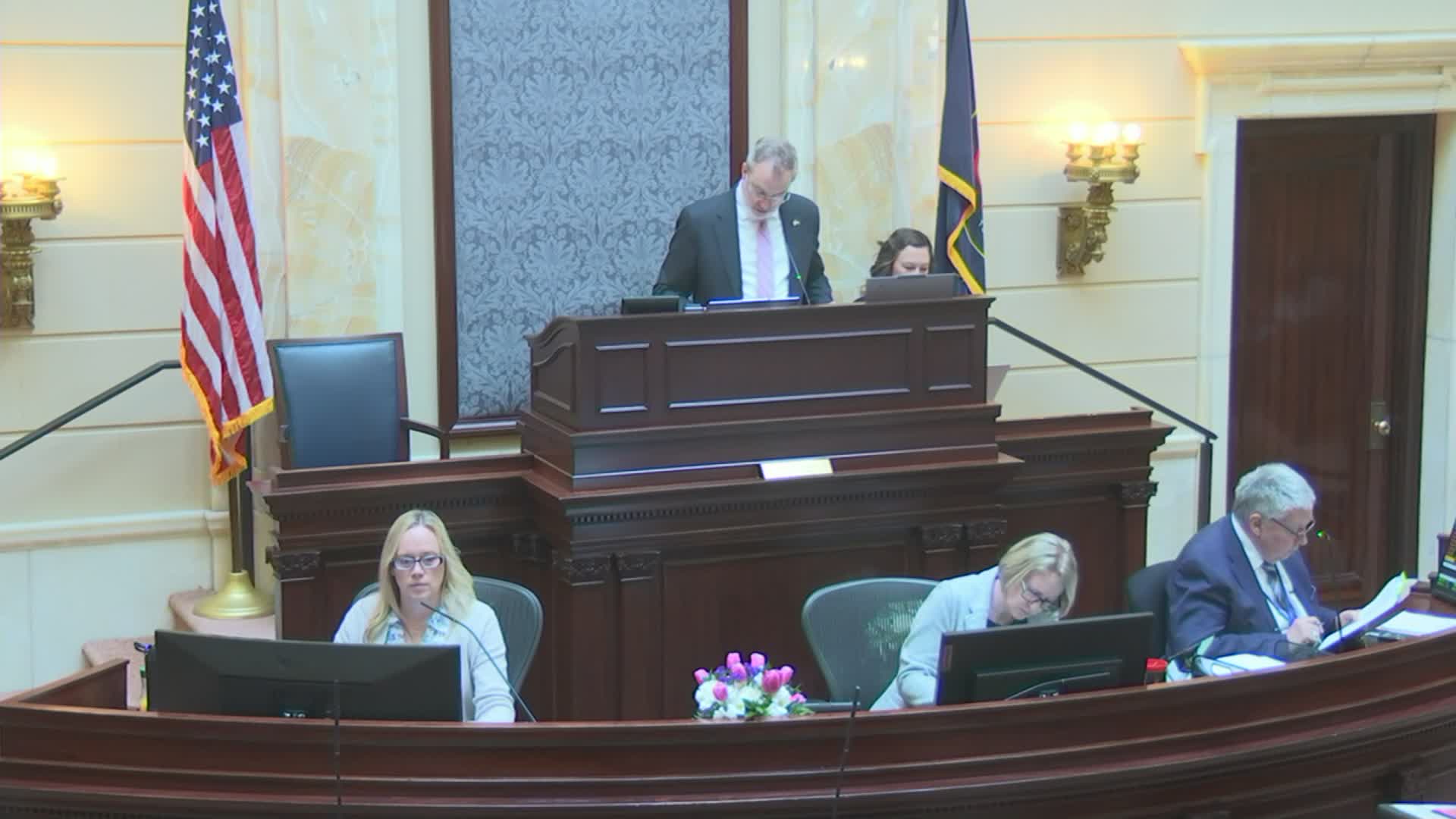
The Utah State Senate met in floor session and moved a broad slate of measures forward, adopting standing committee reports, advancing bills on the consent calendar, and voting on a long third‑reading calendar.
On the consent calendar, Senator Owens described House Bill 1130 as “pretty straightforward” and said the bill requires employers who mandate medical exams to "pay the full cost." The chamber approved that measure by voice and roll call (26 aye, 0 nay, 3 absent). The Senate also passed a fugitive‑dust mitigation bill that Owens said was developed with the Department of Environmental Quality and local stakeholders to address combined dust impacts around gravel pits near Genola; that measure passed 26–0 with three absent.
Other consent‑calendar measures approved included House Bill 1142 (school fee waiver amendments), which limits state waivers for multi‑night extracurricular travel to two trips per eligible student, and House Bill 2246, updating local government drug‑testing statute language to allow oral‑fluid testing and clarified collection procedures. Both measures passed on recorded votes reported on the floor.
The Senate debated several floor bills with more extended discussion. Senator Escamilla sought to expand school meal eligibility in S.B. 180 but asked to “circle” the bill after senators raised questions about the fiscal note and whether a $5,000,000 stabilization account would be tapped; the motion to circle temporarily removed the bill from immediate action while the fiscal detail was clarified. S.B. 181, addressing seclusion‑room standards and creating a one‑time matching grant for local education agencies, drew technical questions but passed on a recorded vote (20 aye, 3 nay, 6 absent).
S.B. 268, which would explicitly permit instruction on religion’s role in U.S. history, generated extended debate and an amendment (amendment 3) that adjusted implementation timing and clarified language. Senator Reby announced a no vote, saying, “I’m a no because all of these things can be taught already in school,” while other sponsors and supporters argued the bill provides helpful clarity and historical context. The Senate passed S.B. 268 as amended (20 aye, 6 nay, 3 absent).
A high‑profile item, S.B. 248 (Child Care Expansion Act), was introduced as a public‑private partnership to retrofit a state‑owned building for licensed Utah childcare slots with 50% reserved for employees, the community and military. The bill failed in an initial floor vote (the clerk announced 13 yay, 9 nay, 7 absent) and was returned to staff. After a successful motion to reconsider, sponsors put S.B. 248 at the top of the third‑reading calendar; following a second roll call the Senate announced the measure passed on reconsideration and it will be sent to the House for consideration.
Other notable floor actions included passage of a suite of bills addressing wrongful liens, identity‑protection modifications related to AI and deepfakes, vintage‑vehicle program changes, motor‑vehicle civil‑action amendments, and several consensus health and corrections bills. Where senators objected or sought further fiscal detail, the body either circled the bill to allow staff work to continue or voted to reconsider.
The Senate recessed until 2 p.m. after completing the morning’s third‑reading calendar; leadership announced a Rules Committee meeting immediately after recess.
Votes at a glance (selected, as announced on the floor):
- House Bill 1130 (employment medical exam expense): Passed — 26 aye, 0 nay, 3 absent. (Sen. Owens presentation)
- Second Substitute House Bill 3378 (fugitive dust mitigation): Passed — 26 aye, 0 nay, 3 absent. (Sen. Owens presentation)
- House Bill 1142 (school fee waiver amendments): Passed — 26 aye, 0 nay, 3 absent. (Sen. Baldry presentation)
- House Bill 2246 (local government drug testing amendments): Passed — 27 aye, 0 nay, 2 absent. (Sen. Baldry presentation)
- First Substitute House Bill 2271 (multi‑agency joint strike force — metal theft addition): Passed — 26 aye, 0 nay, 3 absent. (Sen. Wyler presentation)
- Second Substitute Senate Bill 181 (school discipline/seclusion standards): Passed — 20 aye, 3 nay, 6 absent. (Sen. Escamilla presentation)
- Senate Bill 268 (religion in U.S. history/curriculum, as amended): Passed — 20 aye, 6 nay, 3 absent. (Amendment adopted on floor)
- Senate Bill 248 (Child Care Expansion Act): Failed on initial vote — 13 aye, 9 nay, 7 absent; later passed on reconsideration (placed on top of third reading and returned to the House). (Sen. Escamilla presentation)
- Fourth Substitute House Bill 22 (vintage vehicle program): Passed — 27 aye, 0 nay, 2 absent. (Sen. Buss presentation)
What to watch next: bills the Senate circled for fiscal updates (for example S.B. 180 on school nutrition) and measures returned to staff for amendment or reconsideration before the House receives them.
Reporting notes: quotations and vote tallies are taken verbatim from the floor transcript. Where the transcript recorded senators’ questions about fiscal notes or implementation details (for example, the $5,000,000 stabilization account discussed for S.B. 180), the chamber circled the bill to allow staff and LFA to produce clarifying fiscal documentation.
On the consent calendar, Senator Owens described House Bill 1130 as “pretty straightforward” and said the bill requires employers who mandate medical exams to "pay the full cost." The chamber approved that measure by voice and roll call (26 aye, 0 nay, 3 absent). The Senate also passed a fugitive‑dust mitigation bill that Owens said was developed with the Department of Environmental Quality and local stakeholders to address combined dust impacts around gravel pits near Genola; that measure passed 26–0 with three absent.
Other consent‑calendar measures approved included House Bill 1142 (school fee waiver amendments), which limits state waivers for multi‑night extracurricular travel to two trips per eligible student, and House Bill 2246, updating local government drug‑testing statute language to allow oral‑fluid testing and clarified collection procedures. Both measures passed on recorded votes reported on the floor.
The Senate debated several floor bills with more extended discussion. Senator Escamilla sought to expand school meal eligibility in S.B. 180 but asked to “circle” the bill after senators raised questions about the fiscal note and whether a $5,000,000 stabilization account would be tapped; the motion to circle temporarily removed the bill from immediate action while the fiscal detail was clarified. S.B. 181, addressing seclusion‑room standards and creating a one‑time matching grant for local education agencies, drew technical questions but passed on a recorded vote (20 aye, 3 nay, 6 absent).
S.B. 268, which would explicitly permit instruction on religion’s role in U.S. history, generated extended debate and an amendment (amendment 3) that adjusted implementation timing and clarified language. Senator Reby announced a no vote, saying, “I’m a no because all of these things can be taught already in school,” while other sponsors and supporters argued the bill provides helpful clarity and historical context. The Senate passed S.B. 268 as amended (20 aye, 6 nay, 3 absent).
A high‑profile item, S.B. 248 (Child Care Expansion Act), was introduced as a public‑private partnership to retrofit a state‑owned building for licensed Utah childcare slots with 50% reserved for employees, the community and military. The bill failed in an initial floor vote (the clerk announced 13 yay, 9 nay, 7 absent) and was returned to staff. After a successful motion to reconsider, sponsors put S.B. 248 at the top of the third‑reading calendar; following a second roll call the Senate announced the measure passed on reconsideration and it will be sent to the House for consideration.
Other notable floor actions included passage of a suite of bills addressing wrongful liens, identity‑protection modifications related to AI and deepfakes, vintage‑vehicle program changes, motor‑vehicle civil‑action amendments, and several consensus health and corrections bills. Where senators objected or sought further fiscal detail, the body either circled the bill to allow staff work to continue or voted to reconsider.
The Senate recessed until 2 p.m. after completing the morning’s third‑reading calendar; leadership announced a Rules Committee meeting immediately after recess.
Votes at a glance (selected, as announced on the floor):
- House Bill 1130 (employment medical exam expense): Passed — 26 aye, 0 nay, 3 absent. (Sen. Owens presentation)
- Second Substitute House Bill 3378 (fugitive dust mitigation): Passed — 26 aye, 0 nay, 3 absent. (Sen. Owens presentation)
- House Bill 1142 (school fee waiver amendments): Passed — 26 aye, 0 nay, 3 absent. (Sen. Baldry presentation)
- House Bill 2246 (local government drug testing amendments): Passed — 27 aye, 0 nay, 2 absent. (Sen. Baldry presentation)
- First Substitute House Bill 2271 (multi‑agency joint strike force — metal theft addition): Passed — 26 aye, 0 nay, 3 absent. (Sen. Wyler presentation)
- Second Substitute Senate Bill 181 (school discipline/seclusion standards): Passed — 20 aye, 3 nay, 6 absent. (Sen. Escamilla presentation)
- Senate Bill 268 (religion in U.S. history/curriculum, as amended): Passed — 20 aye, 6 nay, 3 absent. (Amendment adopted on floor)
- Senate Bill 248 (Child Care Expansion Act): Failed on initial vote — 13 aye, 9 nay, 7 absent; later passed on reconsideration (placed on top of third reading and returned to the House). (Sen. Escamilla presentation)
- Fourth Substitute House Bill 22 (vintage vehicle program): Passed — 27 aye, 0 nay, 2 absent. (Sen. Buss presentation)
What to watch next: bills the Senate circled for fiscal updates (for example S.B. 180 on school nutrition) and measures returned to staff for amendment or reconsideration before the House receives them.
Reporting notes: quotations and vote tallies are taken verbatim from the floor transcript. Where the transcript recorded senators’ questions about fiscal notes or implementation details (for example, the $5,000,000 stabilization account discussed for S.B. 180), the chamber circled the bill to allow staff and LFA to produce clarifying fiscal documentation.
Don't Miss a Word: See the Full Meeting!
Go beyond summaries. Unlock every video, transcript, and key insight with a Founder Membership.
✓
Get instant access to full meeting videos
✓
Search and clip any phrase from complete transcripts
✓
Receive AI-powered summaries & custom alerts
✓
Enjoy lifetime, unrestricted access to government data
30-day money-back guarantee
