House committee advances bill requiring disclosure for large public property dispositions
February 25, 2026 | 2026 Utah Legislature, Utah Legislature, Utah Legislative Branch, Utah
This article was created by AI summarizing key points discussed. AI makes mistakes, so for full details and context, please refer to the video of the full meeting. Please report any errors so we can fix them. Report an error »
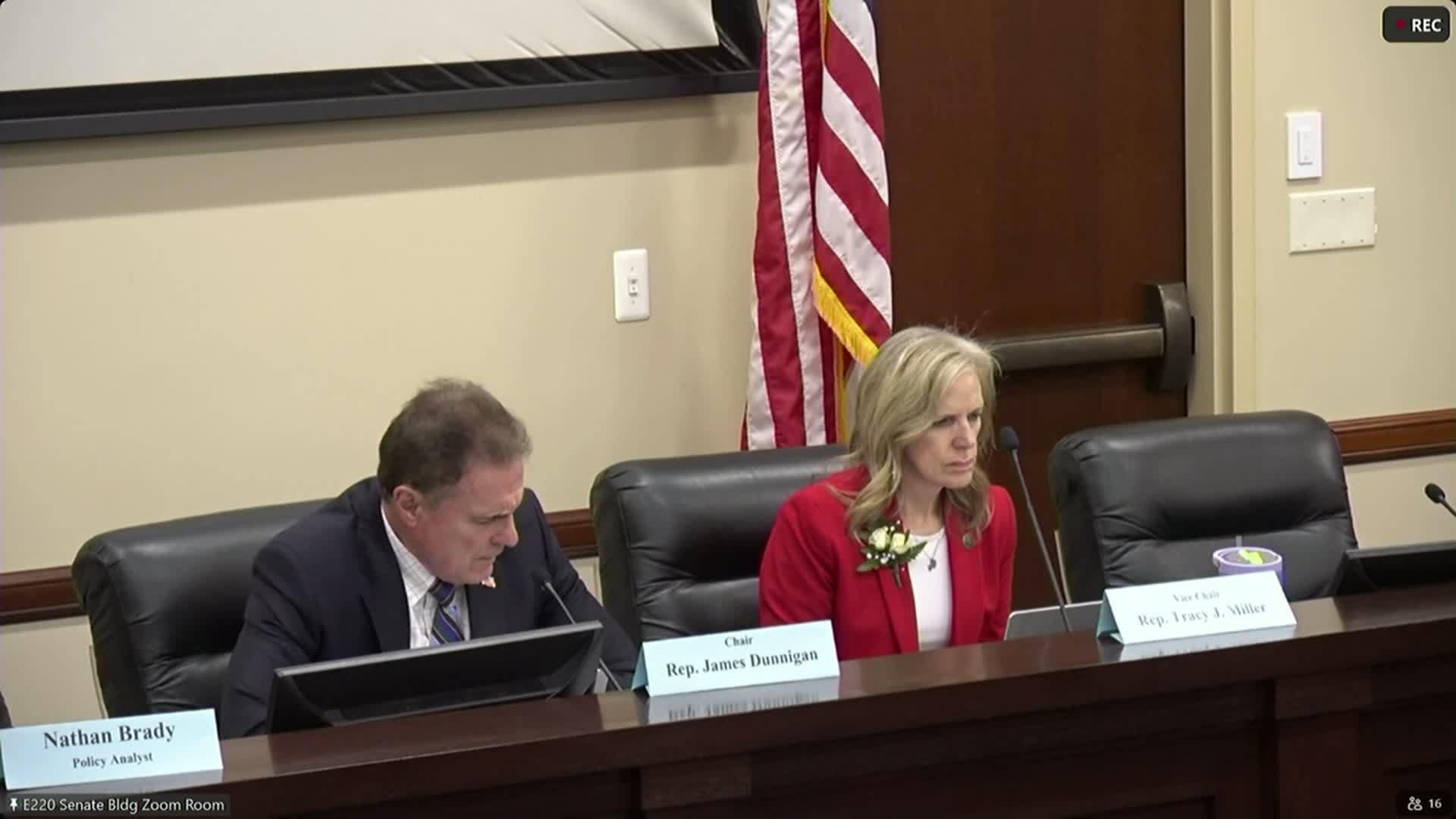
Representative Thomas W. Walter introduced second substitute HB 5-35 to increase transparency when government entities dispose of significant parcels of real property, saying the bill responds to cases where sale terms were difficult to find in public records. "We just want to know, yes, we're planning to make a disposition, and on the other side, this is the decision that we made," Walter said in committee testimony.
The bill defines "disposition" to include a sale, lease or joint venture and sets a $500,000 threshold for "significant parcels." Sponsor Walter said the proposal requires a 45-day public posting on a website or listing service, announcement in a public meeting, and a sign on the property, but does not dictate deal terms or with whom an entity may contract. He told the committee that negotiations may still take place in closed session under the Open and Public Meetings Act.
Questions from committee members focused on public notice accessibility and whether like-for-like land exchanges would be captured. Representative Hansen asked how ordinary residents would learn of listings; Walter said posting on a website, public meeting announcement and signage offers a low-cost, visible approach. Representative Miller asked whether trades or exchanges are included; Walter said he intentionally did not include the word "exchange" to avoid capturing simple value-for-value swaps.
Redevelopment stakeholders who testified—both in person and online—expressed support for transparency but asked carve-outs to preserve redevelopment agencies' discretion and existing competitive RFP processes. Rob Sant, deputy director of economic development for Sandy City and president of the Utah Redevelopment Association, said redevelopment agencies typically tie dispositions to public-benefit objectives and asked language that preserves agencies' ultimate decision power.
The committee adopted the second substitute and unanimously voted to recommend HB 5-35 favorably. Representative Arthur moved adoption of the substitute; Representative Walter explained a drafting correction to a school-district option period that was fixed in the sub. The bill now moves to the House floor with the committee's recommendation.
The committee discussion indicated continued technical drafting with stakeholders on carve-outs for strong-mayor municipalities and intergovernmental transfers; sponsors said they will continue to work with affected parties.
The bill defines "disposition" to include a sale, lease or joint venture and sets a $500,000 threshold for "significant parcels." Sponsor Walter said the proposal requires a 45-day public posting on a website or listing service, announcement in a public meeting, and a sign on the property, but does not dictate deal terms or with whom an entity may contract. He told the committee that negotiations may still take place in closed session under the Open and Public Meetings Act.
Questions from committee members focused on public notice accessibility and whether like-for-like land exchanges would be captured. Representative Hansen asked how ordinary residents would learn of listings; Walter said posting on a website, public meeting announcement and signage offers a low-cost, visible approach. Representative Miller asked whether trades or exchanges are included; Walter said he intentionally did not include the word "exchange" to avoid capturing simple value-for-value swaps.
Redevelopment stakeholders who testified—both in person and online—expressed support for transparency but asked carve-outs to preserve redevelopment agencies' discretion and existing competitive RFP processes. Rob Sant, deputy director of economic development for Sandy City and president of the Utah Redevelopment Association, said redevelopment agencies typically tie dispositions to public-benefit objectives and asked language that preserves agencies' ultimate decision power.
The committee adopted the second substitute and unanimously voted to recommend HB 5-35 favorably. Representative Arthur moved adoption of the substitute; Representative Walter explained a drafting correction to a school-district option period that was fixed in the sub. The bill now moves to the House floor with the committee's recommendation.
The committee discussion indicated continued technical drafting with stakeholders on carve-outs for strong-mayor municipalities and intergovernmental transfers; sponsors said they will continue to work with affected parties.
Don't Miss a Word: See the Full Meeting!
Go beyond summaries. Unlock every video, transcript, and key insight with a Founder Membership.
✓
Get instant access to full meeting videos
✓
Search and clip any phrase from complete transcripts
✓
Receive AI-powered summaries & custom alerts
✓
Enjoy lifetime, unrestricted access to government data
30-day money-back guarantee
