Utah Senate advances wide set of bills on health, environment and education; teen cancer survivor welcomed to chamber
February 25, 2026 | 2026 Utah Legislature, Utah Legislature, Utah Legislative Branch, Utah
This article was created by AI summarizing key points discussed. AI makes mistakes, so for full details and context, please refer to the video of the full meeting. Please report any errors so we can fix them. Report an error »
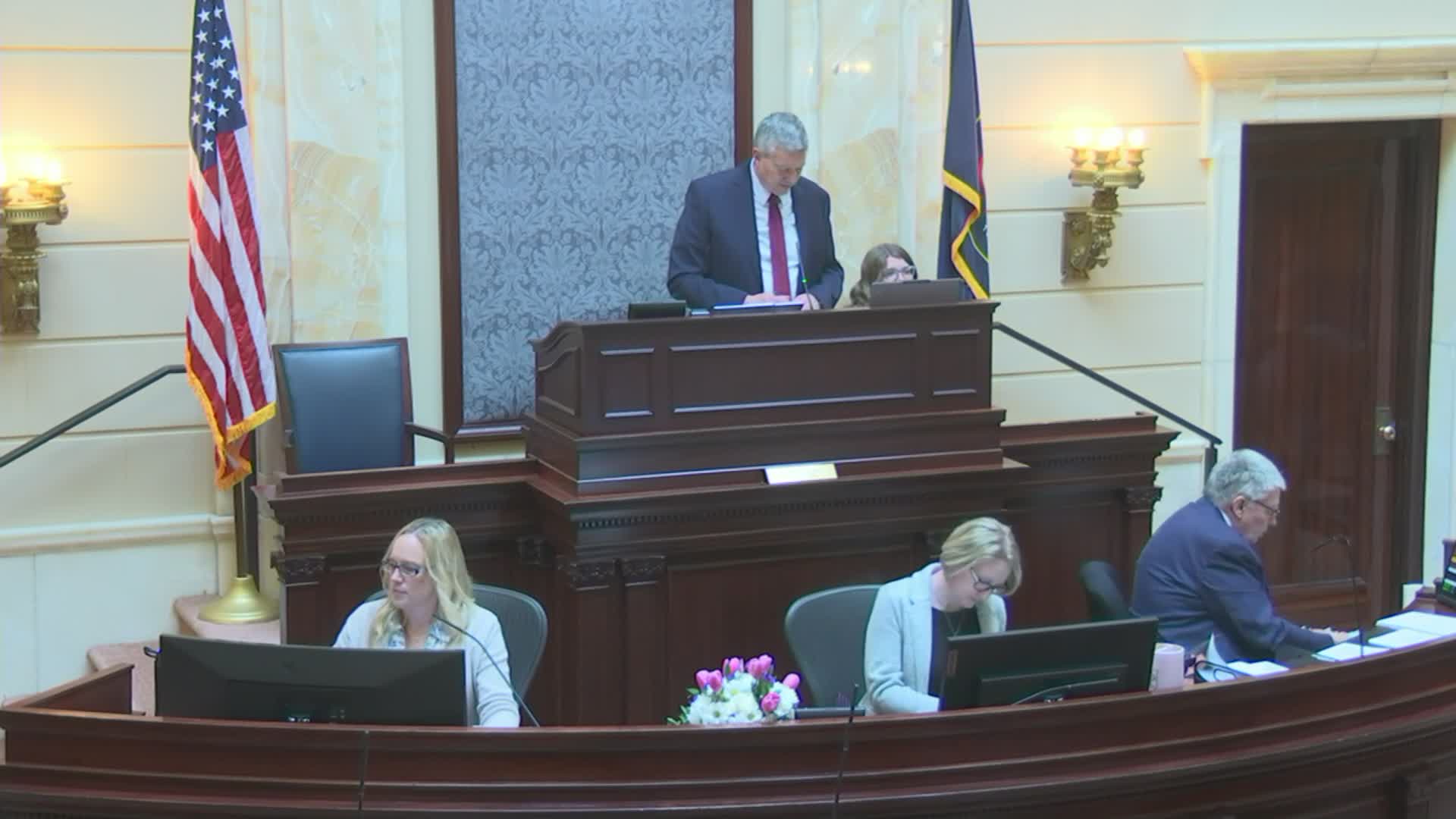
The Utah State Senate on Feb. 25 advanced a broad package of bills spanning health care, environment, education and administrative reform and formally welcomed Wesley Murdoch, a 16-year-old leukemia patient in remission, to the chamber.
Senators unanimously adopted the rules committee's assignments and then moved through a long second- and third-reading calendar. Major floor actions included passage or advancement of bills on organ-donation outreach, ambulance reimbursement reform (tabled on third for fiscal impact), replacement of two-stroke landscaping equipment at state facilities, and a requirement for earlier school-board packet notice for parents.
The session began with a rules committee report read by Senator Lincoln Fillmore, after which President Adams directed that the listed bills be sent to the committees assigned. Later in the morning, Senator Wilson introduced Wesley Murdoch and his family from Lehi, saying, "I'm very, very proud and honored to have Wesley Murdoch with me today," and invited the chamber to recognize them.
On the floor, Senator Harper spoke for first substitute HB105 (child-welfare revisions), and the Senate approved it on third reading by a recorded vote of 23 yeas, 0 nays, 6 absent. Senator Musselman described first substitute HB117 (organ-donation amendments), which would place donor-registration links on high-traffic state websites and require hospitals to provide donor information; the Senate passed that bill 23-1, 5 absent.
Senator McKay presented first substitute HB174, a bill that would discontinue certain hormonal and gender-related treatments for minors and set an effective discontinuation date of Jan. 28, 2027. McKay said, "there will be a discontinuation of that treatment from 01/28/2027," and the Senate read the bill for a third time; the roll call showed 17 ayes, 7 nays and 5 absent.
Environment-related proposals drew extended debate. Senator Pitcher led discussion of second substitute Senate Bill 176, which would require state facilities under 50,000 square feet along the Wasatch Front to replace two-stroke lawn equipment with electric models at retirement. Supporters cited air-quality benefits and the value of a state example; opponents urged trust in local governments' cost judgments. The Senate approved the bill on a recorded vote (transcript shows 20 ayes, 7 nays, 2 absent) and will send it to the House.
Senator Vickers presented second substitute HB269, aiming to stabilize ambulance reimbursements by aligning base and mileage rates with real-world emergency care while preserving patient protections. Vickers said the bill "helps ensure that ambulance providers are paid accurately and predictably for the care that they already provide." The Senate read the bill for a third time, but later moved to table it on third for fiscal impact review.
On education procedure, the Senate called and passed second substitute Senate Bill 269, a measure amending school-board meeting notification requirements to provide additional advance notice to parents; that measure passed on the floor by recorded vote 28-9 and moves to the House for concurrence.
Votes at a glance: HB105 (child-welfare revisions) read third time and passed 23-0 (6 absent); HB117 (organ-donation outreach) passed 23-1 (5 absent); HB87 (animal-shelter/forfeiture changes) passed after substitution 25-1 (3 absent); HB174 (minors' treatment discontinuation) read third time 17-7 (5 absent); SB176 (state landscaping equipment electrification) passed 20-7 (2 absent); SB269 (school-board notification) passed 28-9 (0 absent). Several other bills were substituted, circled for fiscal notes, or tabled for additional review.
What remains next: a handful of bills were tabled on third reading for fiscal review and will return to the calendar once fiscal notes are resolved. The Senate adjourned at the close of the day and will reconvene Thursday, Feb. 26 at 10 a.m.
The session record shows extensive committee work, multiple substitute motions and several unanimous or near-unanimous third readings. Where roll-call tallies were recorded on the floor, this article reports them exactly as read aloud. Additional committee referrals and transmittals from the House were also recorded and will proceed through the legislative process.
The Senate's proceedings included floor substitutions, motions to encircle and uncircle bills to allow fiscal notes to be attached, and several moments of personal privilege and recognition. The next scheduled floor day will pick up items returned from the House and those temporarily tabled for fiscal analysis.
Senators unanimously adopted the rules committee's assignments and then moved through a long second- and third-reading calendar. Major floor actions included passage or advancement of bills on organ-donation outreach, ambulance reimbursement reform (tabled on third for fiscal impact), replacement of two-stroke landscaping equipment at state facilities, and a requirement for earlier school-board packet notice for parents.
The session began with a rules committee report read by Senator Lincoln Fillmore, after which President Adams directed that the listed bills be sent to the committees assigned. Later in the morning, Senator Wilson introduced Wesley Murdoch and his family from Lehi, saying, "I'm very, very proud and honored to have Wesley Murdoch with me today," and invited the chamber to recognize them.
On the floor, Senator Harper spoke for first substitute HB105 (child-welfare revisions), and the Senate approved it on third reading by a recorded vote of 23 yeas, 0 nays, 6 absent. Senator Musselman described first substitute HB117 (organ-donation amendments), which would place donor-registration links on high-traffic state websites and require hospitals to provide donor information; the Senate passed that bill 23-1, 5 absent.
Senator McKay presented first substitute HB174, a bill that would discontinue certain hormonal and gender-related treatments for minors and set an effective discontinuation date of Jan. 28, 2027. McKay said, "there will be a discontinuation of that treatment from 01/28/2027," and the Senate read the bill for a third time; the roll call showed 17 ayes, 7 nays and 5 absent.
Environment-related proposals drew extended debate. Senator Pitcher led discussion of second substitute Senate Bill 176, which would require state facilities under 50,000 square feet along the Wasatch Front to replace two-stroke lawn equipment with electric models at retirement. Supporters cited air-quality benefits and the value of a state example; opponents urged trust in local governments' cost judgments. The Senate approved the bill on a recorded vote (transcript shows 20 ayes, 7 nays, 2 absent) and will send it to the House.
Senator Vickers presented second substitute HB269, aiming to stabilize ambulance reimbursements by aligning base and mileage rates with real-world emergency care while preserving patient protections. Vickers said the bill "helps ensure that ambulance providers are paid accurately and predictably for the care that they already provide." The Senate read the bill for a third time, but later moved to table it on third for fiscal impact review.
On education procedure, the Senate called and passed second substitute Senate Bill 269, a measure amending school-board meeting notification requirements to provide additional advance notice to parents; that measure passed on the floor by recorded vote 28-9 and moves to the House for concurrence.
Votes at a glance: HB105 (child-welfare revisions) read third time and passed 23-0 (6 absent); HB117 (organ-donation outreach) passed 23-1 (5 absent); HB87 (animal-shelter/forfeiture changes) passed after substitution 25-1 (3 absent); HB174 (minors' treatment discontinuation) read third time 17-7 (5 absent); SB176 (state landscaping equipment electrification) passed 20-7 (2 absent); SB269 (school-board notification) passed 28-9 (0 absent). Several other bills were substituted, circled for fiscal notes, or tabled for additional review.
What remains next: a handful of bills were tabled on third reading for fiscal review and will return to the calendar once fiscal notes are resolved. The Senate adjourned at the close of the day and will reconvene Thursday, Feb. 26 at 10 a.m.
The session record shows extensive committee work, multiple substitute motions and several unanimous or near-unanimous third readings. Where roll-call tallies were recorded on the floor, this article reports them exactly as read aloud. Additional committee referrals and transmittals from the House were also recorded and will proceed through the legislative process.
The Senate's proceedings included floor substitutions, motions to encircle and uncircle bills to allow fiscal notes to be attached, and several moments of personal privilege and recognition. The next scheduled floor day will pick up items returned from the House and those temporarily tabled for fiscal analysis.
Don't Miss a Word: See the Full Meeting!
Go beyond summaries. Unlock every video, transcript, and key insight with a Founder Membership.
✓
Get instant access to full meeting videos
✓
Search and clip any phrase from complete transcripts
✓
Receive AI-powered summaries & custom alerts
✓
Enjoy lifetime, unrestricted access to government data
30-day money-back guarantee
