Committee advances bill requiring age verification for adult-content sites and a 2% excise tax to fund youth mental health
February 25, 2026 | 2026 Utah Legislature, Utah Legislature, Utah Legislative Branch, Utah
This article was created by AI summarizing key points discussed. AI makes mistakes, so for full details and context, please refer to the video of the full meeting. Please report any errors so we can fix them. Report an error »
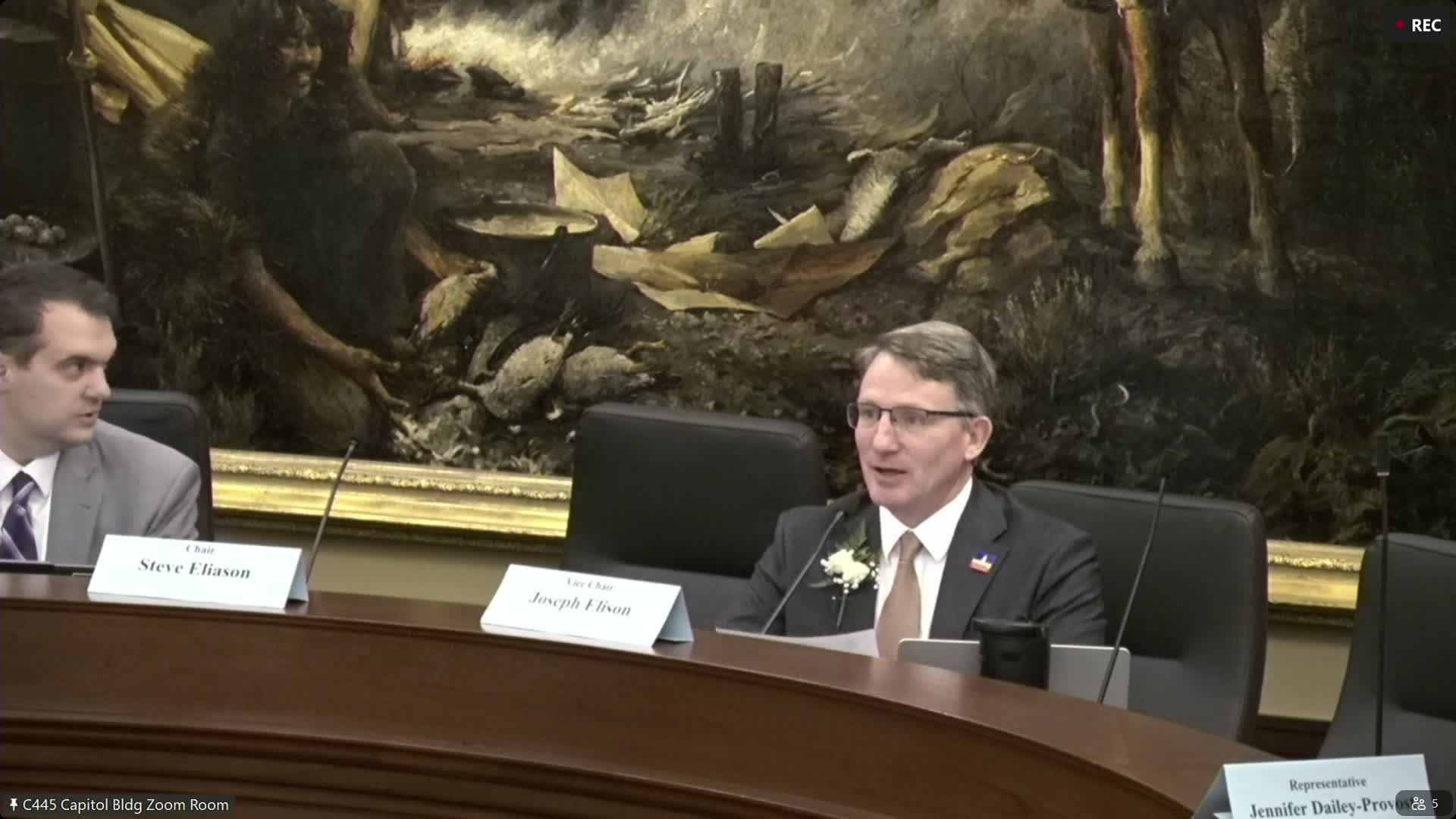
SALT LAKE CITY — The House Revenue and Taxation Committee on Thursday gave a favorable recommendation to SB 73 (third substitute), a bill that tightens online age verification for websites containing material harmful to minors and creates a targeted excise tax to fund mental-health prevention and enforcement.
Senator Musselman, sponsor of the bill, said SB 73 builds on Utah’s 2023 age-gating law by making age verification an affirmative requirement for sites that meet a statutory threshold. "Establishes a 2% excise tax ... on transactions for content harmful to minors," the sponsor said, adding that 90% of the revenue would go into a restricted account for early prevention, treatment, public education and research on harms from adult content to minors, while 10% would support enforcement of the age-verification requirement.
Under the bill, the Division of Consumer Protection (DCP) would have rulemaking authority to set the procedure and standards for determining whether a website meets the 33.3% threshold for adult content. The DCP would identify sites that meet that threshold and provide the list to the Tax Commission, which would assess the 2% excise tax only on those identified entities. The sponsor said the measure is not intended as a general revenue driver; "there's no flow over to the general fund," he said.
Representative Kristofferson asked who would be taxed and on what base. The sponsor replied the 2% would apply to transactions — for example, subscription or purchase fees — and DCP would limit assessments to sites that meet the 33.3% threshold. "It's 2% of whatever that transaction would be," the sponsor said.
Katie Haas, director of the Division of Consumer Protection, told the committee DCP will coordinate with ICAC (Internet Crimes Against Children) to use staff trained to evaluate sites and will adopt safe-harbor rules and privacy and security standards for acceptable age-assurance systems. Haas said DCP will rely on rulemaking to define the 33.3% standard and explained the division will capture sites that clearly present themselves as adult-content sites without a time-consuming audit.
During presentation, the sponsor cited national and state data about youth exposure to harmful material and asserted that Utah saw improvements in youth mental-health measures since 2023 age-gating, noting "28.4 percent fewer symptoms of depression or thoughts of suicide and 23.3 percent fewer suicide attempts" in new state health data; he characterized that as at least correlative. That assertion was presented as sponsor interpretation of data, not as causal proof presented in committee.
Chair Ewesen moved the bill with a favorable recommendation; the committee approved the motion on a voice vote. The committee transcript shows no roll-call tally.
Next steps: SB 73 is moved out of committee and will proceed through the House process; DCP rulemaking will be needed to implement the threshold and enforcement procedures if the bill becomes law.
Senator Musselman, sponsor of the bill, said SB 73 builds on Utah’s 2023 age-gating law by making age verification an affirmative requirement for sites that meet a statutory threshold. "Establishes a 2% excise tax ... on transactions for content harmful to minors," the sponsor said, adding that 90% of the revenue would go into a restricted account for early prevention, treatment, public education and research on harms from adult content to minors, while 10% would support enforcement of the age-verification requirement.
Under the bill, the Division of Consumer Protection (DCP) would have rulemaking authority to set the procedure and standards for determining whether a website meets the 33.3% threshold for adult content. The DCP would identify sites that meet that threshold and provide the list to the Tax Commission, which would assess the 2% excise tax only on those identified entities. The sponsor said the measure is not intended as a general revenue driver; "there's no flow over to the general fund," he said.
Representative Kristofferson asked who would be taxed and on what base. The sponsor replied the 2% would apply to transactions — for example, subscription or purchase fees — and DCP would limit assessments to sites that meet the 33.3% threshold. "It's 2% of whatever that transaction would be," the sponsor said.
Katie Haas, director of the Division of Consumer Protection, told the committee DCP will coordinate with ICAC (Internet Crimes Against Children) to use staff trained to evaluate sites and will adopt safe-harbor rules and privacy and security standards for acceptable age-assurance systems. Haas said DCP will rely on rulemaking to define the 33.3% standard and explained the division will capture sites that clearly present themselves as adult-content sites without a time-consuming audit.
During presentation, the sponsor cited national and state data about youth exposure to harmful material and asserted that Utah saw improvements in youth mental-health measures since 2023 age-gating, noting "28.4 percent fewer symptoms of depression or thoughts of suicide and 23.3 percent fewer suicide attempts" in new state health data; he characterized that as at least correlative. That assertion was presented as sponsor interpretation of data, not as causal proof presented in committee.
Chair Ewesen moved the bill with a favorable recommendation; the committee approved the motion on a voice vote. The committee transcript shows no roll-call tally.
Next steps: SB 73 is moved out of committee and will proceed through the House process; DCP rulemaking will be needed to implement the threshold and enforcement procedures if the bill becomes law.
View the Full Meeting & All Its Details
This article offers just a summary. Unlock complete video, transcripts, and insights as a Founder Member.
✓
Watch full, unedited meeting videos
✓
Search every word spoken in unlimited transcripts
✓
AI summaries & real-time alerts (all government levels)
✓
Permanent access to expanding government content
30-day money-back guarantee
