House committee grills DOC over HB 550 language on searches, housing and trans‑affirming care
February 26, 2026 | Corrections & Institutions, HOUSE OF REPRESENTATIVES, Committees, Legislative , Vermont
This article was created by AI summarizing key points discussed. AI makes mistakes, so for full details and context, please refer to the video of the full meeting. Please report any errors so we can fix them. Report an error »
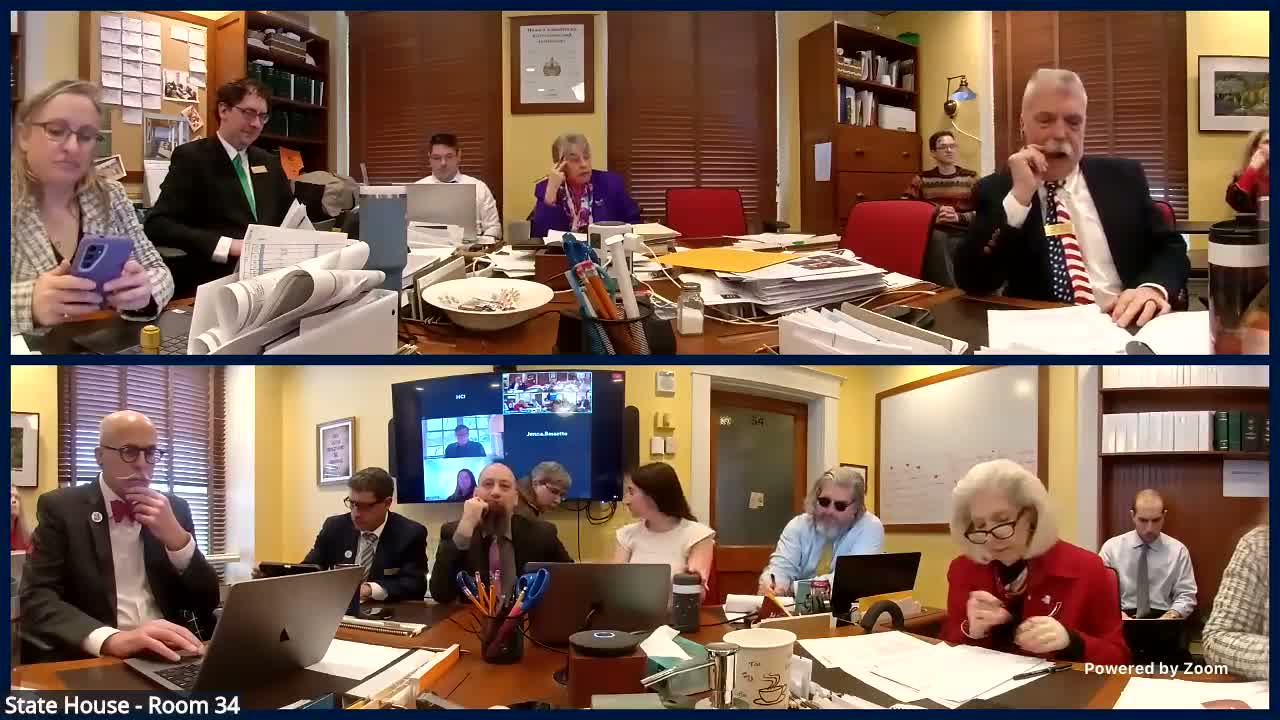
The House Corrections and Institutions Committee on Feb. 25 took an extended look at House Bill 550, which would require the Department of Corrections to address incarcerated people in a manner consistent with their gender identity and to set related search and housing procedures.
Committee Chair opened the meeting noting HB 550 and a DOC marked‑up draft had been circulated; DOC witnesses, including Haley Summer, director of communications for WellPath, and Josh Lutford, deputy director of facilities, answered detailed questions from members about how the department would apply the bill.
Why it matters: the bill touches on operational safety, federal PREA standards and medical care. DOC officials repeatedly cautioned that some proposed statutory wording could create conflicts with the federal Prison Rape Elimination Act (PREA) and with the department’s intake and classification workflow, potentially exposing staff and residents to safety risks unless the language is clarified.
What DOC told the committee: DOC representatives said intake and housing decisions occur at two separate moments. "We have to make an immediate decision based on the facts that are in front of them," a DOC witness said about the overnight supervisor in booking. The department described a later, more deliberative five‑day classification that allows a multidisciplinary team to revisit placement.
DOC flagged specific drafting risks in the current text. One concern centered on lines the committee reviewed that say an inmate "may be searched according to the inmate's gender identity or according to the gender designation of the correctional facility where the person is being booked." DOC noted Vermont facilities sometimes temporarily hold cisgender females in primarily male facilities and that a literal reading could require searches by staff matching a person’s declared gender even when that would be unsafe or impractical. "If someone comes in and we ask their gender identity, if they say transgender female, then we would be obligated to search them with female staff," a DOC representative said. DOC asked the committee to separate statutory language for immediate booking searches from the later five‑day classification to reflect operational realities.
PREA and genital‑status searches: Witnesses and members discussed PREA guidance, which they said bars searching someone "for the purpose of determining genital status." DOC and medical witnesses recommended adding PREA‑consistent language and clarifying that medical staff — not security staff conducting strip searches — handle clinical determinations. "We do not search just to figure out what genital status is," a DOC representative said; committee members agreed that PREA language should be incorporated to avoid unintended legal conflicts.
Single‑cell placement and incentives: The draft includes a requirement to give "serious consideration" to single‑cell placement for vulnerable people. DOC and contracted medical staff warned Vermont lacks general‑population single cells and that codifying an entitlement could create incentives (including hunger strikes or other behaviors) to obtain single cells. "I don't like to use the word manipulation, but ... people will go to extreme measures for just a single cell," said Dr. Lisonbee Richards, director of psychiatry for WellPath.
Interstate placements and specialist care: Committee members asked whether out‑of‑state placements are an option for safety or specialized care. DOC said interstate compact placements exist but are used sparingly ("down to 6 or 7" at times) and are not a practical universal solution. WellPath staff said they maintain referral relationships with community gender‑affirming care specialists and have contracted an experienced WPATH‑affiliated consultant (Brandy Brown) for complex cases.
Pronouns, training and medical competency: The bill's medical section would require staff to use preferred pronouns in clinical communications. DOC and medical witnesses said staff training is already in progress and that repeated refusal to use proper pronouns is a policy violation that can trigger discipline. WellPath described mandatory gender‑affirming training for health‑care staff and said more specialized expertise will be applied to complex requests for treatment.
Process and next steps: After extensive discussion, the committee agreed to form a small drafting group (the chair asked Gina, Brian and Troy to participate, with DOC staff including Josh and legislative counsel Hillary) to produce a revised draft or amendment that (at minimum) separates booking searches from five‑day classification language, incorporates PREA guidance, and adds practical qualifiers around single‑cell and out‑of‑state placement. The committee paused for a short break and set expectations that a new draft or working amendment be prepared before members reconvene.
No vote was taken. The committee directed staff and DOC to work with legislative counsel and return with redrafted language that reflects operational practices and federal requirements.
Committee Chair opened the meeting noting HB 550 and a DOC marked‑up draft had been circulated; DOC witnesses, including Haley Summer, director of communications for WellPath, and Josh Lutford, deputy director of facilities, answered detailed questions from members about how the department would apply the bill.
Why it matters: the bill touches on operational safety, federal PREA standards and medical care. DOC officials repeatedly cautioned that some proposed statutory wording could create conflicts with the federal Prison Rape Elimination Act (PREA) and with the department’s intake and classification workflow, potentially exposing staff and residents to safety risks unless the language is clarified.
What DOC told the committee: DOC representatives said intake and housing decisions occur at two separate moments. "We have to make an immediate decision based on the facts that are in front of them," a DOC witness said about the overnight supervisor in booking. The department described a later, more deliberative five‑day classification that allows a multidisciplinary team to revisit placement.
DOC flagged specific drafting risks in the current text. One concern centered on lines the committee reviewed that say an inmate "may be searched according to the inmate's gender identity or according to the gender designation of the correctional facility where the person is being booked." DOC noted Vermont facilities sometimes temporarily hold cisgender females in primarily male facilities and that a literal reading could require searches by staff matching a person’s declared gender even when that would be unsafe or impractical. "If someone comes in and we ask their gender identity, if they say transgender female, then we would be obligated to search them with female staff," a DOC representative said. DOC asked the committee to separate statutory language for immediate booking searches from the later five‑day classification to reflect operational realities.
PREA and genital‑status searches: Witnesses and members discussed PREA guidance, which they said bars searching someone "for the purpose of determining genital status." DOC and medical witnesses recommended adding PREA‑consistent language and clarifying that medical staff — not security staff conducting strip searches — handle clinical determinations. "We do not search just to figure out what genital status is," a DOC representative said; committee members agreed that PREA language should be incorporated to avoid unintended legal conflicts.
Single‑cell placement and incentives: The draft includes a requirement to give "serious consideration" to single‑cell placement for vulnerable people. DOC and contracted medical staff warned Vermont lacks general‑population single cells and that codifying an entitlement could create incentives (including hunger strikes or other behaviors) to obtain single cells. "I don't like to use the word manipulation, but ... people will go to extreme measures for just a single cell," said Dr. Lisonbee Richards, director of psychiatry for WellPath.
Interstate placements and specialist care: Committee members asked whether out‑of‑state placements are an option for safety or specialized care. DOC said interstate compact placements exist but are used sparingly ("down to 6 or 7" at times) and are not a practical universal solution. WellPath staff said they maintain referral relationships with community gender‑affirming care specialists and have contracted an experienced WPATH‑affiliated consultant (Brandy Brown) for complex cases.
Pronouns, training and medical competency: The bill's medical section would require staff to use preferred pronouns in clinical communications. DOC and medical witnesses said staff training is already in progress and that repeated refusal to use proper pronouns is a policy violation that can trigger discipline. WellPath described mandatory gender‑affirming training for health‑care staff and said more specialized expertise will be applied to complex requests for treatment.
Process and next steps: After extensive discussion, the committee agreed to form a small drafting group (the chair asked Gina, Brian and Troy to participate, with DOC staff including Josh and legislative counsel Hillary) to produce a revised draft or amendment that (at minimum) separates booking searches from five‑day classification language, incorporates PREA guidance, and adds practical qualifiers around single‑cell and out‑of‑state placement. The committee paused for a short break and set expectations that a new draft or working amendment be prepared before members reconvene.
No vote was taken. The committee directed staff and DOC to work with legislative counsel and return with redrafted language that reflects operational practices and federal requirements.
View the Full Meeting & All Its Details
This article offers just a summary. Unlock complete video, transcripts, and insights as a Founder Member.
✓
Watch full, unedited meeting videos
✓
Search every word spoken in unlimited transcripts
✓
AI summaries & real-time alerts (all government levels)
✓
Permanent access to expanding government content
30-day money-back guarantee
