Vermont committee hears testimony on H.814 neurological rights, moves broader AI rules into a study and shifts chatbot rules to H.816
February 26, 2026 | Health Care, HOUSE OF REPRESENTATIVES, Committees, Legislative , Vermont
This article was created by AI summarizing key points discussed. AI makes mistakes, so for full details and context, please refer to the video of the full meeting. Please report any errors so we can fix them. Report an error »
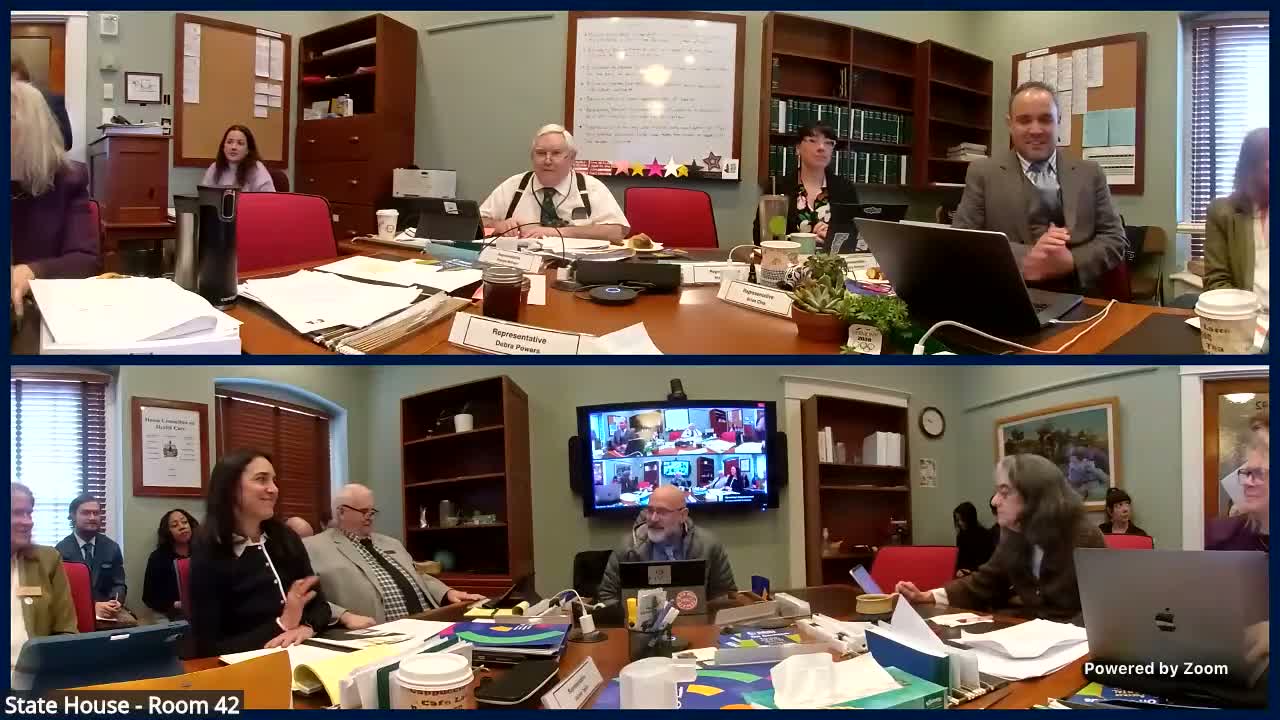
The Health Care Committee on Feb. 25 heard several hours of testimony on H.814, a bill that would establish neurological-rights language and change the membership and charge of Vermont’s artificial-intelligence advisory council, while lawmakers signaled they will move many technical regulatory provisions, including chatbot rules, into a one-year study and handle chatbots through companion legislation, H.816.
Lynn Currier, executive director of the National Association of Social Workers’ Vermont chapter, told the committee that independent AI therapy chatbots should be barred from practice in Vermont. "At best, it's unlicensed practice. At worst, anything that's attached to a large language model is potentially very dangerous," she said, urging lawmakers to adopt neurological-rights language aligned with United Nations guidance and to include NASW representation on the AI council.
The bill’s sponsor and committee members described a compromise they are drafting: retain a short set of neurological-rights declarations in H.814 while moving the bulk of proposed regulatory changes — covering generative AI, neurotechnology, regulated-profession guidance and payer utilization review — into a study the AI council would complete and report back on within the next year. Committee discussion indicated chatbot-specific rules would be handled in H.816 instead of H.814.
Peter Trombley, director of legislative affairs for the State Treasurer’s Office, told the committee his office supports adding the treasurer or a treasurer designee to the AI advisory council and said state finance systems (including retirement systems and cash-management tools) could benefit from careful AI use. "We would be grateful for the opportunity to engage in more productive conversations about how we can use AI to benefit the experience that Vermonters have of our office," Trombley said.
Josiah Reish, Vermont’s chief data and AI officer, described the state’s multi-year work on AI: in-house models for infrastructure and traffic-sign inventory, an AI council-created code of ethics adopted by other states, and a published AI inventory. Reish recommended regulators focus on protecting neural data under existing health-data frameworks rather than trying to regulate speculative, input-to-brain technologies. He described the executive-branch practice on generative AI: require human review and a disclosure that lists when a generative tool was used and who verified the content.
Dr. Rick Barnett, chair of the Vermont Psychological Association’s legislative committee, said the VPA "is in full support of H.814" but urged caution on specific language. He warned that an outright ban on chatbots could conflict with future or existing Food and Drug Administration approvals for digital therapeutics and raised concerns about penalty provisions in the bill that he described as potentially disproportionate for clinicians.
Committee members repeatedly asked for sharper definitions — for example, whether the bill’s reference to "augmented intelligence" should be defined — and for legislative council to refine statutory wording. Members discussed a draft amendment (being prepared by "Jen") that would transfer many regulatory details into the council-led study, add specified new members (social work, psychology, medical and treasury representation) to the council, and preserve the neurological-rights language in the bill.
No formal votes or final actions were recorded during the hearing. Lawmakers signaled they will circulate amendment language to committee members, consult legislative counsel for definitions and report-back timelines, and reconvene with additional witnesses and counsel to refine the technical sections.
The Health Care Committee paused for a break and planned to continue consideration of the bills at a later session; committee staff said the study language and any amendment text will be circulated to members for review before further action.
Lynn Currier, executive director of the National Association of Social Workers’ Vermont chapter, told the committee that independent AI therapy chatbots should be barred from practice in Vermont. "At best, it's unlicensed practice. At worst, anything that's attached to a large language model is potentially very dangerous," she said, urging lawmakers to adopt neurological-rights language aligned with United Nations guidance and to include NASW representation on the AI council.
The bill’s sponsor and committee members described a compromise they are drafting: retain a short set of neurological-rights declarations in H.814 while moving the bulk of proposed regulatory changes — covering generative AI, neurotechnology, regulated-profession guidance and payer utilization review — into a study the AI council would complete and report back on within the next year. Committee discussion indicated chatbot-specific rules would be handled in H.816 instead of H.814.
Peter Trombley, director of legislative affairs for the State Treasurer’s Office, told the committee his office supports adding the treasurer or a treasurer designee to the AI advisory council and said state finance systems (including retirement systems and cash-management tools) could benefit from careful AI use. "We would be grateful for the opportunity to engage in more productive conversations about how we can use AI to benefit the experience that Vermonters have of our office," Trombley said.
Josiah Reish, Vermont’s chief data and AI officer, described the state’s multi-year work on AI: in-house models for infrastructure and traffic-sign inventory, an AI council-created code of ethics adopted by other states, and a published AI inventory. Reish recommended regulators focus on protecting neural data under existing health-data frameworks rather than trying to regulate speculative, input-to-brain technologies. He described the executive-branch practice on generative AI: require human review and a disclosure that lists when a generative tool was used and who verified the content.
Dr. Rick Barnett, chair of the Vermont Psychological Association’s legislative committee, said the VPA "is in full support of H.814" but urged caution on specific language. He warned that an outright ban on chatbots could conflict with future or existing Food and Drug Administration approvals for digital therapeutics and raised concerns about penalty provisions in the bill that he described as potentially disproportionate for clinicians.
Committee members repeatedly asked for sharper definitions — for example, whether the bill’s reference to "augmented intelligence" should be defined — and for legislative council to refine statutory wording. Members discussed a draft amendment (being prepared by "Jen") that would transfer many regulatory details into the council-led study, add specified new members (social work, psychology, medical and treasury representation) to the council, and preserve the neurological-rights language in the bill.
No formal votes or final actions were recorded during the hearing. Lawmakers signaled they will circulate amendment language to committee members, consult legislative counsel for definitions and report-back timelines, and reconvene with additional witnesses and counsel to refine the technical sections.
The Health Care Committee paused for a break and planned to continue consideration of the bills at a later session; committee staff said the study language and any amendment text will be circulated to members for review before further action.
Don't Miss a Word: See the Full Meeting!
Go beyond summaries. Unlock every video, transcript, and key insight with a Founder Membership.
✓
Get instant access to full meeting videos
✓
Search and clip any phrase from complete transcripts
✓
Receive AI-powered summaries & custom alerts
✓
Enjoy lifetime, unrestricted access to government data
30-day money-back guarantee
