Senate subcommittee advances bill mirroring SNAP waiver, removes restaurant-meals language
February 25, 2026 | 2026 Legislative Meetings, South Carolina
This article was created by AI summarizing key points discussed. AI makes mistakes, so for full details and context, please refer to the video of the full meeting. Please report any errors so we can fix them. Report an error »
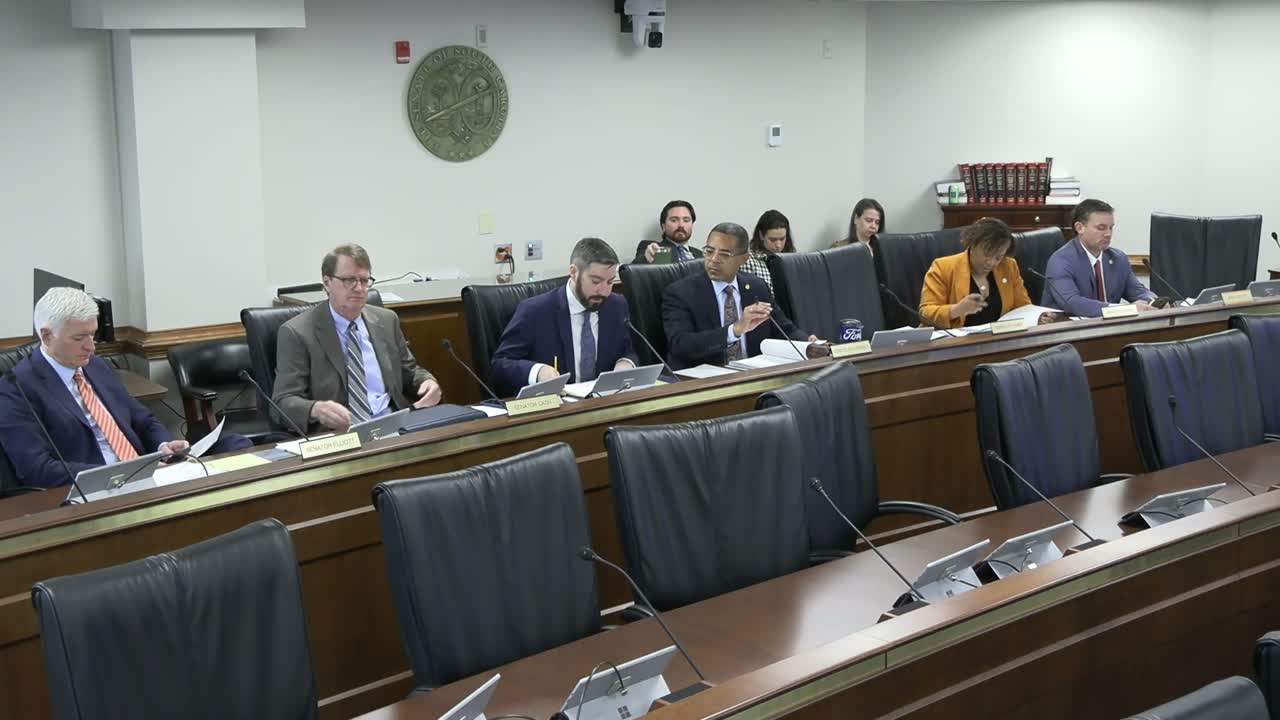
Quentin Gaddy introduced Senate Bill 777 to the Child Welfare Subcommittee, saying the measure "provides that candy, energy drinks, soft drinks, and sweetened beverages are not foods eligible for purchase using SNAP benefits." The subcommittee adopted a staff amendment striking a subsection that referenced a federal restaurant-meals program and then voted to report the bill favorably as amended.
Why it matters: Department of Social Services staff told senators the governor requested and received a federal food-demonstration waiver and that the state pilot "goes into effect 08/31/2026" and will run for two years. DSS also provided participation data: January 2026 SNAP participation in South Carolina was about 247,005 households (roughly 514,847 individuals) with roughly $95,460,979 in benefits paid that month; annual benefit flows were estimated at about $1.6–$2.0 billion. Committee members and witnesses debated whether codifying the waiver into state law is necessary or could create administrative burdens for small retailers and unintended impacts on food access.
What happened at the hearing: DSS witness Conley Ann Ragley described how an August 2025 executive order led the agency to file for a USDA Food and Nutrition Service demonstration waiver, which the state received. Ragley warned that a subsection in the bill referring to a restaurant-meals program "does not align with the federal definition" and recommended striking it because South Carolina does not participate in that federal program. The subcommittee adopted the amendment to remove that subsection.
Industry and health groups offered contrasting testimony. Jay Hicks of the South Carolina Beverage Association told the panel that the governor’s waiver "has been granted" and that "everything this bill seeks to accomplish has already been done," arguing a state statute would have little practical effect on a federally administered program. Public-health advocates including Meg Stanley of Whole Spire urged caution, saying there is "absolutely no evidence" that restrictions on SNAP purchases will improve health outcomes and warning about administrative complexity. Sue Berkowitz of South Carolina Appleseed told senators that "restricting food and SNAP would exacerbate food insecurity," and cautioned that small independent retailers in rural areas may not be able to reprogram point-of-sale systems and therefore could stop accepting SNAP.
Votes and next steps: The subcommittee considered a motion to carry the bill over for another subcommittee hearing; that motion failed. The panel then voted to report the bill favorably as amended (adopting the strike-amendment) and adjourned. The bill, as reported, mirrors the federally approved waiver and will proceed as the committee process dictates.
Key quotes from the hearing: "This bill provides that candy, energy drinks, soft drinks, and sweetened beverages are not foods eligible for purchase using SNAP benefits," Quentin Gaddy said in his introduction. Conley Ann Ragley (DSS) said the state waiver "goes into effect 08/31/2026." Jay Hicks of the beverage association said: "Everything this bill seeks to accomplish has already been done." Meg Stanley (Whole Spire) urged: "I respectfully urge you to really, practice caution with this bill." Sue Berkowitz (Appleseed) said: "Restricting food and SNAP would exacerbate food insecurity."
Context and outstanding questions: DSS and industry witnesses said the federal waiver’s implementation will produce a definitive product list and retailer guidance this spring; committee members asked for additional data on where SNAP dollars are currently spent, technical demands on retailers' point-of-sale systems, and whether the federal demonstration or broader federal policy initiatives are tied to other grants or programs. The subcommittee did not adopt new reporting or evaluation requirements during the hearing; proponents and opponents said the two-year pilot will generate data to evaluate results.
The subcommittee adjourned after reporting the bill as amended.
Why it matters: Department of Social Services staff told senators the governor requested and received a federal food-demonstration waiver and that the state pilot "goes into effect 08/31/2026" and will run for two years. DSS also provided participation data: January 2026 SNAP participation in South Carolina was about 247,005 households (roughly 514,847 individuals) with roughly $95,460,979 in benefits paid that month; annual benefit flows were estimated at about $1.6–$2.0 billion. Committee members and witnesses debated whether codifying the waiver into state law is necessary or could create administrative burdens for small retailers and unintended impacts on food access.
What happened at the hearing: DSS witness Conley Ann Ragley described how an August 2025 executive order led the agency to file for a USDA Food and Nutrition Service demonstration waiver, which the state received. Ragley warned that a subsection in the bill referring to a restaurant-meals program "does not align with the federal definition" and recommended striking it because South Carolina does not participate in that federal program. The subcommittee adopted the amendment to remove that subsection.
Industry and health groups offered contrasting testimony. Jay Hicks of the South Carolina Beverage Association told the panel that the governor’s waiver "has been granted" and that "everything this bill seeks to accomplish has already been done," arguing a state statute would have little practical effect on a federally administered program. Public-health advocates including Meg Stanley of Whole Spire urged caution, saying there is "absolutely no evidence" that restrictions on SNAP purchases will improve health outcomes and warning about administrative complexity. Sue Berkowitz of South Carolina Appleseed told senators that "restricting food and SNAP would exacerbate food insecurity," and cautioned that small independent retailers in rural areas may not be able to reprogram point-of-sale systems and therefore could stop accepting SNAP.
Votes and next steps: The subcommittee considered a motion to carry the bill over for another subcommittee hearing; that motion failed. The panel then voted to report the bill favorably as amended (adopting the strike-amendment) and adjourned. The bill, as reported, mirrors the federally approved waiver and will proceed as the committee process dictates.
Key quotes from the hearing: "This bill provides that candy, energy drinks, soft drinks, and sweetened beverages are not foods eligible for purchase using SNAP benefits," Quentin Gaddy said in his introduction. Conley Ann Ragley (DSS) said the state waiver "goes into effect 08/31/2026." Jay Hicks of the beverage association said: "Everything this bill seeks to accomplish has already been done." Meg Stanley (Whole Spire) urged: "I respectfully urge you to really, practice caution with this bill." Sue Berkowitz (Appleseed) said: "Restricting food and SNAP would exacerbate food insecurity."
Context and outstanding questions: DSS and industry witnesses said the federal waiver’s implementation will produce a definitive product list and retailer guidance this spring; committee members asked for additional data on where SNAP dollars are currently spent, technical demands on retailers' point-of-sale systems, and whether the federal demonstration or broader federal policy initiatives are tied to other grants or programs. The subcommittee did not adopt new reporting or evaluation requirements during the hearing; proponents and opponents said the two-year pilot will generate data to evaluate results.
The subcommittee adjourned after reporting the bill as amended.
View the Full Meeting & All Its Details
This article offers just a summary. Unlock complete video, transcripts, and insights as a Founder Member.
✓
Watch full, unedited meeting videos
✓
Search every word spoken in unlimited transcripts
✓
AI summaries & real-time alerts (all government levels)
✓
Permanent access to expanding government content
30-day money-back guarantee
