Subcommittee adopts bill to ban fee-based, unaccredited veterans claims assistance
February 25, 2026 | 2026 Legislative Meetings, South Carolina
This article was created by AI summarizing key points discussed. AI makes mistakes, so for full details and context, please refer to the video of the full meeting. Please report any errors so we can fix them. Report an error »
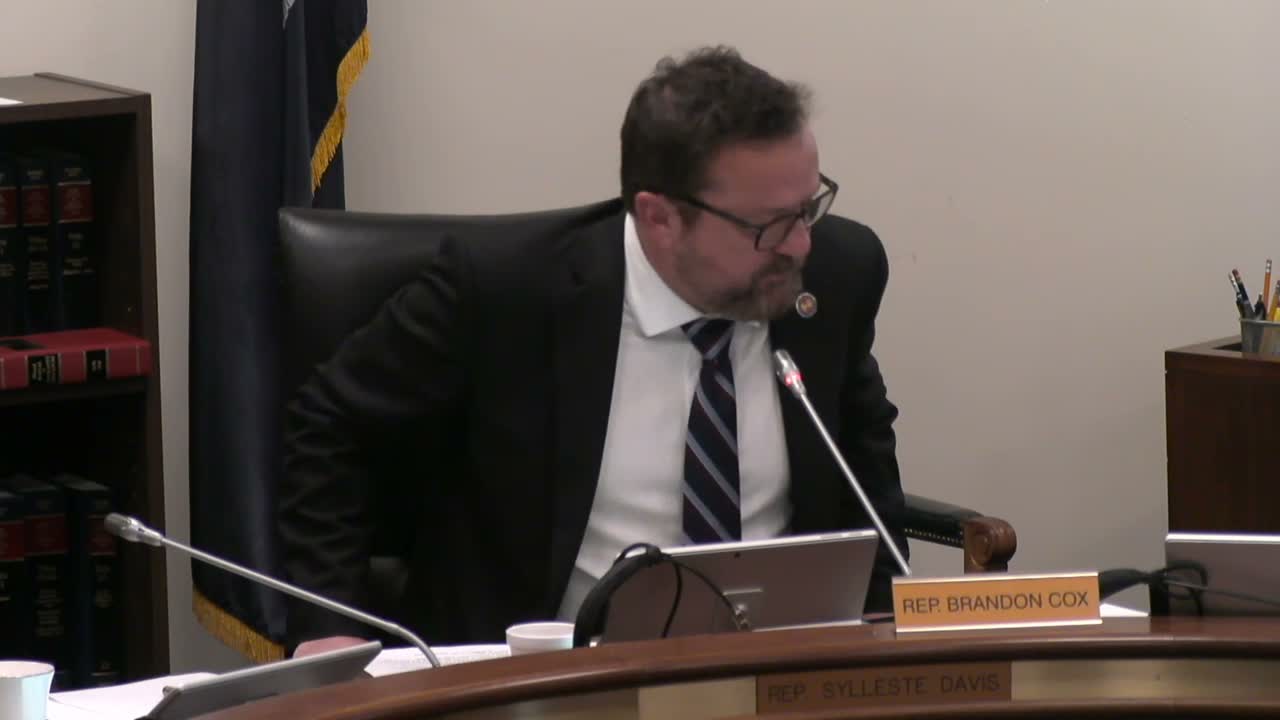
The Military and Veterans Affairs Subcommittee voted to adopt S.695 on a voice-roll call after hearing competing testimony about how to protect veterans from predatory claims preparers and preserve access to paid assistance.
Secretary McCaffrey of the South Carolina Department of Veterans Affairs told the committee he came ‘‘in strong support of S-six 95, the proposed legislation thats before you,’’ arguing the bill would protect veterans from unaccredited individuals who charge for claims assistance. He said accredited support through county veterans offices and recognized Veteran Service Organizations (VSOs) is free to veterans and described numerous examples of what he called ‘‘claim sharks’’ that charge upfront or contingency fees based on disability awards.
McCaffrey illustrated the stakes with VA disability examples: a 10% rating, he said, is roughly $175 per month, and a 100% rating approaches $4,000 per month, meaning contingency multipliers can send substantial dollars to unaccredited preparers. He also told the committee the 2022 PACT Act expanded presumptions that made some claims easier to establish and increased the volume of filings, drawing more unaccredited actors into the market. McCaffrey emphasized that the bill would not prohibit accredited attorneys or accredited representatives who lawfully charge for appeals or other services.
Mark Christiansen, chief of staff at Veterans Guardian, a veteran-owned private company based in Pinehurst, North Carolina, urged the committee to preserve choice for veterans who seek paid assistance. ‘‘If theres no successful outcome for the veteran, they dont owe us anything,’’ he said, describing his companys contingent-fee model and saying Veterans Guardian helps thousands of veterans annually. Christiansen said his firm has assisted more than 3,000 South Carolina veterans, has roughly 1,500 active cases, and estimated it brings about $36,000,000 a year in benefits to veterans in the state.
Committee members questioned witnesses about whether predatory practices are driven by federal backlog and systemic outreach failures. McCaffrey acknowledged a backlog at the federal Veterans Benefit Administration (regional office in Columbia) and called for improved education and outreach to veterans at separation from service, while saying state action could reduce predatory activity.
After discussion, the chair put the question to adopt S.695. Clerk Miss Fierce called the roll; Mister Cox, Mister Gilliard, Miss Holman and Mister Lastinger were recorded as voting ‘‘Aye,’’ and the chair declared the bill adopted. No recorded ‘‘No’’ votes or abstentions were stated on the transcript.
The subcommittee had no further business and adjourned.
Secretary McCaffrey of the South Carolina Department of Veterans Affairs told the committee he came ‘‘in strong support of S-six 95, the proposed legislation thats before you,’’ arguing the bill would protect veterans from unaccredited individuals who charge for claims assistance. He said accredited support through county veterans offices and recognized Veteran Service Organizations (VSOs) is free to veterans and described numerous examples of what he called ‘‘claim sharks’’ that charge upfront or contingency fees based on disability awards.
McCaffrey illustrated the stakes with VA disability examples: a 10% rating, he said, is roughly $175 per month, and a 100% rating approaches $4,000 per month, meaning contingency multipliers can send substantial dollars to unaccredited preparers. He also told the committee the 2022 PACT Act expanded presumptions that made some claims easier to establish and increased the volume of filings, drawing more unaccredited actors into the market. McCaffrey emphasized that the bill would not prohibit accredited attorneys or accredited representatives who lawfully charge for appeals or other services.
Mark Christiansen, chief of staff at Veterans Guardian, a veteran-owned private company based in Pinehurst, North Carolina, urged the committee to preserve choice for veterans who seek paid assistance. ‘‘If theres no successful outcome for the veteran, they dont owe us anything,’’ he said, describing his companys contingent-fee model and saying Veterans Guardian helps thousands of veterans annually. Christiansen said his firm has assisted more than 3,000 South Carolina veterans, has roughly 1,500 active cases, and estimated it brings about $36,000,000 a year in benefits to veterans in the state.
Committee members questioned witnesses about whether predatory practices are driven by federal backlog and systemic outreach failures. McCaffrey acknowledged a backlog at the federal Veterans Benefit Administration (regional office in Columbia) and called for improved education and outreach to veterans at separation from service, while saying state action could reduce predatory activity.
After discussion, the chair put the question to adopt S.695. Clerk Miss Fierce called the roll; Mister Cox, Mister Gilliard, Miss Holman and Mister Lastinger were recorded as voting ‘‘Aye,’’ and the chair declared the bill adopted. No recorded ‘‘No’’ votes or abstentions were stated on the transcript.
The subcommittee had no further business and adjourned.
Don't Miss a Word: See the Full Meeting!
Go beyond summaries. Unlock every video, transcript, and key insight with a Founder Membership.
✓
Get instant access to full meeting videos
✓
Search and clip any phrase from complete transcripts
✓
Receive AI-powered summaries & custom alerts
✓
Enjoy lifetime, unrestricted access to government data
30-day money-back guarantee
