Subcommittee advances bill to give workers’ comp commission more flexibility on physician rates
February 25, 2026 | 2026 Legislative Meetings, South Carolina
This article was created by AI summarizing key points discussed. AI makes mistakes, so for full details and context, please refer to the video of the full meeting. Please report any errors so we can fix them. Report an error »
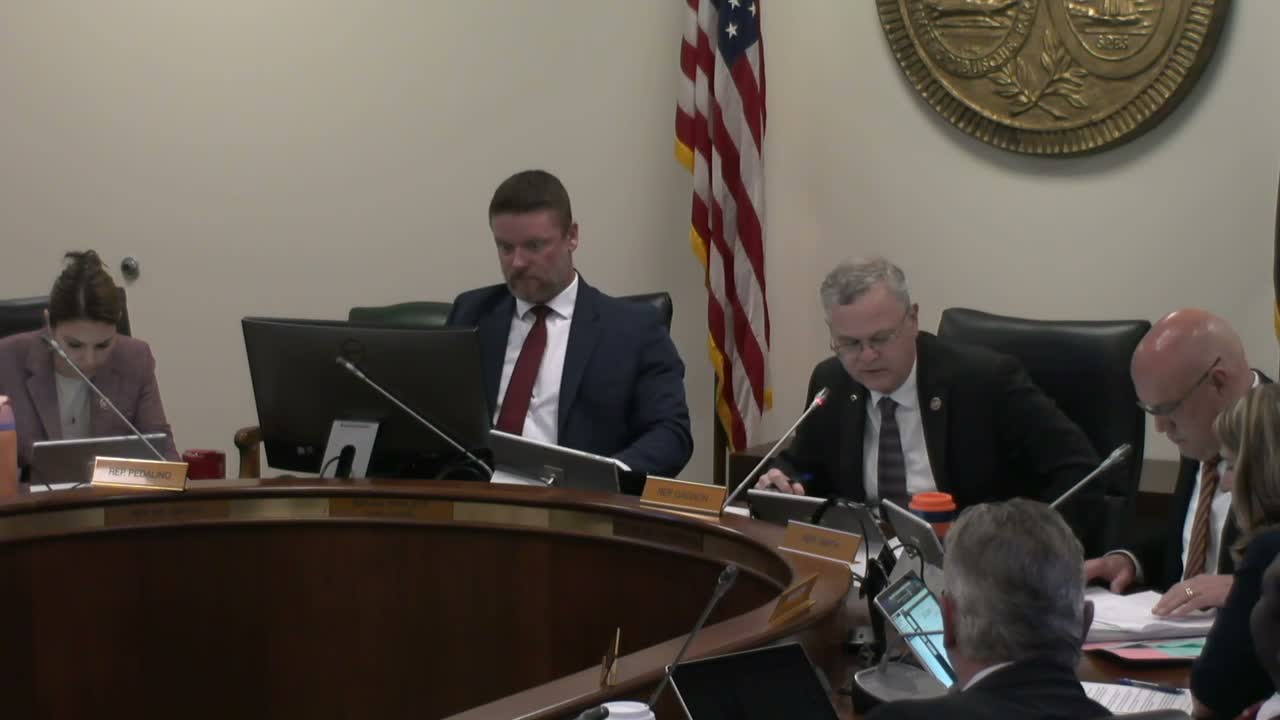
A House subcommittee advanced legislation this morning that would give South Carolina’s workers’ compensation agency more flexibility to set physician reimbursement rates and would establish a stakeholder cost‑containment committee and a statutory public‑hearing process.
Supporters, including Ann Margaret McCraw of the South Carolina Orthopedic Association, told the panel the current statutory structure—written after a steep Medicare cut more than a decade ago—has an unintended effect of keeping physician fees low and narrowing the commission’s tools to target specialties where access is limited. “The bill before you seeks to amend the methodology that is currently prescribed for setting rates paid to medical providers for the services they render to injured workers,” McCraw said in testimony.
Why it matters: Providers and physician groups said South Carolina ranks near the bottom among states on professional‑service reimbursement and that low relative rates and rising administrative burdens are prompting specialists to stop taking workers’ compensation patients. Dr. Chris Mazway, chairman of orthopedic surgery at Prisma Health, described growing administrative complexity and said many orthopedic surgeons are no longer seeing comp patients: “The administrative burden and the challenges that come with working with these patients is becoming more and more burdensome every year.” Supporters and the commission argued the change is intended to preserve access to care rather than to trigger automatic increases.
What the amendment does: Committee members adopted Amendment 1 after stakeholders and staff worked to add guardrails. The amendment, as described in testimony, would remove a restrictive statutory cap tied to a plus/minus 10 percent threshold that currently limits how the fee schedule can be adjusted; it would also codify public hearings and create an annual stakeholder committee—employers, insurers, providers and commission representatives—to make recommendations to the commission. “It’s not really oversight, it’s collaboration,” McCraw said of the proposed committee.
Commission perspective: Scott Beck, chairman of the Workers’ Compensation Commission, told the subcommittee the commission has updated the fee schedule annually but lacks flexibility under the current statutory and regulatory structure (he cited regulation 67‑13‑02 and the single conversion‑factor constraint). “The plus or minus 10% is prohibitive to us,” Beck said, adding the commission has limited staff and budget resources to manage appeals and complex rule changes.
Votes and next steps: The subcommittee adopted the amendment and then voted to send the bill, as amended, to the full House. Committee members recorded no opposition during the voice votes. After the subcommittee action, the bill will proceed through the House committee process where additional debate and potential amendments could follow.
Details and caveats: Witnesses repeatedly framed the proposal as giving the commission tools to target specific services and specialties; they did not propose a specific statewide percentage increase. Testimony referenced out‑of‑state fee changes—Florida’s Jan. 1, 2025 adjustment was cited as an example of more aggressive increases—but supporters said the change before the subcommittee is about methodology and process rather than guaranteeing a set increase.
The subcommittee hearing included multiple speakers from the orthopedic community and questions from legislators focused on competitiveness with neighboring states, how the commission applies Medicare as a baseline and how the proposed committee would be appointed and operate. The bill now moves to the full House for further consideration.
Supporters, including Ann Margaret McCraw of the South Carolina Orthopedic Association, told the panel the current statutory structure—written after a steep Medicare cut more than a decade ago—has an unintended effect of keeping physician fees low and narrowing the commission’s tools to target specialties where access is limited. “The bill before you seeks to amend the methodology that is currently prescribed for setting rates paid to medical providers for the services they render to injured workers,” McCraw said in testimony.
Why it matters: Providers and physician groups said South Carolina ranks near the bottom among states on professional‑service reimbursement and that low relative rates and rising administrative burdens are prompting specialists to stop taking workers’ compensation patients. Dr. Chris Mazway, chairman of orthopedic surgery at Prisma Health, described growing administrative complexity and said many orthopedic surgeons are no longer seeing comp patients: “The administrative burden and the challenges that come with working with these patients is becoming more and more burdensome every year.” Supporters and the commission argued the change is intended to preserve access to care rather than to trigger automatic increases.
What the amendment does: Committee members adopted Amendment 1 after stakeholders and staff worked to add guardrails. The amendment, as described in testimony, would remove a restrictive statutory cap tied to a plus/minus 10 percent threshold that currently limits how the fee schedule can be adjusted; it would also codify public hearings and create an annual stakeholder committee—employers, insurers, providers and commission representatives—to make recommendations to the commission. “It’s not really oversight, it’s collaboration,” McCraw said of the proposed committee.
Commission perspective: Scott Beck, chairman of the Workers’ Compensation Commission, told the subcommittee the commission has updated the fee schedule annually but lacks flexibility under the current statutory and regulatory structure (he cited regulation 67‑13‑02 and the single conversion‑factor constraint). “The plus or minus 10% is prohibitive to us,” Beck said, adding the commission has limited staff and budget resources to manage appeals and complex rule changes.
Votes and next steps: The subcommittee adopted the amendment and then voted to send the bill, as amended, to the full House. Committee members recorded no opposition during the voice votes. After the subcommittee action, the bill will proceed through the House committee process where additional debate and potential amendments could follow.
Details and caveats: Witnesses repeatedly framed the proposal as giving the commission tools to target specific services and specialties; they did not propose a specific statewide percentage increase. Testimony referenced out‑of‑state fee changes—Florida’s Jan. 1, 2025 adjustment was cited as an example of more aggressive increases—but supporters said the change before the subcommittee is about methodology and process rather than guaranteeing a set increase.
The subcommittee hearing included multiple speakers from the orthopedic community and questions from legislators focused on competitiveness with neighboring states, how the commission applies Medicare as a baseline and how the proposed committee would be appointed and operate. The bill now moves to the full House for further consideration.
Don't Miss a Word: See the Full Meeting!
Go beyond summaries. Unlock every video, transcript, and key insight with a Founder Membership.
✓
Get instant access to full meeting videos
✓
Search and clip any phrase from complete transcripts
✓
Receive AI-powered summaries & custom alerts
✓
Enjoy lifetime, unrestricted access to government data
30-day money-back guarantee
