Committee advances bill to create statewide campus mapping program for emergency responders
February 25, 2026 | 2026 Legislative Meetings, South Carolina
This article was created by AI summarizing key points discussed. AI makes mistakes, so for full details and context, please refer to the video of the full meeting. Please report any errors so we can fix them. Report an error »
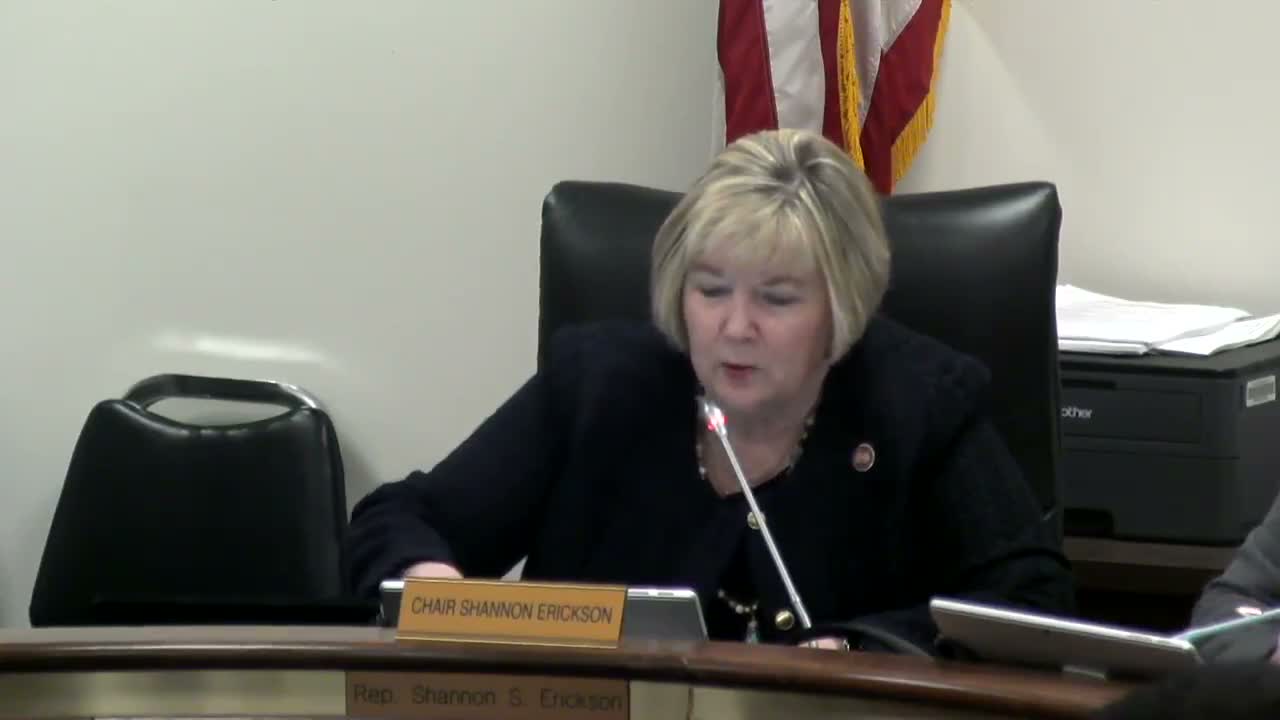
The Education and Public Works full committee advanced H.5179 on a unanimous committee vote after adopting an amendment that requires state-supported colleges and technical institutions to share campus mapping information with the South Carolina Law Enforcement Division at least once every two years.
The bill, as described by Lieutenant Colonel Alex Carney of Critical Response Group, would establish a statewide mapping-data program housed in SLED to give public-safety agencies interoperable, usable campus maps for state-supported colleges, universities and technical institutions. "This is something that you can sustain in years to come," Carney told the committee, describing the maps as compatible with existing local software and accessible to 9-1-1 centers, vehicles, mobile apps and even printed map books.
Carney, a Marine Corps special operations officer and co-founder of Critical Response Group, told lawmakers that college campuses present complex tactical environments — multiple buildings, mixed uses, construction and overlapping jurisdictions — and that shared, accurate mapping data "can be the difference between a coordinated response and a delayed one." He urged members to advance the bill and said that other states, including Michigan, have followed a similar path.
Committee members focused questions on confidentiality, practical access for first responders, update cadence and cost. Representative Tipple asked whether the data would be publicly available; Carney said it "would not be" and that the bill would protect the mapping as confidential information. On how responders would access maps on scene, Carney said systems vary by jurisdiction and equipment: "The 9-1-1 center will look at the mapping data through the software they use to find the location of a 9-1-1 call," he said, adding that mobile apps or printed map books are used where appropriate.
Members pressed for implementation and timelines. Carney estimated that mapping a small technical school could take a few months, while a large urban campus could take eight months to a year; he said the program could start delivering maps for initial institutions within three to four months and run multiple institutions concurrently.
The committee adopted an amendment offered by the chairwoman to require participating colleges to provide updated mapping information to SLED at least once every two years, and the amendment passed by roll call 17–0 with one member absent. The committee then heard a separate amendment from Representative Frank that would have expressly invoked the state's consolidated procurement code and specified an RFP process for future contracting. Frank said the change would add "transparency" as the program grows and involve other vendors; the chairwoman and staff responded that the amendment inserted procurement language that does not match the state code they normally use and that it needed more time for review.
After brief debate, Representative McGinnis moved to table Frank's procurement amendment; the committee tabled it by roll call 13–3 with two absent. With the procurement language set aside for later consideration, the committee then voted to report H.5179 favorably as amended by a recorded vote of 17–0 with one absent.
The bill now leaves committee with a requirement for at least biennial updates from colleges and with procurement-process questions unresolved. Committee members framed the measure as a public-safety improvement for students and staff: "This sends the right message to all of our parents and constituents and students that this committee is doing the hard work to keep everyone safe," Mister Grant said after the vote. The committee adjourned with the bill advanced to the next stage of the legislative process.
Votes at a glance: the chairwoman's amendment (minimum two-year update cadence) adopted 17–0, one absent; Representative Frank's procurement amendment tabled 13–3, two absent; bill reported favorably as amended 17–0, one absent.
The bill, as described by Lieutenant Colonel Alex Carney of Critical Response Group, would establish a statewide mapping-data program housed in SLED to give public-safety agencies interoperable, usable campus maps for state-supported colleges, universities and technical institutions. "This is something that you can sustain in years to come," Carney told the committee, describing the maps as compatible with existing local software and accessible to 9-1-1 centers, vehicles, mobile apps and even printed map books.
Carney, a Marine Corps special operations officer and co-founder of Critical Response Group, told lawmakers that college campuses present complex tactical environments — multiple buildings, mixed uses, construction and overlapping jurisdictions — and that shared, accurate mapping data "can be the difference between a coordinated response and a delayed one." He urged members to advance the bill and said that other states, including Michigan, have followed a similar path.
Committee members focused questions on confidentiality, practical access for first responders, update cadence and cost. Representative Tipple asked whether the data would be publicly available; Carney said it "would not be" and that the bill would protect the mapping as confidential information. On how responders would access maps on scene, Carney said systems vary by jurisdiction and equipment: "The 9-1-1 center will look at the mapping data through the software they use to find the location of a 9-1-1 call," he said, adding that mobile apps or printed map books are used where appropriate.
Members pressed for implementation and timelines. Carney estimated that mapping a small technical school could take a few months, while a large urban campus could take eight months to a year; he said the program could start delivering maps for initial institutions within three to four months and run multiple institutions concurrently.
The committee adopted an amendment offered by the chairwoman to require participating colleges to provide updated mapping information to SLED at least once every two years, and the amendment passed by roll call 17–0 with one member absent. The committee then heard a separate amendment from Representative Frank that would have expressly invoked the state's consolidated procurement code and specified an RFP process for future contracting. Frank said the change would add "transparency" as the program grows and involve other vendors; the chairwoman and staff responded that the amendment inserted procurement language that does not match the state code they normally use and that it needed more time for review.
After brief debate, Representative McGinnis moved to table Frank's procurement amendment; the committee tabled it by roll call 13–3 with two absent. With the procurement language set aside for later consideration, the committee then voted to report H.5179 favorably as amended by a recorded vote of 17–0 with one absent.
The bill now leaves committee with a requirement for at least biennial updates from colleges and with procurement-process questions unresolved. Committee members framed the measure as a public-safety improvement for students and staff: "This sends the right message to all of our parents and constituents and students that this committee is doing the hard work to keep everyone safe," Mister Grant said after the vote. The committee adjourned with the bill advanced to the next stage of the legislative process.
Votes at a glance: the chairwoman's amendment (minimum two-year update cadence) adopted 17–0, one absent; Representative Frank's procurement amendment tabled 13–3, two absent; bill reported favorably as amended 17–0, one absent.
View the Full Meeting & All Its Details
This article offers just a summary. Unlock complete video, transcripts, and insights as a Founder Member.
✓
Watch full, unedited meeting videos
✓
Search every word spoken in unlimited transcripts
✓
AI summaries & real-time alerts (all government levels)
✓
Permanent access to expanding government content
30-day money-back guarantee
