Committee advances bill to require autism training for first responders
February 25, 2026 | 2026 Legislative Meetings, South Carolina
This article was created by AI summarizing key points discussed. AI makes mistakes, so for full details and context, please refer to the video of the full meeting. Please report any errors so we can fix them. Report an error »
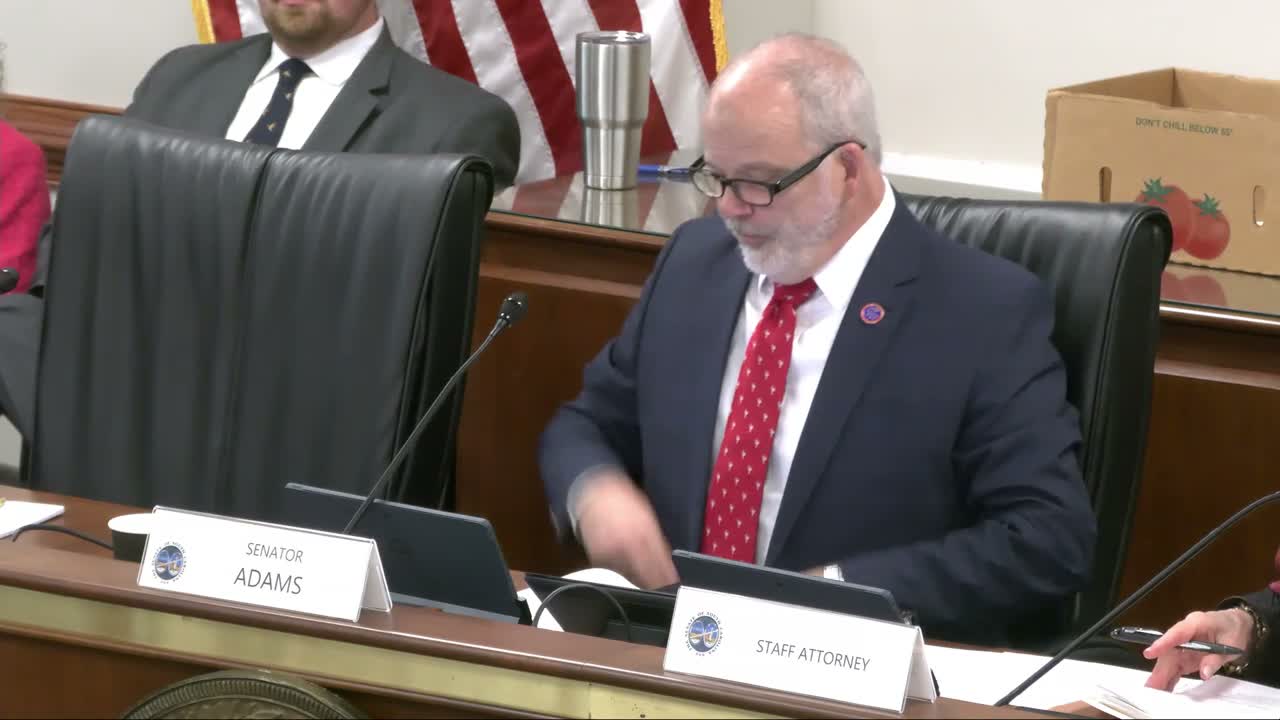
A South Carolina legislative committee voted to advance a bill that would require law enforcement officers to complete continuing-education credits on autism spectrum disorder and would add autism-related coursework to emergency medical technician training.
Representative Landing, sponsor of the measure, told the committee the proposal grew from work with former chief of police Carl Ritchie (now Charleston County sheriff) and advocacy group Just Be. "We need a bill to create, as you might recall, a license tag...and to make sure we don't have an overload situation when either a first responder...comes by with the sirens and the horns blowing," Landing said, arguing that training could prevent misunderstandings that lead to physical confrontations or other harms.
Sally Foster, director of the South Carolina Sheriffs Association, told the committee the association "fully support[s] this bill," and said the training already has approval from the Law Enforcement Training Council and the Criminal Justice Academy. Foster said the measure would build community confidence and provide uniform training across the state.
Supporters described real-world risks the training aims to reduce, including situations in which an autistic person runs back into a burning house or does not respond to officers’ commands. The bill would leave the exact number of annual credits to the South Carolina Law Enforcement Training Council.
There were no recorded roll-call objections; a member moved for a favorable recommendation, the motion was seconded, and the committee advanced the bill by voice vote to full committee. No formal amendments were reported in committee.
The bill now moves to a full committee for further consideration.
Representative Landing, sponsor of the measure, told the committee the proposal grew from work with former chief of police Carl Ritchie (now Charleston County sheriff) and advocacy group Just Be. "We need a bill to create, as you might recall, a license tag...and to make sure we don't have an overload situation when either a first responder...comes by with the sirens and the horns blowing," Landing said, arguing that training could prevent misunderstandings that lead to physical confrontations or other harms.
Sally Foster, director of the South Carolina Sheriffs Association, told the committee the association "fully support[s] this bill," and said the training already has approval from the Law Enforcement Training Council and the Criminal Justice Academy. Foster said the measure would build community confidence and provide uniform training across the state.
Supporters described real-world risks the training aims to reduce, including situations in which an autistic person runs back into a burning house or does not respond to officers’ commands. The bill would leave the exact number of annual credits to the South Carolina Law Enforcement Training Council.
There were no recorded roll-call objections; a member moved for a favorable recommendation, the motion was seconded, and the committee advanced the bill by voice vote to full committee. No formal amendments were reported in committee.
The bill now moves to a full committee for further consideration.
View the Full Meeting & All Its Details
This article offers just a summary. Unlock complete video, transcripts, and insights as a Founder Member.
✓
Watch full, unedited meeting videos
✓
Search every word spoken in unlimited transcripts
✓
AI summaries & real-time alerts (all government levels)
✓
Permanent access to expanding government content
30-day money-back guarantee
