Morrow County says state will fund roughly $4.3M of a planned $5M jail renovation; county to cover about 13.6%
November 27, 2024 | Morrow County, Ohio
This article was created by AI summarizing key points discussed. AI makes mistakes, so for full details and context, please refer to the video of the full meeting. Please report any errors so we can fix them. Report an error »
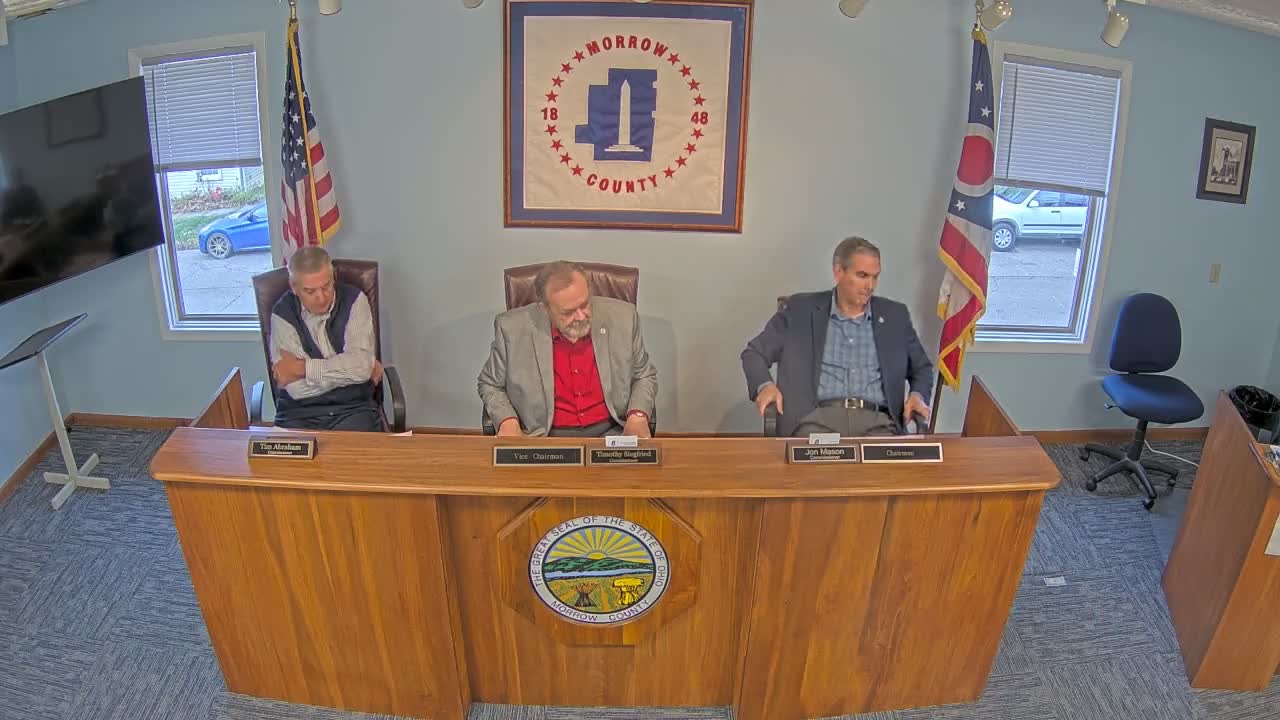
An unidentified county official (identified in the transcript as Speaker 1) told Morrow County commissioners on Nov. 27 that the county has won a state grant to support an estimated $5 million renovation of the county jail and detention facilities.
"The study proposed adding on to the jail," Speaker 1 said, describing a shift away from large dormitory-style housing to smaller pods and individual cells, plumbing and bathroom upgrades, and replacement of older finishes to improve sanitization and safety. "We only had to contribute 13.64% to the project," the speaker said, describing the county's local-match requirement.
According to the presentation, the state will contribute just over $4,300,000 toward the project, leaving the county responsible for about 13.64% of eligible costs — approximately $650,000 on a $5,000,000 project. The official said the county had applied multiple years for the program and was awarded funding this cycle.
The speaker walked commissioners through a five-phase approval and delivery sequence required by the granting and oversight agencies: schematic design, design review (phase 2), construction documents, bidding and contractor selection, and post-construction closeout. The county estimated about nine months to complete design and selection phases, with the earliest realistic construction start in late 2025 and more likely activity in 2026, depending on bidding and approvals.
County staff also told the commission that the sheriff's office has agreed to transfer $200,000 from its bail funds into a new special account to help meet the required local match. "At the end of the year, they said, let's go ahead and transfer 200,000 out of their bail funds to this special fund that's just being created for this project," Speaker 1 said.
Officials cautioned that the final scope will depend on construction bids; some items in the study may be deferred if costs exceed estimates. The presentation noted the jail was built in 1996 and has not had major upgrades since, and that detention standards have shifted away from large dormitory housing toward smaller housing units to improve safety and management.
Next steps described at the meeting include confirming an architect (staff said they had completed an RFQ scoring process and will present a recommended firm after legal review), completing design phases for review, and securing contractor bids. A formal resolution vote is expected to be scheduled in mid-January after staff finalize the resolution language and obtain prosecutor review to ensure compliance with the Ohio Revised Code (ORC).
"The study proposed adding on to the jail," Speaker 1 said, describing a shift away from large dormitory-style housing to smaller pods and individual cells, plumbing and bathroom upgrades, and replacement of older finishes to improve sanitization and safety. "We only had to contribute 13.64% to the project," the speaker said, describing the county's local-match requirement.
According to the presentation, the state will contribute just over $4,300,000 toward the project, leaving the county responsible for about 13.64% of eligible costs — approximately $650,000 on a $5,000,000 project. The official said the county had applied multiple years for the program and was awarded funding this cycle.
The speaker walked commissioners through a five-phase approval and delivery sequence required by the granting and oversight agencies: schematic design, design review (phase 2), construction documents, bidding and contractor selection, and post-construction closeout. The county estimated about nine months to complete design and selection phases, with the earliest realistic construction start in late 2025 and more likely activity in 2026, depending on bidding and approvals.
County staff also told the commission that the sheriff's office has agreed to transfer $200,000 from its bail funds into a new special account to help meet the required local match. "At the end of the year, they said, let's go ahead and transfer 200,000 out of their bail funds to this special fund that's just being created for this project," Speaker 1 said.
Officials cautioned that the final scope will depend on construction bids; some items in the study may be deferred if costs exceed estimates. The presentation noted the jail was built in 1996 and has not had major upgrades since, and that detention standards have shifted away from large dormitory housing toward smaller housing units to improve safety and management.
Next steps described at the meeting include confirming an architect (staff said they had completed an RFQ scoring process and will present a recommended firm after legal review), completing design phases for review, and securing contractor bids. A formal resolution vote is expected to be scheduled in mid-January after staff finalize the resolution language and obtain prosecutor review to ensure compliance with the Ohio Revised Code (ORC).
View the Full Meeting & All Its Details
This article offers just a summary. Unlock complete video, transcripts, and insights as a Founder Member.
✓
Watch full, unedited meeting videos
✓
Search every word spoken in unlimited transcripts
✓
AI summaries & real-time alerts (all government levels)
✓
Permanent access to expanding government content
30-day money-back guarantee
