San Angelo finance staff lays out menu of revenue options to close budget gaps
February 26, 2026 | San Angelo, Tom Green County, Texas
This article was created by AI summarizing key points discussed. AI makes mistakes, so for full details and context, please refer to the video of the full meeting. Please report any errors so we can fix them. Report an error »
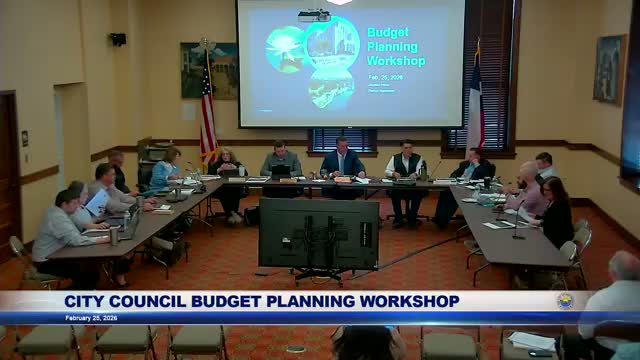
Finance Director Jonathan (identified in the transcript) offered council a broad portfolio of options to increase revenues and reduce expenditures as the city prepares for the budget cycle. He described legal and practical steps needed to pursue each option and emphasized these were ideas for council direction, not formal proposals.
Revenue ideas highlighted included:
- A limited cemetery property-tax add-on (up to five cents) to replace a roughly $95,000 annual general-fund subsidy to Fairmount Cemetery, subject to legal vetting and interaction with the state 3.5% cap.
- A credit-card convenience or processing fee aimed at recouping roughly $166,000 in general-fund card processing costs (and larger sums for enterprise funds).
- Levying impact fees on new development to help pay for infrastructure related to growth.
- Introducing paid short- and long-term parking downtown and at the airport or expanding the Texas Bank Sports Complex tournament program to generate visitor-driven revenue.
- Examining indirect cost allocations so enterprise funds (water, sewer) pay a fair share of internal services such as engineering and legal.
On the expenditure side staff suggested: vacancy-control reviews, modest procurement and janitorial savings, temporary across-the-board general-fund reductions (excluding public safety), reorganizing shared services (finance/IT/budget) for efficiency, and evaluating subsidized enterprises (golf/senior center) for potential divestiture or restructured support.
Council members repeatedly asked for: (1) legal review of options (especially anything tied to property tax or voter approvals); (2) clear dollar estimates for each idea; and (3) communication plans for options that affect seniors or low-income residents, such as changes to the over-65 freeze or fee expansion. Finance said it would return with vetted cost estimates and legal analysis.
Revenue ideas highlighted included:
- A limited cemetery property-tax add-on (up to five cents) to replace a roughly $95,000 annual general-fund subsidy to Fairmount Cemetery, subject to legal vetting and interaction with the state 3.5% cap.
- A credit-card convenience or processing fee aimed at recouping roughly $166,000 in general-fund card processing costs (and larger sums for enterprise funds).
- Levying impact fees on new development to help pay for infrastructure related to growth.
- Introducing paid short- and long-term parking downtown and at the airport or expanding the Texas Bank Sports Complex tournament program to generate visitor-driven revenue.
- Examining indirect cost allocations so enterprise funds (water, sewer) pay a fair share of internal services such as engineering and legal.
On the expenditure side staff suggested: vacancy-control reviews, modest procurement and janitorial savings, temporary across-the-board general-fund reductions (excluding public safety), reorganizing shared services (finance/IT/budget) for efficiency, and evaluating subsidized enterprises (golf/senior center) for potential divestiture or restructured support.
Council members repeatedly asked for: (1) legal review of options (especially anything tied to property tax or voter approvals); (2) clear dollar estimates for each idea; and (3) communication plans for options that affect seniors or low-income residents, such as changes to the over-65 freeze or fee expansion. Finance said it would return with vetted cost estimates and legal analysis.
View the Full Meeting & All Its Details
This article offers just a summary. Unlock complete video, transcripts, and insights as a Founder Member.
✓
Watch full, unedited meeting videos
✓
Search every word spoken in unlimited transcripts
✓
AI summaries & real-time alerts (all government levels)
✓
Permanent access to expanding government content
30-day money-back guarantee
