Commissioners debate home‑occupation limits, B&B rules and enforcement tools
February 26, 2026 | Chesapeake Beach, Calvert County, Maryland
This article was created by AI summarizing key points discussed. AI makes mistakes, so for full details and context, please refer to the video of the full meeting. Please report any errors so we can fix them. Report an error »
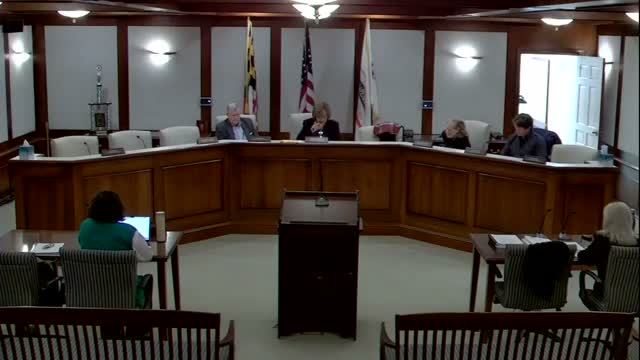
A written public comment from a resident, Ethan Johnson, prompted a detailed commission discussion about how the draft ordinance will treat home‑based businesses and short‑term lodging.
Staff outlined a two‑tier approach: minor home occupations (low traffic, largely in‑home activity) versus major home occupations (allowing on‑site customers, limited employees). Commissioners focused on enforceable metrics for major occupations — options included limiting the share of the dwelling used, capping gross sales, specifying maximum customer or delivery trips, and setting hours for on‑site sales and employees. Several members favored daylight business hours to protect residential character; staff proposed 8 a.m.–6 p.m. as a default and noted alternatives such as 8 a.m.–8 p.m. were discussed.
Bed‑and‑breakfast rules drew particular attention. Staff read the proposed definition aloud: "An owner occupied or manager occupied building where for compensation and only by prearrangement for definite periods, lodging and meals are provided not to exceed 90 days per year. Limited to 5 guest rooms excluding resident management." Commissioners expressed concern about permitting manager‑occupied B&Bs and agreed to change the definition back to owner‑occupied only; staff will remove the manager‑occupied language.
Commissioners also debated parking requirements tied to guest rooms and home‑business customers. Staff said on‑site parking is required for B&B guest rooms and that lack of on‑lot parking should prevent permit issuance. For home occupations, staff proposed additional parking for nonresident employees and thought enforcement would rely in part on neighbor complaints and zoning administration.
What’s next: staff will draft concrete conditions for minor/major home occupations (including proposed hours, parking, dwelling‑area limits and delivery limits) and bring the recommended language back to the commission. The commission signaled it prefers owner‑occupied B&Bs and wants clearer enforceable limits for home businesses.
Staff outlined a two‑tier approach: minor home occupations (low traffic, largely in‑home activity) versus major home occupations (allowing on‑site customers, limited employees). Commissioners focused on enforceable metrics for major occupations — options included limiting the share of the dwelling used, capping gross sales, specifying maximum customer or delivery trips, and setting hours for on‑site sales and employees. Several members favored daylight business hours to protect residential character; staff proposed 8 a.m.–6 p.m. as a default and noted alternatives such as 8 a.m.–8 p.m. were discussed.
Bed‑and‑breakfast rules drew particular attention. Staff read the proposed definition aloud: "An owner occupied or manager occupied building where for compensation and only by prearrangement for definite periods, lodging and meals are provided not to exceed 90 days per year. Limited to 5 guest rooms excluding resident management." Commissioners expressed concern about permitting manager‑occupied B&Bs and agreed to change the definition back to owner‑occupied only; staff will remove the manager‑occupied language.
Commissioners also debated parking requirements tied to guest rooms and home‑business customers. Staff said on‑site parking is required for B&B guest rooms and that lack of on‑lot parking should prevent permit issuance. For home occupations, staff proposed additional parking for nonresident employees and thought enforcement would rely in part on neighbor complaints and zoning administration.
What’s next: staff will draft concrete conditions for minor/major home occupations (including proposed hours, parking, dwelling‑area limits and delivery limits) and bring the recommended language back to the commission. The commission signaled it prefers owner‑occupied B&Bs and wants clearer enforceable limits for home businesses.
View the Full Meeting & All Its Details
This article offers just a summary. Unlock complete video, transcripts, and insights as a Founder Member.
✓
Watch full, unedited meeting videos
✓
Search every word spoken in unlimited transcripts
✓
AI summaries & real-time alerts (all government levels)
✓
Permanent access to expanding government content
30-day money-back guarantee
