State officials describe HR 1 impact on SNAP: less federal admin support, possible state benefit share and eligibility cuts
February 25, 2026 | 2026 Legislature MN, Minnesota
This article was created by AI summarizing key points discussed. AI makes mistakes, so for full details and context, please refer to the video of the full meeting. Please report any errors so we can fix them. Report an error »
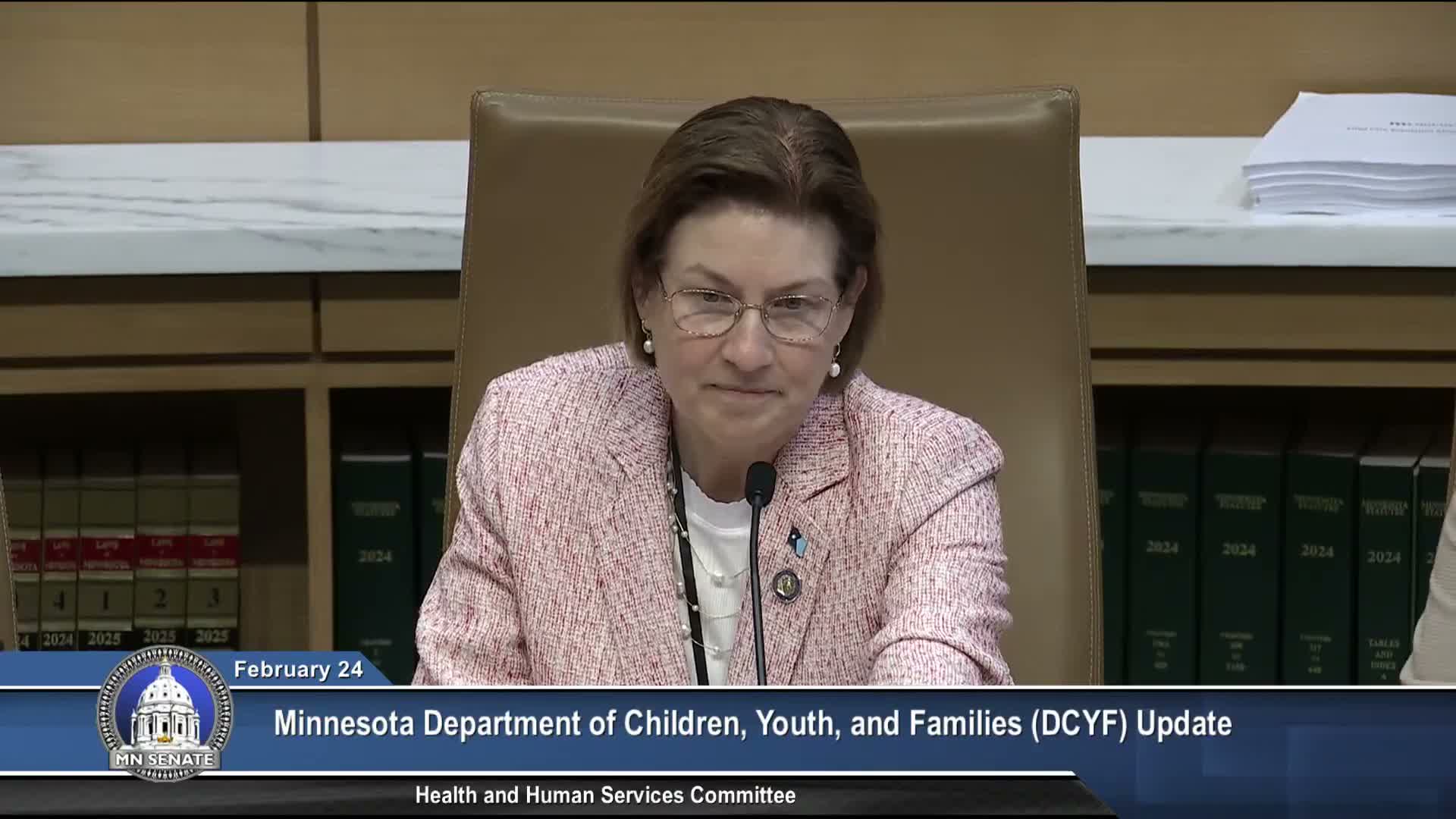
Assistant Commissioner Dr. Shaneen Moore told the committee that the federal HR 1 law (described in DCYF materials as the "1 Big Beautiful Bill Act") makes sweeping changes to SNAP that will shift costs to states and change eligibility rules.
Moore said, citing the Congressional Budget Office, that "HR 1 cuts federal SNAP spending by $187,000,000,000 over the next 10 years." She explained that HR 1 reduces the federal reimbursement rate for SNAP administrative expenses from 50% to 25% effective Oct. 1, and that Minnesota expects to receive an estimated $39,000,000 less annually for administrative costs as a result.
On benefit costs, Moore said HR 1 adds a state share requirement based on payment error rates starting 10/01/2027, with state shares ranging from 0% (for error rates under 6%) up to 15% (for error rates over 10%); Minnesota's error rate in federal fiscal year 2024 was 8.9%, and DCYF estimated the state share could be about 10% of SNAP benefit costs (approximately $97,000,000). Moore also noted changes to work requirements (expanding the required work‑eligible age up to 64, narrowing exemptions, and applying requirements to some families with dependent children) and restrictions narrowing eligibility for some lawful noncitizens, which DCYF estimated will make roughly 9,000 legal noncitizens in Minnesota ineligible for federal SNAP benefits on average each month.
Moore described additional HR 1 changes: a new cost neutrality restriction on benefit recalculation that will limit USDA’s ability to update benefits via the Thrifty Food Plan (she estimated an average $5 cut per SNAP household per month beginning in 2027), restrictions on treating Internet costs as shelter expenses, and elimination of SNAP Ed funding, which Moore said amounted to about $9.5 million in Minnesota that supported nutrition classes and outreach.
Committee reactions were immediate. Senator Bridal urged urgent attention: "This is gonna have real devastating impacts in people's lives," she said, and several members asked how DCYF and counties are mitigating payment errors. Moore said the state convened steering committees with counties and tribes, updated policy manuals, rolled out trainings, and is pursuing technology and process changes to reduce payment errors and improve case‑management accuracy.
Next steps and uncertainty: Moore said DCYF is coordinating with county and tribal partners on an implementation plan, policy guidance and training; the department is also proceeding with Maxis modernization and exploring income‑verification tools, but she repeatedly cautioned that federal guidance has sometimes been delayed or unclear and that litigation has been necessary in some cases to clarify federal directives.
Closing: Moore asked legislators to view HR 1 implementation as a major operational challenge that will require training, system updates and potentially additional state investment to preserve program access and integrity.
Moore said, citing the Congressional Budget Office, that "HR 1 cuts federal SNAP spending by $187,000,000,000 over the next 10 years." She explained that HR 1 reduces the federal reimbursement rate for SNAP administrative expenses from 50% to 25% effective Oct. 1, and that Minnesota expects to receive an estimated $39,000,000 less annually for administrative costs as a result.
On benefit costs, Moore said HR 1 adds a state share requirement based on payment error rates starting 10/01/2027, with state shares ranging from 0% (for error rates under 6%) up to 15% (for error rates over 10%); Minnesota's error rate in federal fiscal year 2024 was 8.9%, and DCYF estimated the state share could be about 10% of SNAP benefit costs (approximately $97,000,000). Moore also noted changes to work requirements (expanding the required work‑eligible age up to 64, narrowing exemptions, and applying requirements to some families with dependent children) and restrictions narrowing eligibility for some lawful noncitizens, which DCYF estimated will make roughly 9,000 legal noncitizens in Minnesota ineligible for federal SNAP benefits on average each month.
Moore described additional HR 1 changes: a new cost neutrality restriction on benefit recalculation that will limit USDA’s ability to update benefits via the Thrifty Food Plan (she estimated an average $5 cut per SNAP household per month beginning in 2027), restrictions on treating Internet costs as shelter expenses, and elimination of SNAP Ed funding, which Moore said amounted to about $9.5 million in Minnesota that supported nutrition classes and outreach.
Committee reactions were immediate. Senator Bridal urged urgent attention: "This is gonna have real devastating impacts in people's lives," she said, and several members asked how DCYF and counties are mitigating payment errors. Moore said the state convened steering committees with counties and tribes, updated policy manuals, rolled out trainings, and is pursuing technology and process changes to reduce payment errors and improve case‑management accuracy.
Next steps and uncertainty: Moore said DCYF is coordinating with county and tribal partners on an implementation plan, policy guidance and training; the department is also proceeding with Maxis modernization and exploring income‑verification tools, but she repeatedly cautioned that federal guidance has sometimes been delayed or unclear and that litigation has been necessary in some cases to clarify federal directives.
Closing: Moore asked legislators to view HR 1 implementation as a major operational challenge that will require training, system updates and potentially additional state investment to preserve program access and integrity.
View the Full Meeting & All Its Details
This article offers just a summary. Unlock complete video, transcripts, and insights as a Founder Member.
✓
Watch full, unedited meeting videos
✓
Search every word spoken in unlimited transcripts
✓
AI summaries & real-time alerts (all government levels)
✓
Permanent access to expanding government content
30-day money-back guarantee
