FIT-based colorectal screening pilots and an NCI-funded implementation center aim to increase screening in Mexico
September 06, 2024 | National Cancer Institute (NCI), National Institutes of Health (NIH), Department of Health and Human Services (HHS), Executive, Federal
This article was created by AI summarizing key points discussed. AI makes mistakes, so for full details and context, please refer to the video of the full meeting. Please report any errors so we can fix them. Report an error »
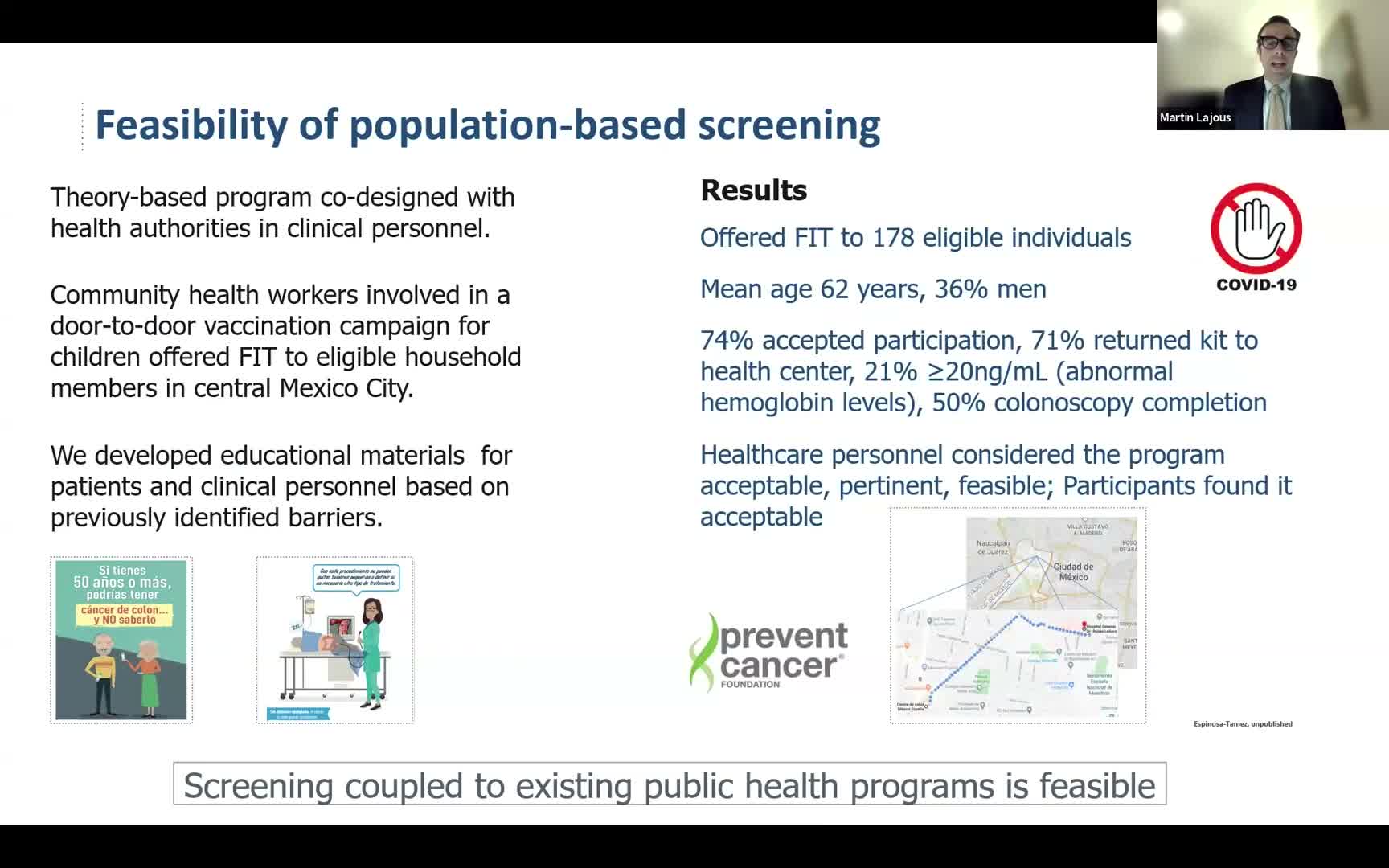
Investigators ran a small community pilot in a low-income urban neighborhood using community health workers to distribute FIT kits door-to-door; despite COVID-related disruptions, they reported that 71% of kit recipients returned FIT kits to primary-care centers in the small sample. In a separate feasibility study in a social-security health system in Monterrey (named "Iste Leon" in the presentation), researchers enrolled 300 eligible individuals with a three-step outreach (email, automated phone call, navigation call). Roughly 40% attended an initial appointment, about 30% accepted FIT, and among those who received a FIT kit the return rate was approximately 83%.
"Screening could be feasible in Mexico," Leju said, while cautioning that feasibility differs by health-care setting and that context-appropriate implementation strategies are needed. The team has received funding for a Mexico center to "leverage implementation science to optimize strategies for cancer control," an NCI initiative to adapt evidence-based interventions. Planned work includes a colorectal cancer research project using a type-2 hybrid randomized implementation-effectiveness trial, evaluation of evidence-based interventions to support FIT return, and development of a costing framework and economic evaluation.
Leju described barriers identified in pilots—logistical challenges, variable health-system engagement and limited capacity in some institutions—and stressed the importance of designing interventions appropriate to each health system rather than assuming one-size-fits-all solutions.
The presentation emphasized the need to combine effectiveness outcomes with implementation measures (uptake, reach, fidelity) and to estimate direct costs to inform scaling decisions across Mexico’s diverse health systems.
View the Full Meeting & All Its Details
This article offers just a summary. Unlock complete video, transcripts, and insights as a Founder Member.
30-day money-back guarantee
