Wappingers board unanimously extends enhanced senior-property tax exemption for 2026–27
February 24, 2026 | Wappingers Central School District, School Districts, New York
This article was created by AI summarizing key points discussed. AI makes mistakes, so for full details and context, please refer to the video of the full meeting. Please report any errors so we can fix them. Report an error »
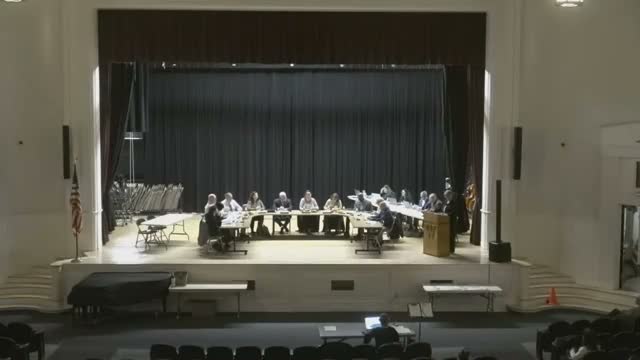
The Wappingers Central School District Board of Education voted unanimously Feb. 24 to extend the enhanced partial property tax exemption for eligible senior citizens under Real Property Tax Law section 467 for the 2026–27 school year, with the measure effective July 1, 2026.
Miss Dainty, who presented the proposal to the board, said the law expands property tax relief for qualified seniors and that the district had previously approved similar exemptions. She told the board the district received guidance from its attorneys and that the board must take action before March 1 so municipalities can include the change on tax rolls. "Real property tax law section 4 6 7 expands property tax relief for eligible senior citizens," she said, and described the renewal as "effective 07/01/2026."
Miss Dainty said the enhanced provisions increase the upper end of the sliding-scale exemption. In her presentation she stated there was "approximately $5,000, I think, of lower income allowability," and that the practical effect would raise the maximum exemption in some cases from the district's prior 50% up to 65% for qualifying households.
A trustee asked how much additional revenue must be raised when a taxpayer's income exceeds the threshold and who would "make up the difference." Miss Dainty replied that it depends on the assessed value of the property and the tax rate in the taxpayer's municipality and that the change shifts responsibility within the existing levy across the district's seven municipalities rather than creating a new, separate charge.
After the hearing the board read a resolution that cited prior action in December 2022 and the governor's recent legislation that modified income eligibility limits. A motion to adopt the resolution was moved and seconded on the record and the board approved the measure by a unanimous vote. The board also voted to close the public hearing and resume regular business.
Next steps: the district will confirm the adopted income-eligibility schedule with local municipalities so the exemption can be added to tax rolls for the 2026–27 school year.
Miss Dainty, who presented the proposal to the board, said the law expands property tax relief for qualified seniors and that the district had previously approved similar exemptions. She told the board the district received guidance from its attorneys and that the board must take action before March 1 so municipalities can include the change on tax rolls. "Real property tax law section 4 6 7 expands property tax relief for eligible senior citizens," she said, and described the renewal as "effective 07/01/2026."
Miss Dainty said the enhanced provisions increase the upper end of the sliding-scale exemption. In her presentation she stated there was "approximately $5,000, I think, of lower income allowability," and that the practical effect would raise the maximum exemption in some cases from the district's prior 50% up to 65% for qualifying households.
A trustee asked how much additional revenue must be raised when a taxpayer's income exceeds the threshold and who would "make up the difference." Miss Dainty replied that it depends on the assessed value of the property and the tax rate in the taxpayer's municipality and that the change shifts responsibility within the existing levy across the district's seven municipalities rather than creating a new, separate charge.
After the hearing the board read a resolution that cited prior action in December 2022 and the governor's recent legislation that modified income eligibility limits. A motion to adopt the resolution was moved and seconded on the record and the board approved the measure by a unanimous vote. The board also voted to close the public hearing and resume regular business.
Next steps: the district will confirm the adopted income-eligibility schedule with local municipalities so the exemption can be added to tax rolls for the 2026–27 school year.
View the Full Meeting & All Its Details
This article offers just a summary. Unlock complete video, transcripts, and insights as a Founder Member.
✓
Watch full, unedited meeting videos
✓
Search every word spoken in unlimited transcripts
✓
AI summaries & real-time alerts (all government levels)
✓
Permanent access to expanding government content
30-day money-back guarantee
