Draft beachfront‑lighting rules prompt detailed debate over enforcement and fairness
February 25, 2026 | Glynn County, Georgia
This article was created by AI summarizing key points discussed. AI makes mistakes, so for full details and context, please refer to the video of the full meeting. Please report any errors so we can fix them. Report an error »
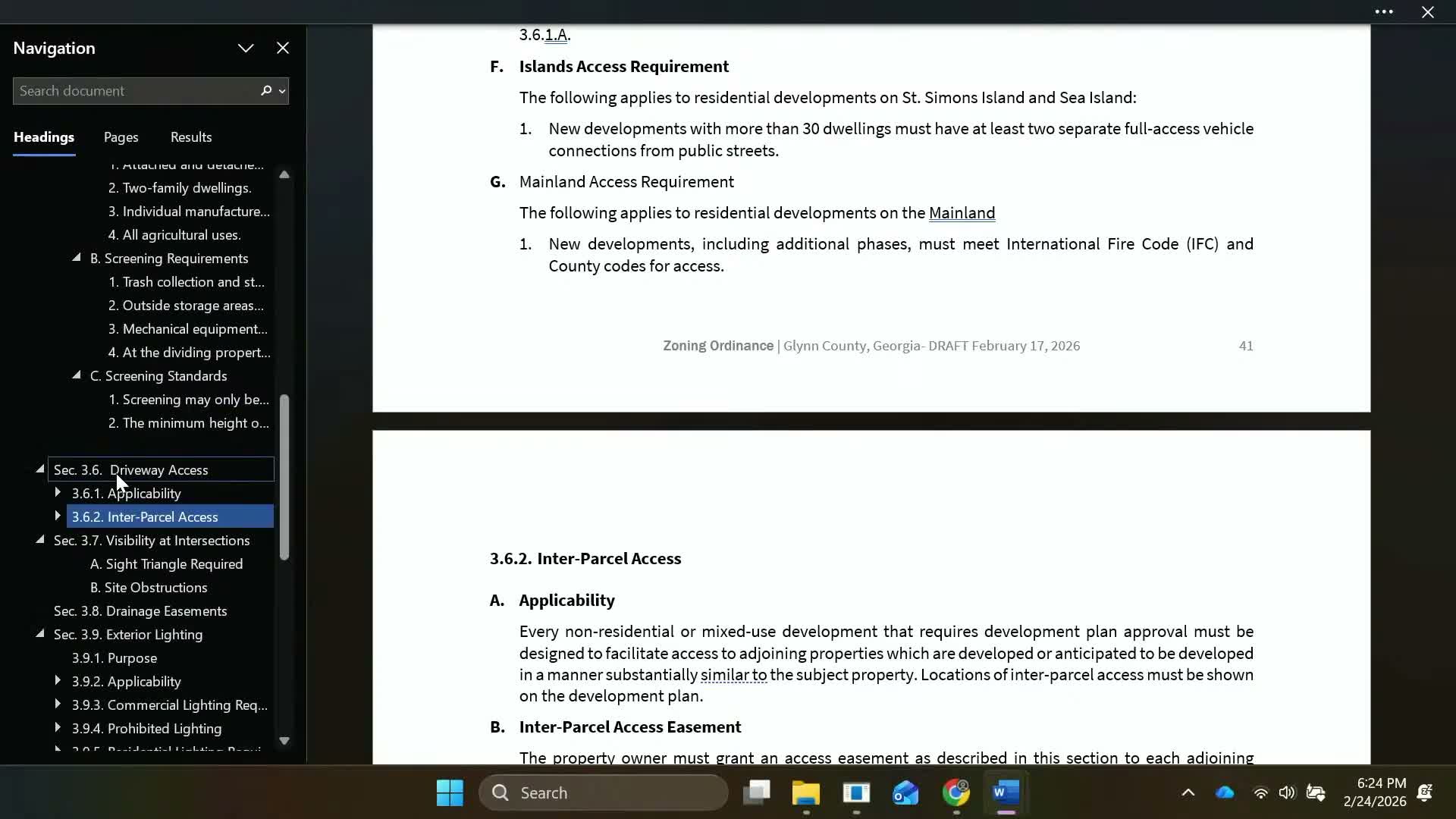
Staff moved beachfront lighting provisions from the Beach and Dune Protection district into the exterior lighting section of the draft zoning ordinance and presented stricter language intended to reduce harmful light at night on nesting beaches. The draft limits visible light sources and references permitted wavelengths: staff said the draft allows light sources that produce wavelengths "not less than 560 nanometers" or fixtures authorized by the Department of Natural Resources.
Commissioners asked whether existing lighting would be grandfathered and how the county would enforce the rule. One commissioner summarized the concern: enforcing a stricter standard only for new construction and remodels "punishes the people that are renovating their home" while leaving many existing fixtures untouched. Staff responded that the draft targets new construction and "modifications" that change fixtures or lighting systems; they repeated that enforcement is complaint driven and that, in nighttime violation cases, law enforcement would be the likely responder if alerted.
Staff said a DNR representative presented wavelength data at earlier town halls and offered to provide an approved fixture and bulb list; planners agreed to circulate an approved‑fixture list to help homeowners and contractors make compliant choices. Commissioners requested clearer definitions of "modification/alteration" so trivial repairs would not inadvertently trigger full compliance obligations.
Why it matters: beachfront lighting rules affect oceanfront homeowners, sea turtle conservation groups and the enforceability of the code. Commissioners signaled they want clearer triggers, explicit grandfathering language and an outreach plan to help property owners comply rather than rely only on complaint‑driven enforcement.
What staff will do next: provide an approved fixture/bulb list (per DNR guidance where possible), refine definitions for "modification" and clarify when existing lighting becomes subject to the new standard.
Commissioners asked whether existing lighting would be grandfathered and how the county would enforce the rule. One commissioner summarized the concern: enforcing a stricter standard only for new construction and remodels "punishes the people that are renovating their home" while leaving many existing fixtures untouched. Staff responded that the draft targets new construction and "modifications" that change fixtures or lighting systems; they repeated that enforcement is complaint driven and that, in nighttime violation cases, law enforcement would be the likely responder if alerted.
Staff said a DNR representative presented wavelength data at earlier town halls and offered to provide an approved fixture and bulb list; planners agreed to circulate an approved‑fixture list to help homeowners and contractors make compliant choices. Commissioners requested clearer definitions of "modification/alteration" so trivial repairs would not inadvertently trigger full compliance obligations.
Why it matters: beachfront lighting rules affect oceanfront homeowners, sea turtle conservation groups and the enforceability of the code. Commissioners signaled they want clearer triggers, explicit grandfathering language and an outreach plan to help property owners comply rather than rely only on complaint‑driven enforcement.
What staff will do next: provide an approved fixture/bulb list (per DNR guidance where possible), refine definitions for "modification" and clarify when existing lighting becomes subject to the new standard.
Don't Miss a Word: See the Full Meeting!
Go beyond summaries. Unlock every video, transcript, and key insight with a Founder Membership.
✓
Get instant access to full meeting videos
✓
Search and clip any phrase from complete transcripts
✓
Receive AI-powered summaries & custom alerts
✓
Enjoy lifetime, unrestricted access to government data
30-day money-back guarantee
