Speaker at House Committee urges paid family leave, highlights permanent employer tax credit
February 25, 2026 | House Committee on Education and the Workforce, House Committee, House, Legislative, Federal
This article was created by AI summarizing key points discussed. AI makes mistakes, so for full details and context, please refer to the video of the full meeting. Please report any errors so we can fix them. Report an error »
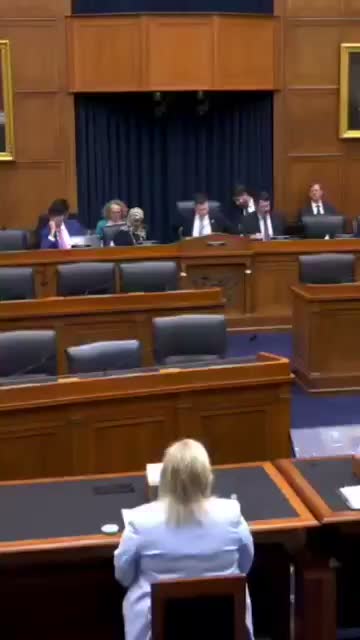
An unidentified speaker at a hearing of the House Committee on Education and the Workforce urged stronger protections for working families, arguing paid family leave improves child development and prevents parents from losing pay during emergencies.
The speaker framed the issue in broad terms, saying "the family is the most important fundamental unit of society" and warning that "too many parents are forced to choose between family obligations and professional responsibilities." The remarks noted that where once a middle-class family could live on one income, "both parents are often forced to work to pay for necessities," creating obstacles to caring for sick children or elderly relatives.
To support the case for paid leave, the speaker cited research, stating, "Numerous studies show increased brain development among infants whose parents are able to spend more time with them because of paid family leave." The speaker also described employer responses, observing that "many employers have responded by providing alternative work arrangements and flexible schedules," which can help employees balance care and work while improving employer retention.
The speaker further pointed to federal tax policy as precedent, saying, "In the working families tax cut, Republicans and President Trump led the way by making permanent a tax credit to employers who voluntarily offer at least 2 weeks of paid family and medical leave to their employees." The comment characterizes the tax credit as an incentive for employers to offer at least two weeks of leave; the speaker did not provide citations for the studies or specifics of the tax-credit statute in the transcript.
The hearing record does not show a formal motion, vote, or a named sponsor proposing new legislation in this excerpt; the speaker presented arguments and cited an existing federal tax incentive as support for policies expanding paid leave. The committee's next procedural steps were not stated in the provided transcript.
The committee discussion emphasized the economic pressures on families and cited both research and private-sector flexibility as rationales for policy action; the speaker recommended maintaining or expanding incentives that encourage employers to offer paid family and medical leave.
The speaker framed the issue in broad terms, saying "the family is the most important fundamental unit of society" and warning that "too many parents are forced to choose between family obligations and professional responsibilities." The remarks noted that where once a middle-class family could live on one income, "both parents are often forced to work to pay for necessities," creating obstacles to caring for sick children or elderly relatives.
To support the case for paid leave, the speaker cited research, stating, "Numerous studies show increased brain development among infants whose parents are able to spend more time with them because of paid family leave." The speaker also described employer responses, observing that "many employers have responded by providing alternative work arrangements and flexible schedules," which can help employees balance care and work while improving employer retention.
The speaker further pointed to federal tax policy as precedent, saying, "In the working families tax cut, Republicans and President Trump led the way by making permanent a tax credit to employers who voluntarily offer at least 2 weeks of paid family and medical leave to their employees." The comment characterizes the tax credit as an incentive for employers to offer at least two weeks of leave; the speaker did not provide citations for the studies or specifics of the tax-credit statute in the transcript.
The hearing record does not show a formal motion, vote, or a named sponsor proposing new legislation in this excerpt; the speaker presented arguments and cited an existing federal tax incentive as support for policies expanding paid leave. The committee's next procedural steps were not stated in the provided transcript.
The committee discussion emphasized the economic pressures on families and cited both research and private-sector flexibility as rationales for policy action; the speaker recommended maintaining or expanding incentives that encourage employers to offer paid family and medical leave.
Don't Miss a Word: See the Full Meeting!
Go beyond summaries. Unlock every video, transcript, and key insight with a Founder Membership.
✓
Get instant access to full meeting videos
✓
Search and clip any phrase from complete transcripts
✓
Receive AI-powered summaries & custom alerts
✓
Enjoy lifetime, unrestricted access to government data
30-day money-back guarantee
