Senate adopts Health and Welfare changes to bill allowing court petitions for autopsy reports
February 21, 2026 | SENATE, Committees, Legislative , Vermont
This article was created by AI summarizing key points discussed. AI makes mistakes, so for full details and context, please refer to the video of the full meeting. Please report any errors so we can fix them. Report an error »
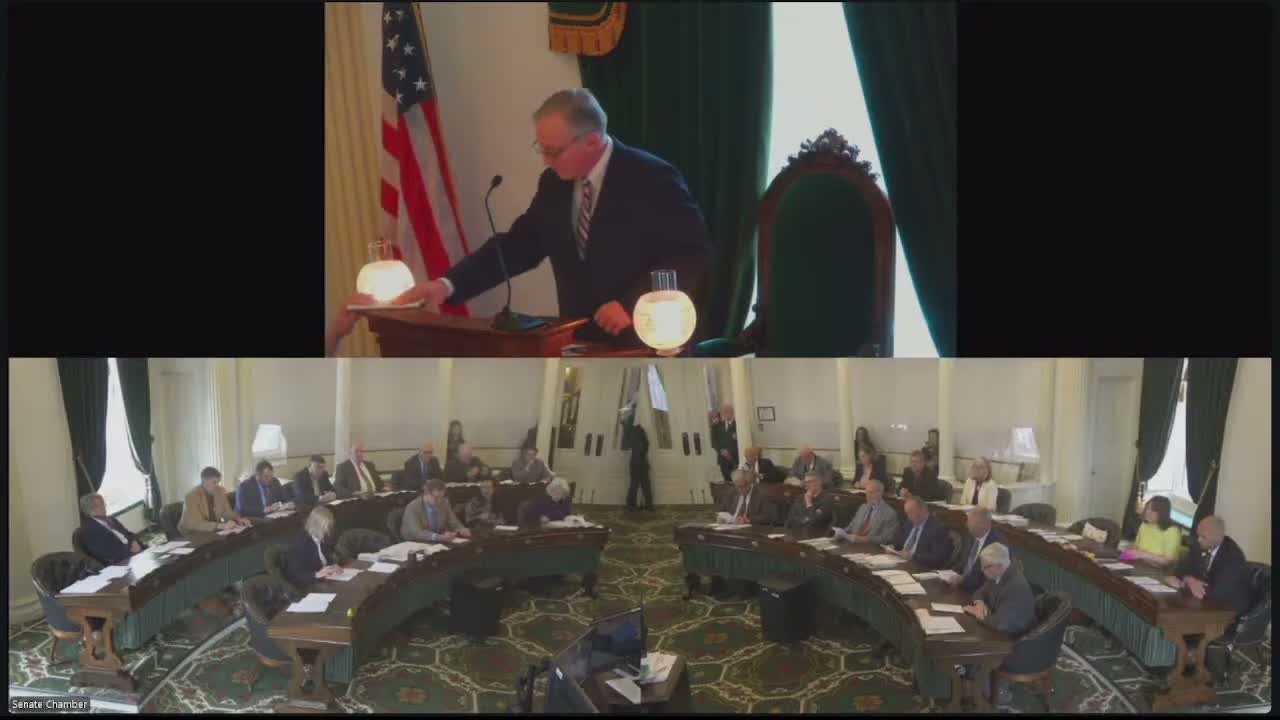
The Senate on second reading advanced S.210, an act that creates a narrow, court‑supervised process for some individuals to obtain autopsy reports.
Senator Cummings, the senator from Washington District, said the bill grew from “a constituent’s request” after a family could not learn how a daughter had died because an estranged parent obtained custody and the family lost access. Cummings told colleagues the bill is intended to provide “guardrails around who can have access and under what conditions.”
Under the bill as reported by the Committee on Health and Welfare, an individual not already authorized to receive an autopsy report may petition the probate division of the Superior Court for a copy. The petition must include an affidavit describing the petitioner’s relationship to the deceased and the reason for the request. The office of the medical examiner and the state's attorney in the jurisdiction where the death occurred must be notified; the state's attorney has 14 days to respond. If the probate court finds good cause and the state's attorney does not object, the court may order release of the report in whole or in part and may impose restrictions on the petitioner’s dissemination of the material.
Cummings emphasized the bill aims to balance family needs for answers against privacy and public‑interest considerations, noting the bill specifies factors for determining "good cause," including the petitioner’s relationship to the decedent and whether disclosure is necessary for public evaluation of governmental performance.
Senators voted by voice to amend the bill as recommended by the committee; the amendment was adopted and the Senate ordered S.210 to third reading.
The committee record cited testimony from an anonymous family member and a presiding judge who provided input that shaped the current language. The Health and Welfare report and the bill text remain the primary sources for the procedures described.
Next steps: S.210 has been ordered for third reading in the Senate. If passed on third reading, the prescription in the bill will be subject to any additional Senate amendments or concurrence with the House.
Senator Cummings, the senator from Washington District, said the bill grew from “a constituent’s request” after a family could not learn how a daughter had died because an estranged parent obtained custody and the family lost access. Cummings told colleagues the bill is intended to provide “guardrails around who can have access and under what conditions.”
Under the bill as reported by the Committee on Health and Welfare, an individual not already authorized to receive an autopsy report may petition the probate division of the Superior Court for a copy. The petition must include an affidavit describing the petitioner’s relationship to the deceased and the reason for the request. The office of the medical examiner and the state's attorney in the jurisdiction where the death occurred must be notified; the state's attorney has 14 days to respond. If the probate court finds good cause and the state's attorney does not object, the court may order release of the report in whole or in part and may impose restrictions on the petitioner’s dissemination of the material.
Cummings emphasized the bill aims to balance family needs for answers against privacy and public‑interest considerations, noting the bill specifies factors for determining "good cause," including the petitioner’s relationship to the decedent and whether disclosure is necessary for public evaluation of governmental performance.
Senators voted by voice to amend the bill as recommended by the committee; the amendment was adopted and the Senate ordered S.210 to third reading.
The committee record cited testimony from an anonymous family member and a presiding judge who provided input that shaped the current language. The Health and Welfare report and the bill text remain the primary sources for the procedures described.
Next steps: S.210 has been ordered for third reading in the Senate. If passed on third reading, the prescription in the bill will be subject to any additional Senate amendments or concurrence with the House.
View the Full Meeting & All Its Details
This article offers just a summary. Unlock complete video, transcripts, and insights as a Founder Member.
✓
Watch full, unedited meeting videos
✓
Search every word spoken in unlimited transcripts
✓
AI summaries & real-time alerts (all government levels)
✓
Permanent access to expanding government content
30-day money-back guarantee
