House Ways and Means hearing spotlights rural residency bottlenecks and GME funding reforms
February 25, 2026 | House Committee on Ways and Means Republicans, Ways and Means: House Committee, Standing Committees - House & Senate, Congressional Hearings Compilation, Legislative, Federal
This article was created by AI summarizing key points discussed. AI makes mistakes, so for full details and context, please refer to the video of the full meeting. Please report any errors so we can fix them. Report an error »
Dr. Emily Hawes, a rural clinical pharmacist and professor at the University of North Carolina School of Medicine, told the subcommittee that rural training “doubles the probability they will practice in rural communities” and highlighted the HRSA-administered rural residency planning and development program (RRPD) as a critical seed funder that helped create roughly 63–66 new rural residency programs and about 800 accredited resident positions.
Jason Shenafield, president and CEO of Phelps Health in Rolla, Missouri, described the effort of launching a family medicine residency with obstetrics training, saying startup grants from HRSA and his state made the program possible but that build-out costs run “about $5–7 million” and under current Medicare formulas the hospital estimates about a $100,000 per-resident shortfall at launch.
Sam Houston State dean Dr. Thomas Moore and other witnesses said longstanding Medicare GME caps and per-resident amounts tied to decades-old cost reports disadvantage smaller and rural hospitals. “Everything was kind of frozen in time,” Moore said, arguing that per-resident payments and residency caps should be modernized to reflect current population needs and enable program expansion.
Witnesses and lawmakers described several common proposals: codifying and expanding RRPD’s eligibility and technical assistance; prioritizing new Medicare-supported slots for rural tracks and health professional shortage areas; allowing rural facilities to reset historical per-resident amounts or extending the window for cap adjustments; and offering bridge funding to cover the gap between planning grants and sustainable Medicare reimbursement.
Several members cited pending legislation, including the bipartisan Resident Physician Shortage Reduction Act (H.R. 4731), which would add 14,000 residency slots over seven years with prioritization for rural and underserved areas. Rep. Brian Fitzpatrick, one of the bill’s sponsors, said the slots would be targeted to states with newer medical schools and hospitals training above their caps.
Panelists emphasized accountability and transparency. Dr. Hawes pointed to a GAO review of a previous slot distribution as useful evidence and urged reporting on where slots are placed and how they translate into physician supply for target communities.
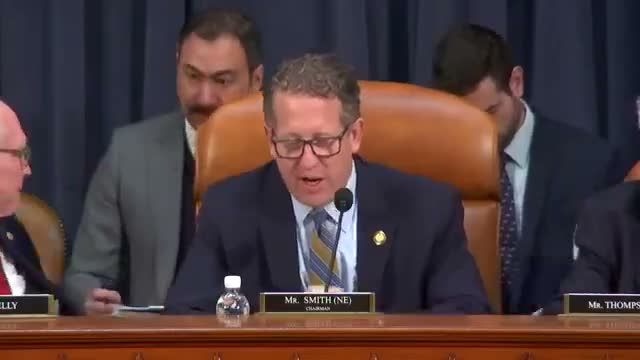
The hearing concluded with members renewing calls for a mix of startup grants, clearer per-resident payment rules, and targeted slot distribution to ensure new slots translate into permanent rural practice. Chairman Smith closed the hearing and left the record open for written questions.
Don't Miss a Word: See the Full Meeting!
Go beyond summaries. Unlock every video, transcript, and key insight with a Founder Membership.
30-day money-back guarantee
