Police and Human Services outline coordinated response plan targeting youth, unhoused and repeat offenders
February 24, 2026 | Fairfax City, Fairfax County, Virginia
This article was created by AI summarizing key points discussed. AI makes mistakes, so for full details and context, please refer to the video of the full meeting. Please report any errors so we can fix them. Report an error »
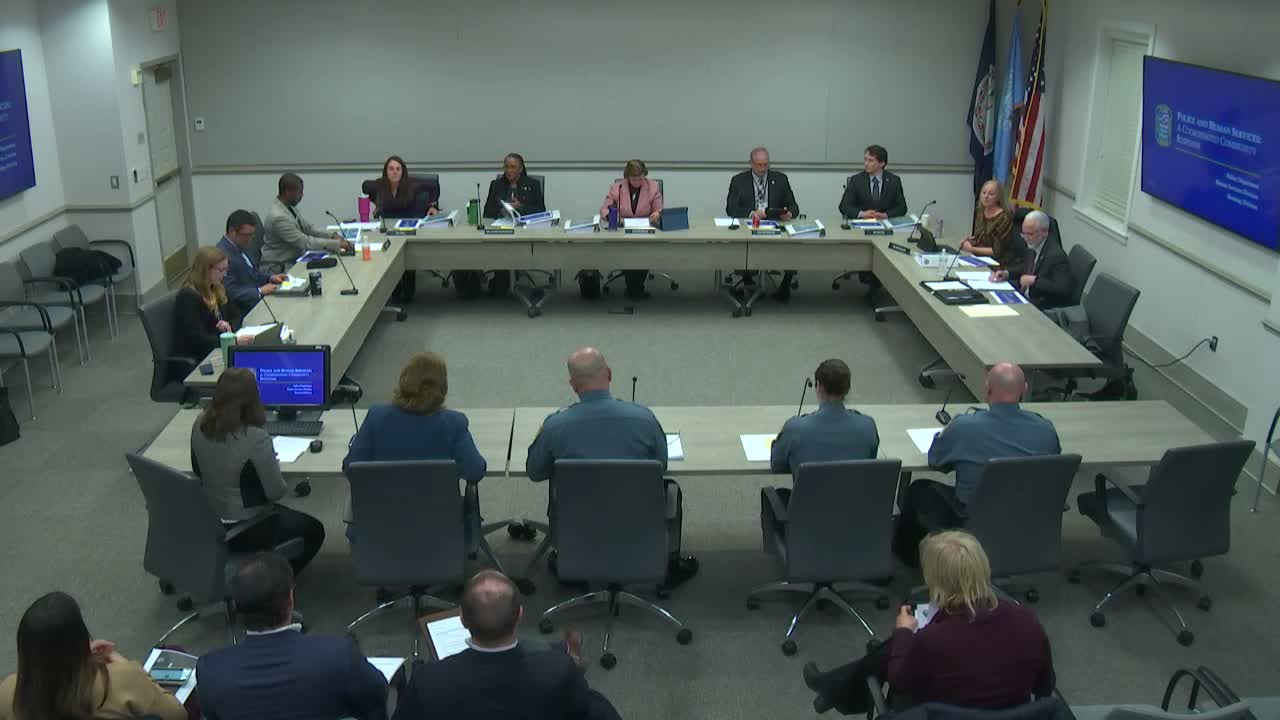
Police Chief Raul Pedrosso and Human Services staff presented a coordinated community response update in a work session on Feb. 24, describing a prevention‑focused, multi‑agency approach intended to reduce repeat criminal involvement and improve crisis response.
Chief Pedrosso said the council’s October charge produced two core objectives: explore partnerships between the police department and human services to prevent at‑risk residents from entering the criminal justice system and recommend how to close departmental capacity gaps for crime analysis and safety‑risk reporting. He said staff identified three priority groups: "1, the unhoused, 2, our youth, and 3, repeat offenders and repeat victims." That triage informed recommendations for targeted outreach, mentorship and co‑responder response.
Human Services staff described a public‑health risk model and emphasized partnerships with nonprofits and faith communities. Captain Andrew Hawkins and others summarized a pilot expansion in which officers who specialize in relationship building (Officer Klein and an added second officer, Officer Mills) will conduct sustained outreach in Fairfax Circle, downtown and other neighborhoods through June 1. The goal is to connect repeat victims and offenders to services rather than taking an exclusively enforcement response.
Staff also flagged data and capacity investments: prioritizing funding for a crime analyst (initially a contract or temporary position with a plan to formalize an FTE later), upgrading the records management system, and starting a monthly crime/traffic/quality‑of‑life review in March that will convene police, human services, fire and other stakeholders to coordinate interventions, monitor outcomes and revise tactics. Dan Alexander framed the effort within a community‑safety spectrum that spans prevention, risk assessment, response and recovery.
Council members probed details about metrics, the role of regional partners (988 and the Community Services Board) in off‑hours crisis response, the city’s ability to tap George Mason University for student practicums and research support, and whether behavioral threat assessment programs and fusion‑center cooperation will be part of the strategy. Staff said investigators have experience in behavioral threat assessment and routinely consult state and federal partners when necessary. A GMU graduate‑student intern is already assisting with crime analysis work.
What council heard: a mix of upstream prevention (youth mentorship, outreach), targeted cross‑agency response (CRT and co‑responder teams) and near‑term operational investments (crime analyst, records upgrades, monthly reviews). Staff emphasized measurement of outcomes and willingness to pivot tactics if a strategy does not produce results.
Chief Pedrosso said the council’s October charge produced two core objectives: explore partnerships between the police department and human services to prevent at‑risk residents from entering the criminal justice system and recommend how to close departmental capacity gaps for crime analysis and safety‑risk reporting. He said staff identified three priority groups: "1, the unhoused, 2, our youth, and 3, repeat offenders and repeat victims." That triage informed recommendations for targeted outreach, mentorship and co‑responder response.
Human Services staff described a public‑health risk model and emphasized partnerships with nonprofits and faith communities. Captain Andrew Hawkins and others summarized a pilot expansion in which officers who specialize in relationship building (Officer Klein and an added second officer, Officer Mills) will conduct sustained outreach in Fairfax Circle, downtown and other neighborhoods through June 1. The goal is to connect repeat victims and offenders to services rather than taking an exclusively enforcement response.
Staff also flagged data and capacity investments: prioritizing funding for a crime analyst (initially a contract or temporary position with a plan to formalize an FTE later), upgrading the records management system, and starting a monthly crime/traffic/quality‑of‑life review in March that will convene police, human services, fire and other stakeholders to coordinate interventions, monitor outcomes and revise tactics. Dan Alexander framed the effort within a community‑safety spectrum that spans prevention, risk assessment, response and recovery.
Council members probed details about metrics, the role of regional partners (988 and the Community Services Board) in off‑hours crisis response, the city’s ability to tap George Mason University for student practicums and research support, and whether behavioral threat assessment programs and fusion‑center cooperation will be part of the strategy. Staff said investigators have experience in behavioral threat assessment and routinely consult state and federal partners when necessary. A GMU graduate‑student intern is already assisting with crime analysis work.
What council heard: a mix of upstream prevention (youth mentorship, outreach), targeted cross‑agency response (CRT and co‑responder teams) and near‑term operational investments (crime analyst, records upgrades, monthly reviews). Staff emphasized measurement of outcomes and willingness to pivot tactics if a strategy does not produce results.
Don't Miss a Word: See the Full Meeting!
Go beyond summaries. Unlock every video, transcript, and key insight with a Founder Membership.
✓
Get instant access to full meeting videos
✓
Search and clip any phrase from complete transcripts
✓
Receive AI-powered summaries & custom alerts
✓
Enjoy lifetime, unrestricted access to government data
30-day money-back guarantee
