Efficiency Vermont tells committee it will end one pilot, keep low-income fuel-switch work and supports Burlington Electric carve-out
February 24, 2026 | Environment & Energy, HOUSE OF REPRESENTATIVES, Committees, Legislative , Vermont
This article was created by AI summarizing key points discussed. AI makes mistakes, so for full details and context, please refer to the video of the full meeting. Please report any errors so we can fix them. Report an error »
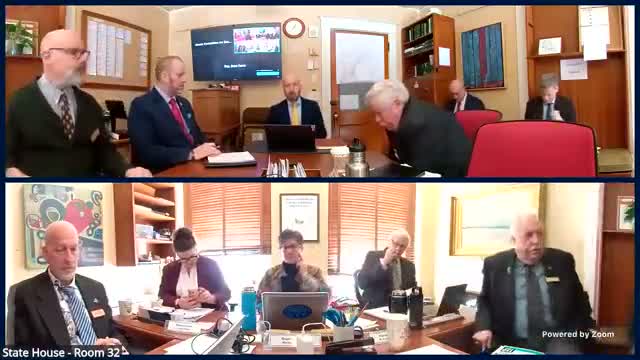
Peter Walkman, interim director of Efficiency Vermont, told the House Energy and Digital Infrastructure committee on Feb. 24 that the agency will not pursue one of two Energy Efficiency Modernization Act pilot programs for the next performance period but will continue the other.
“We are very supportive of Burlington continuing to do that,” Walkman said, referring to a carve-out for Burlington Electric Department in the committee’s draft bill. He summarized the pilot’s two iterations — a three-year pilot launched in 2020 and a second three-year extension ending this year — and described two programs that ran under the pilot: a dealer-support program for electric-vehicle (EV) dealerships and a Low-Income Fuel Switch program.
Walkman said federal tax credits winding down and weakening state incentives left the EV-dealer support program less necessary. “The market is a little quieter than it was,” he said, and Efficiency Vermont “is not pursuing that program for the next 3 year performance period.” By contrast, he called the Low-Income Fuel Switch program “very effective” and said it will continue using traditional regulated funding sources. “That has been very effective, and we’re gonna keep that program going using traditional regulated funding sources,” Walkman said.
Committee members pressed Walkman on budgeting and geographic distribution. He said Efficiency Vermont relies on five years of install data to estimate average cost per install and to plan for panel upgrades and other requirements; the agency also coordinated with distribution utilities to meet DU-territory and geographic equity commitments across the state.
On funding mechanics, Walkman told the committee the agency expects to use a combination of its existing funds (described in testimony as “EZ and TPF dollars”) to support the continued fuel-switch work and offered to provide detailed installation-location data by town and DU territory.
Walkman recommended two changes for the draft data center bill. First, he urged explicit language requiring new data centers to engage with the relevant energy-efficiency authority up front so projects can be sited and designed for efficient cooling and lower power needs: “If we can get them in on the front end, then everybody saves a lot of money in the process, and we don't have to have as much power going into it,” he said. Second, he recommended excluding large data centers from some business-directed programs that allow firms to retain energy-efficiency charge dollars (self-managed energy efficiency, energy savings accounts, customer credit) because such facilities add large, potentially transient loads and may not be appropriate participants in those business-retention programs.
Walkman also warned lawmakers to consider transition periods when updating appliance standards, citing the 2020 fluorescent bulb phaseout as an example where incentives phased out before customers could complete an affordable transition. He said the bill before the committee did not create that specific problem but urged careful implementation planning for future standard changes.
On municipal code enforcement, Walkman said he supports stronger enforcement in principle but cautioned against diverting limited thermal-program funding to pay for municipal enforcement tasks, arguing the state has the expertise to carry out that work. An unidentified committee member responded that recent RGGI revenues totaled roughly $8,000,000 over three years and that the draft (as described in testimony) would allocate about 5% — approximately $400,000 — toward builder training and incentives to improve code compliance.
Walkman closed by offering follow-up materials and thanking the committee for the opportunity to testify; the committee scheduled further witnesses later in the week and a vote on some items during the upcoming Thursday session.
“We are very supportive of Burlington continuing to do that,” Walkman said, referring to a carve-out for Burlington Electric Department in the committee’s draft bill. He summarized the pilot’s two iterations — a three-year pilot launched in 2020 and a second three-year extension ending this year — and described two programs that ran under the pilot: a dealer-support program for electric-vehicle (EV) dealerships and a Low-Income Fuel Switch program.
Walkman said federal tax credits winding down and weakening state incentives left the EV-dealer support program less necessary. “The market is a little quieter than it was,” he said, and Efficiency Vermont “is not pursuing that program for the next 3 year performance period.” By contrast, he called the Low-Income Fuel Switch program “very effective” and said it will continue using traditional regulated funding sources. “That has been very effective, and we’re gonna keep that program going using traditional regulated funding sources,” Walkman said.
Committee members pressed Walkman on budgeting and geographic distribution. He said Efficiency Vermont relies on five years of install data to estimate average cost per install and to plan for panel upgrades and other requirements; the agency also coordinated with distribution utilities to meet DU-territory and geographic equity commitments across the state.
On funding mechanics, Walkman told the committee the agency expects to use a combination of its existing funds (described in testimony as “EZ and TPF dollars”) to support the continued fuel-switch work and offered to provide detailed installation-location data by town and DU territory.
Walkman recommended two changes for the draft data center bill. First, he urged explicit language requiring new data centers to engage with the relevant energy-efficiency authority up front so projects can be sited and designed for efficient cooling and lower power needs: “If we can get them in on the front end, then everybody saves a lot of money in the process, and we don't have to have as much power going into it,” he said. Second, he recommended excluding large data centers from some business-directed programs that allow firms to retain energy-efficiency charge dollars (self-managed energy efficiency, energy savings accounts, customer credit) because such facilities add large, potentially transient loads and may not be appropriate participants in those business-retention programs.
Walkman also warned lawmakers to consider transition periods when updating appliance standards, citing the 2020 fluorescent bulb phaseout as an example where incentives phased out before customers could complete an affordable transition. He said the bill before the committee did not create that specific problem but urged careful implementation planning for future standard changes.
On municipal code enforcement, Walkman said he supports stronger enforcement in principle but cautioned against diverting limited thermal-program funding to pay for municipal enforcement tasks, arguing the state has the expertise to carry out that work. An unidentified committee member responded that recent RGGI revenues totaled roughly $8,000,000 over three years and that the draft (as described in testimony) would allocate about 5% — approximately $400,000 — toward builder training and incentives to improve code compliance.
Walkman closed by offering follow-up materials and thanking the committee for the opportunity to testify; the committee scheduled further witnesses later in the week and a vote on some items during the upcoming Thursday session.
Don't Miss a Word: See the Full Meeting!
Go beyond summaries. Unlock every video, transcript, and key insight with a Founder Membership.
✓
Get instant access to full meeting videos
✓
Search and clip any phrase from complete transcripts
✓
Receive AI-powered summaries & custom alerts
✓
Enjoy lifetime, unrestricted access to government data
30-day money-back guarantee
