Council sends proposed changes to snow-removal fines to committee amid calls for data-driven approach
February 21, 2026 | Salem City, Essex County, Massachusetts
This article was created by AI summarizing key points discussed. AI makes mistakes, so for full details and context, please refer to the video of the full meeting. Please report any errors so we can fix them. Report an error »
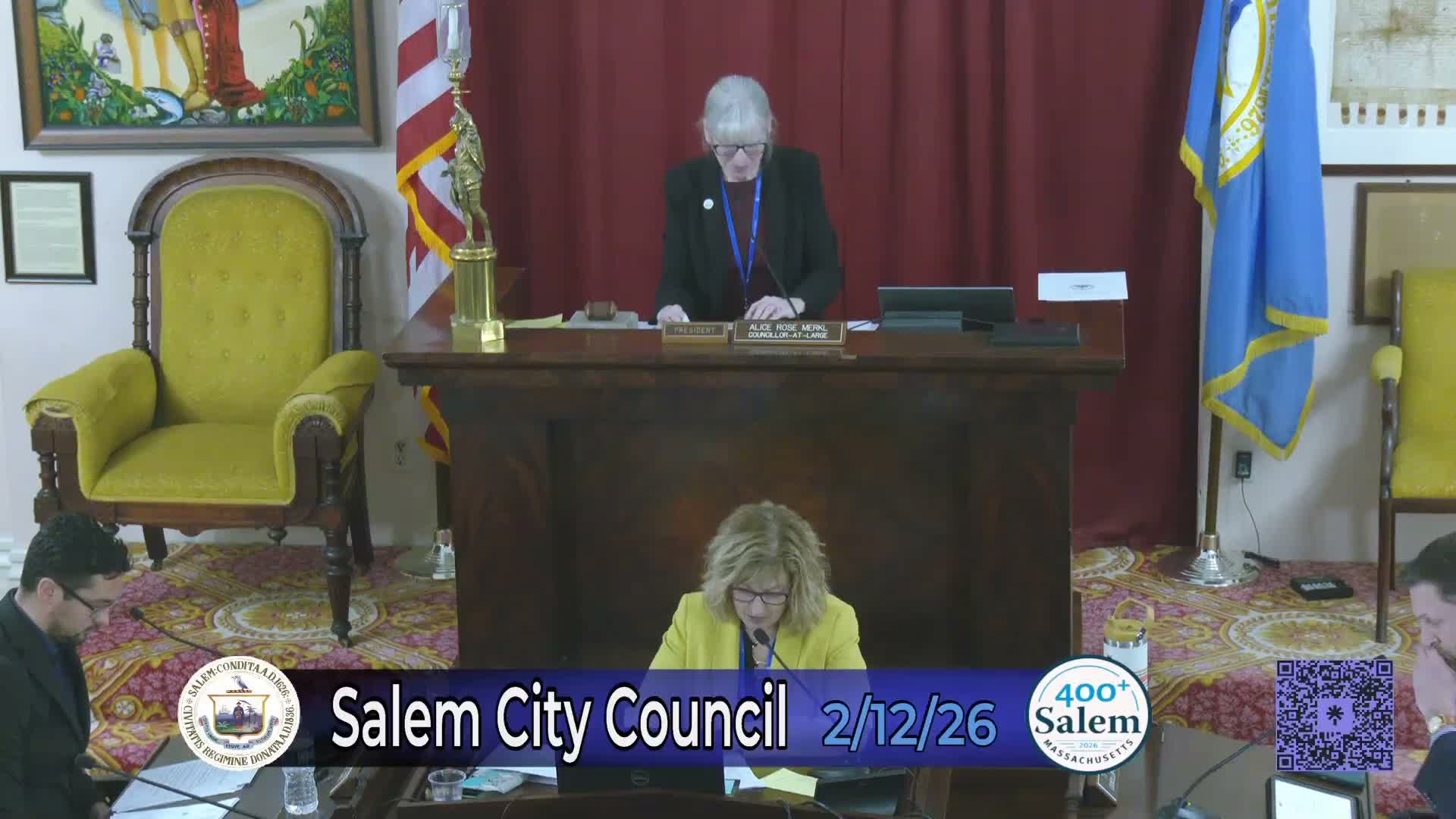
The Salem City Council voted Feb. 12 to refer proposed ordinance changes that would increase fines for failing to remove snow and ice from sidewalks to the Committee on Ordinances, Licenses, and Legal Affairs, co‑posted with the Committee of the Whole.
Public commenters and multiple councilors urged caution about raising fines without better data and supports. Steve Kapantis urged the city to collect historic ticketing and compliance data and to recognize businesses and property owners who have consistently maintained sidewalks. Councilors echoed concerns about the disproportionate burden on elderly and disabled residents and questioned whether fines alone would solve the problem.
During floor debate, councilors repeatedly asked for granular data: current ticketing levels, noncompliance rates under the existing $25 fine, and the city’s own performance clearing city-owned sidewalks. Several members recommended that the committee explore complementary approaches used elsewhere—such as vetted youth or contractor programs that connect workers with residents who need help clearing sidewalks, reporting dashboards to track noncompliance, and options that prevent penalizing residents who lack resources.
Councilors emphasized equitable enforcement, suggesting the committee examine how increased fines would be implemented citywide and what assistance the city can offer to those unable to pay or to clear sidewalks. The motion to refer the ordinance to committee carried on a council vote.
Next steps: the ordinance will be considered in committee where councilors expect presentations of ticketing data, comparative programs from peer cities, and recommendations for implementation frameworks or alternative support measures.
Public commenters and multiple councilors urged caution about raising fines without better data and supports. Steve Kapantis urged the city to collect historic ticketing and compliance data and to recognize businesses and property owners who have consistently maintained sidewalks. Councilors echoed concerns about the disproportionate burden on elderly and disabled residents and questioned whether fines alone would solve the problem.
During floor debate, councilors repeatedly asked for granular data: current ticketing levels, noncompliance rates under the existing $25 fine, and the city’s own performance clearing city-owned sidewalks. Several members recommended that the committee explore complementary approaches used elsewhere—such as vetted youth or contractor programs that connect workers with residents who need help clearing sidewalks, reporting dashboards to track noncompliance, and options that prevent penalizing residents who lack resources.
Councilors emphasized equitable enforcement, suggesting the committee examine how increased fines would be implemented citywide and what assistance the city can offer to those unable to pay or to clear sidewalks. The motion to refer the ordinance to committee carried on a council vote.
Next steps: the ordinance will be considered in committee where councilors expect presentations of ticketing data, comparative programs from peer cities, and recommendations for implementation frameworks or alternative support measures.
Don't Miss a Word: See the Full Meeting!
Go beyond summaries. Unlock every video, transcript, and key insight with a Founder Membership.
✓
Get instant access to full meeting videos
✓
Search and clip any phrase from complete transcripts
✓
Receive AI-powered summaries & custom alerts
✓
Enjoy lifetime, unrestricted access to government data
30-day money-back guarantee
