Committee hears bill to let tenants install portable cooling devices during extreme heat
February 23, 2026 | Legislative Sessions, Washington
This article was created by AI summarizing key points discussed. AI makes mistakes, so for full details and context, please refer to the video of the full meeting. Please report any errors so we can fix them. Report an error »
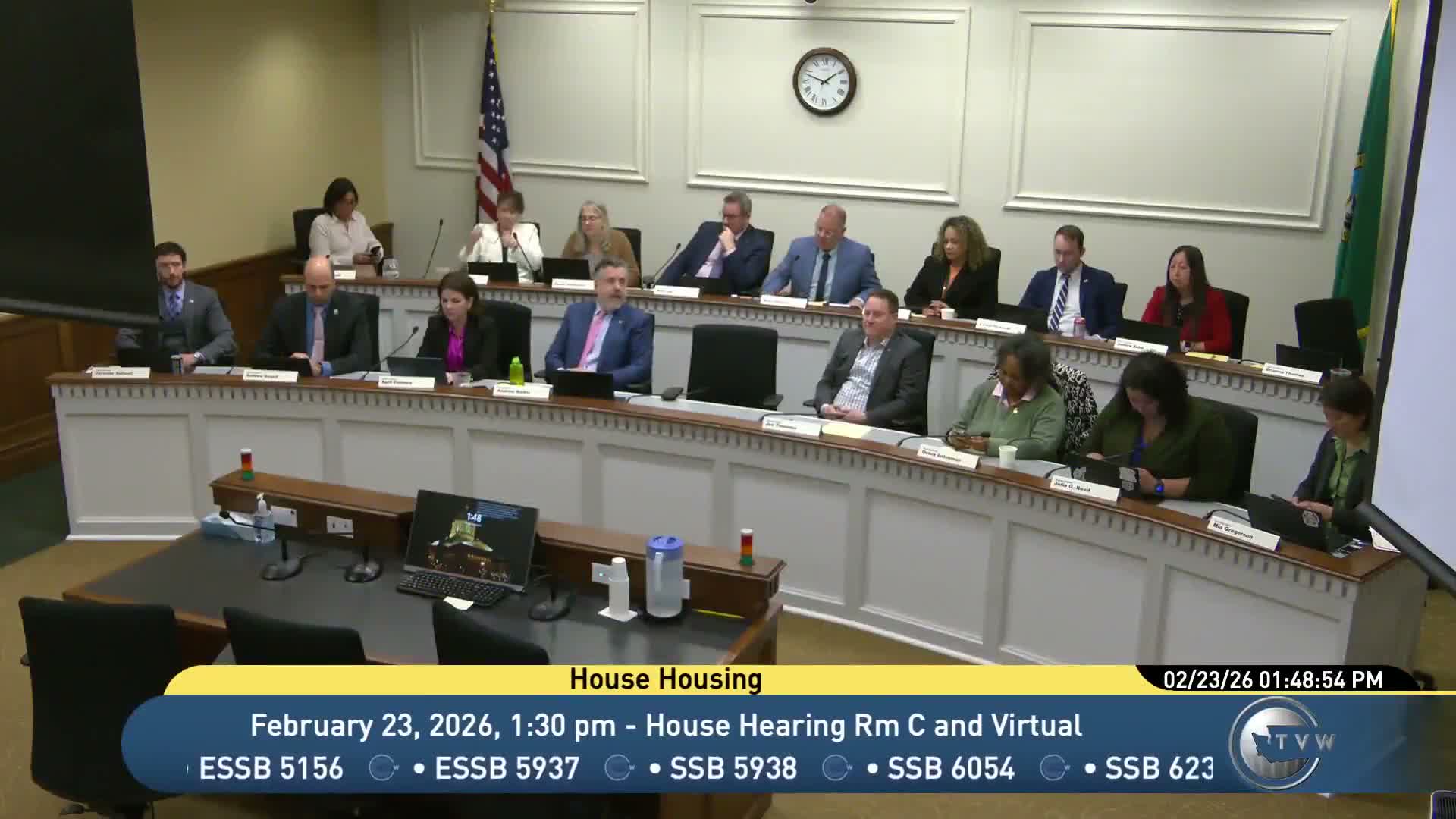
Sen. Vandana Slatter, sponsor of Senate Bill 6,200, told the House Housing Committee that the bill is "basically a housing and health bill" aimed at preventing heat-related illness and death among renters by allowing tenants to install safe, portable cooling devices with clear guardrails. "This bill protects older adults, people living alone, infants, residents on heat-sensitive medication, and communities in heat burden neighborhoods," Slatter said on Feb. 23.
Audrey Vacek, committee staff, summarized the bill's key provisions: landlords under the Residential Landlord-Tenant Act and the Manufactured/Mobile Home Landlord-Tenant Act could not prohibit tenants from installing portable cooling devices except where the dwelling already has a functioning heat pump, installation would violate code or safety guidelines, cause unreasonable damage or render the unit uninhabitable, or require electrical capacity the building cannot supply. The bill excludes certain saddle-mounted window devices and allows inspections after installation; it also prohibits landlords from charging installation or inspection fees in most cases and preserves landlords' ability to retain portions of security deposits for lawful reasons.
Public-health and tenant advocates urged passage. Brian Henning of the Gonzaga Institute for Climate, Water and the Environment described Spokane's local ordinance and said the bill would extend similar protections statewide; Dr. Anne Marie Dooley of Washington Physicians for Social Responsibility described the 2021 heat dome's impact and said many heat deaths occurred inside homes, arguing that portable cooling devices can prevent avoidable illnesses and deaths.
Tenant organizers and housing advocates, including Carl Nelson of Cedar Crossing Tenants Association and Violet (executive director of a tenant-rights nonprofit), said building-level policies often make it difficult for low-income renters to secure life-saving cooling, citing onerous paperwork and medical-documentation requirements used by some property managers.
Property-management groups registered neutral or raised concerns. Jim Henderson of the National Association of Residential Property Managers said members wanted standardized lease language and clarity about window units; Christel Perkey of the Washington Multifamily Housing Association said the bill's notice-and-inspection provisions and the two-day advance notice allow property managers to confirm safe installation and provide for in-house installation where necessary.
Committee members asked about insurance impacts, ceiling fans, evaporative coolers and high-rise installation safety. Slatter and witnesses said stakeholders were negotiating technical fixes; staff noted the bill's definition of portable cooling device includes portable air conditioners, portable heat pumps and evaporative coolers (but not ceiling fans). The sponsor acknowledged evaporative coolers can cause moisture problems and said the question could be taken back to the drafting team.
No final vote was taken; the public hearing closed with an invitation for additional written testimony. The committee indicated willingness to continue negotiating language to address insurance, lease wording and safety concerns.
What happens next: Sponsor and stakeholders plan further negotiations on insurance language, lease-update burden, and whether to limit or revise definitions for evaporative coolers and window-mounted devices.
Audrey Vacek, committee staff, summarized the bill's key provisions: landlords under the Residential Landlord-Tenant Act and the Manufactured/Mobile Home Landlord-Tenant Act could not prohibit tenants from installing portable cooling devices except where the dwelling already has a functioning heat pump, installation would violate code or safety guidelines, cause unreasonable damage or render the unit uninhabitable, or require electrical capacity the building cannot supply. The bill excludes certain saddle-mounted window devices and allows inspections after installation; it also prohibits landlords from charging installation or inspection fees in most cases and preserves landlords' ability to retain portions of security deposits for lawful reasons.
Public-health and tenant advocates urged passage. Brian Henning of the Gonzaga Institute for Climate, Water and the Environment described Spokane's local ordinance and said the bill would extend similar protections statewide; Dr. Anne Marie Dooley of Washington Physicians for Social Responsibility described the 2021 heat dome's impact and said many heat deaths occurred inside homes, arguing that portable cooling devices can prevent avoidable illnesses and deaths.
Tenant organizers and housing advocates, including Carl Nelson of Cedar Crossing Tenants Association and Violet (executive director of a tenant-rights nonprofit), said building-level policies often make it difficult for low-income renters to secure life-saving cooling, citing onerous paperwork and medical-documentation requirements used by some property managers.
Property-management groups registered neutral or raised concerns. Jim Henderson of the National Association of Residential Property Managers said members wanted standardized lease language and clarity about window units; Christel Perkey of the Washington Multifamily Housing Association said the bill's notice-and-inspection provisions and the two-day advance notice allow property managers to confirm safe installation and provide for in-house installation where necessary.
Committee members asked about insurance impacts, ceiling fans, evaporative coolers and high-rise installation safety. Slatter and witnesses said stakeholders were negotiating technical fixes; staff noted the bill's definition of portable cooling device includes portable air conditioners, portable heat pumps and evaporative coolers (but not ceiling fans). The sponsor acknowledged evaporative coolers can cause moisture problems and said the question could be taken back to the drafting team.
No final vote was taken; the public hearing closed with an invitation for additional written testimony. The committee indicated willingness to continue negotiating language to address insurance, lease wording and safety concerns.
What happens next: Sponsor and stakeholders plan further negotiations on insurance language, lease-update burden, and whether to limit or revise definitions for evaporative coolers and window-mounted devices.
View the Full Meeting & All Its Details
This article offers just a summary. Unlock complete video, transcripts, and insights as a Founder Member.
✓
Watch full, unedited meeting videos
✓
Search every word spoken in unlimited transcripts
✓
AI summaries & real-time alerts (all government levels)
✓
Permanent access to expanding government content
30-day money-back guarantee
