Committee hears testimony on Green Alert bill to locate missing veterans
February 24, 2026 | 2025-2026 House Legislature MI, Michigan
This article was created by AI summarizing key points discussed. AI makes mistakes, so for full details and context, please refer to the video of the full meeting. Please report any errors so we can fix them. Report an error »
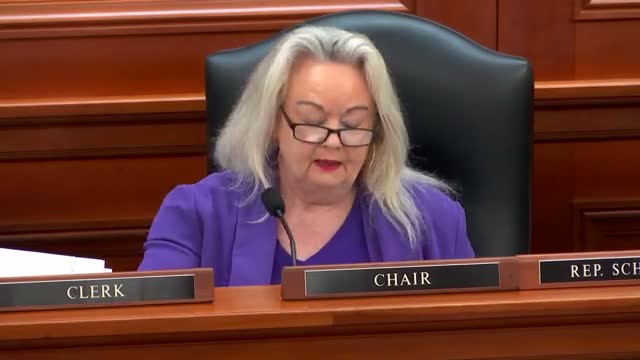
Representative Cam Cabot introduced House Bill 5,387, called the Green Alert Act, saying it would allow alerts similar to AMBER and Silver alerts when a missing veteran at risk is reported by someone familiar with them. "According to the U.S. Department of Veterans Affairs, an estimated 17 veterans a day are lost to suicide," Cabot said in opening remarks, framing the bill as a life‑saving measure.
Supporters told the committee the state can reuse existing alert infrastructure. Cabot said the alert network is already set up and the bill "adds a green alert to that." Tim Paxson of the American Legion Department of Michigan urged passage and cited national figures and local examples, saying veteran suicide rates have risen and recounting a Michigan case where a family and local police sought an alert after a suicide note but the State Police declined to issue one; a deputy later intervened and the veteran survived. "If we can do anything in the state of Michigan to help our veterans I think this bill is well worth it," Paxson said.
Committee members focused on operational questions. Representative Young asked how officials would verify that a missing person is a veteran and avoid misuse. Cabot and Paxson described practical verification paths: veteran designation on a Michigan driver's license, family possession of a DD214 or discharge papers, photos in uniform, and other documentary evidence. Both witnesses acknowledged verification can be imperfect and, in some cases, may rely on a family member's report while the responding agency seeks confirmation.
Representative Burns and others asked for evidence of effectiveness from the other states that have implemented similar programs. Paxson said some states have not made detailed outcome data widely available, and Cabot offered to follow up with committee offices with additional information.
Two witnesses offered extended personal testimony. Paxson described national statistics and the Michigan anecdote to argue the alert could reduce delays in locating veterans who are at risk. Robert Bull, identified as the author of a prior American Legion resolution, described encounters with veterans experiencing homelessness, early‑onset dementia and other conditions that increase risk of disappearance and harm, saying the bill would improve the chance of finding and assisting veterans quickly.
The committee did not vote on HB 5,387 during the session. Testimony concluded and the committee paused briefly for administrative matters before adjourning. Sponsors and witnesses said they would provide additional information to answer members' requests about verification procedures and outcome data from other states.
Supporters told the committee the state can reuse existing alert infrastructure. Cabot said the alert network is already set up and the bill "adds a green alert to that." Tim Paxson of the American Legion Department of Michigan urged passage and cited national figures and local examples, saying veteran suicide rates have risen and recounting a Michigan case where a family and local police sought an alert after a suicide note but the State Police declined to issue one; a deputy later intervened and the veteran survived. "If we can do anything in the state of Michigan to help our veterans I think this bill is well worth it," Paxson said.
Committee members focused on operational questions. Representative Young asked how officials would verify that a missing person is a veteran and avoid misuse. Cabot and Paxson described practical verification paths: veteran designation on a Michigan driver's license, family possession of a DD214 or discharge papers, photos in uniform, and other documentary evidence. Both witnesses acknowledged verification can be imperfect and, in some cases, may rely on a family member's report while the responding agency seeks confirmation.
Representative Burns and others asked for evidence of effectiveness from the other states that have implemented similar programs. Paxson said some states have not made detailed outcome data widely available, and Cabot offered to follow up with committee offices with additional information.
Two witnesses offered extended personal testimony. Paxson described national statistics and the Michigan anecdote to argue the alert could reduce delays in locating veterans who are at risk. Robert Bull, identified as the author of a prior American Legion resolution, described encounters with veterans experiencing homelessness, early‑onset dementia and other conditions that increase risk of disappearance and harm, saying the bill would improve the chance of finding and assisting veterans quickly.
The committee did not vote on HB 5,387 during the session. Testimony concluded and the committee paused briefly for administrative matters before adjourning. Sponsors and witnesses said they would provide additional information to answer members' requests about verification procedures and outcome data from other states.
View the Full Meeting & All Its Details
This article offers just a summary. Unlock complete video, transcripts, and insights as a Founder Member.
✓
Watch full, unedited meeting videos
✓
Search every word spoken in unlimited transcripts
✓
AI summaries & real-time alerts (all government levels)
✓
Permanent access to expanding government content
30-day money-back guarantee
