Michigan lawmakers hear WMPC defend performance‑based foster care after MDHHS budget cut
February 24, 2026 | 2025-2026 House Legislature MI, Michigan
This article was created by AI summarizing key points discussed. AI makes mistakes, so for full details and context, please refer to the video of the full meeting. Please report any errors so we can fix them. Report an error »
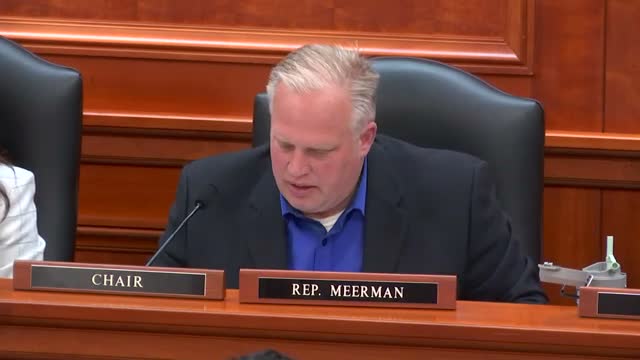
West Michigan Partnership for Children leaders told a joint House oversight hearing on Dec. 22, 2025 that Michigan’s only regional performance‑based foster care pilot improved outcomes for children in Kent County and should be protected from unilateral administrative changes.
"Children deserve better futures," Sonia Norman, chief executive officer of West Michigan Partnership for Children, said in opening testimony describing the model’s goal of aligning public investment to measurable child‑safety and permanency outcomes.
Norman and colleagues said WMPC, launched in 2017 under legislative authority, operates a performance‑based payment structure that reinvested savings into services and required participating agencies to accept high‑acuity children without "eject or reject" policies. She said independent evaluation showed children in WMPC spent about 79 fewer days in foster care on average and had higher short‑term permanency compared with two similar counties.
Tim Bergsma, WMPC’s chief financial officer, told the committee that despite a contract boilerplate calling for a three‑year master agreement plus two optional years, WMPC consistently received annual grants, which the organization says caused chronic instability for planning and partnerships. Bergsma said MDHHS in October 2025 reassigned 426 children previously under WMPC back to MDHHS authority, an action WMPC challenged in court. He said a Court of Claims order issued in late December 2025 found that move placed MDHHS out of statutory compliance.
Bergsma also criticized a University of Michigan evaluation of WMPC that he said was published without data validation and that WMPC’s FOIA requests to review the evaluation data and MDHHS records have not been fulfilled. "From day one when that report was published, we have been practically begging for an opportunity to sit at a table and understand the data," he said.
David Shields, director of strategic initiatives and advocacy for WMPC, requested that the Legislature formally retract the 2025 evaluation or commission an independent review with a clear scope, full data access and an opportunity for response before the study is used to guide policy. He outlined five legislative recommendations: define a single administrative operational entity for the model; codify governance structures to ensure local accountability; codify the financial architecture including risk and reinvestment rules; require multi‑year contract language; and prevent unilateral administrative restructuring without legislative review.
Carrie Boehm, chief executive officer of the National Center for Community‑Based Child Welfare, told the committee that community‑based care is a recognized child‑welfare reform strategy nationwide and emphasized contractual performance measures, audits and oversight when states adopt regional lead‑agency models.
Committee members pressed WMPC on financial details, the timing of the University of Michigan evaluation, and whether MDHHS had engaged WMPC before removing boilerplate funding from the budget. WMPC said it performed quarterly fiscal monitoring with MDHHS and a third party, disagreed with the evaluation’s cost conclusions, and said it had received no prior notice that boilerplate language would be removed during last year’s late budget negotiations.
Representative Wolford noted testimony that MDHHS "tried to cancel a lawful contract to save $3,000,000," asked who authorized the budget change and how much ongoing litigation is costing taxpayers. WMPC representatives said they do not know who made the specific budget change, dispute the $3 million net savings estimate because removal of WMPC would require backfilling leadership roles, and said litigation and audits have imposed significant cost and operational burdens.
Several members cited a Court of Claims finding that MDHHS’s abrupt cancellation in October 2025 created an "immediate child welfare emergency" affecting hundreds of children and raising risks including delays in services and loss of certified staff. WMPC warned that dismantling nearly a decade of investment would create long‑term instability and that full operational restoration would require a transition period of several months should the partnership be reinstated.
The committee said it would pursue document requests and further oversight. MDHHS was not present at the hearing, and committee leaders said the department declined to attend because of ongoing litigation.
The committee had no formal votes on substantive legislation during the hearing. Representative McDonald moved to excuse absent members and the joint committee adjourned.
Next steps: committee chairs said they would pursue document requests, consider legislative language to strengthen statutory protections for the WMPC model, and follow up on the evaluation and transition questions that arose during testimony.
"Children deserve better futures," Sonia Norman, chief executive officer of West Michigan Partnership for Children, said in opening testimony describing the model’s goal of aligning public investment to measurable child‑safety and permanency outcomes.
Norman and colleagues said WMPC, launched in 2017 under legislative authority, operates a performance‑based payment structure that reinvested savings into services and required participating agencies to accept high‑acuity children without "eject or reject" policies. She said independent evaluation showed children in WMPC spent about 79 fewer days in foster care on average and had higher short‑term permanency compared with two similar counties.
Tim Bergsma, WMPC’s chief financial officer, told the committee that despite a contract boilerplate calling for a three‑year master agreement plus two optional years, WMPC consistently received annual grants, which the organization says caused chronic instability for planning and partnerships. Bergsma said MDHHS in October 2025 reassigned 426 children previously under WMPC back to MDHHS authority, an action WMPC challenged in court. He said a Court of Claims order issued in late December 2025 found that move placed MDHHS out of statutory compliance.
Bergsma also criticized a University of Michigan evaluation of WMPC that he said was published without data validation and that WMPC’s FOIA requests to review the evaluation data and MDHHS records have not been fulfilled. "From day one when that report was published, we have been practically begging for an opportunity to sit at a table and understand the data," he said.
David Shields, director of strategic initiatives and advocacy for WMPC, requested that the Legislature formally retract the 2025 evaluation or commission an independent review with a clear scope, full data access and an opportunity for response before the study is used to guide policy. He outlined five legislative recommendations: define a single administrative operational entity for the model; codify governance structures to ensure local accountability; codify the financial architecture including risk and reinvestment rules; require multi‑year contract language; and prevent unilateral administrative restructuring without legislative review.
Carrie Boehm, chief executive officer of the National Center for Community‑Based Child Welfare, told the committee that community‑based care is a recognized child‑welfare reform strategy nationwide and emphasized contractual performance measures, audits and oversight when states adopt regional lead‑agency models.
Committee members pressed WMPC on financial details, the timing of the University of Michigan evaluation, and whether MDHHS had engaged WMPC before removing boilerplate funding from the budget. WMPC said it performed quarterly fiscal monitoring with MDHHS and a third party, disagreed with the evaluation’s cost conclusions, and said it had received no prior notice that boilerplate language would be removed during last year’s late budget negotiations.
Representative Wolford noted testimony that MDHHS "tried to cancel a lawful contract to save $3,000,000," asked who authorized the budget change and how much ongoing litigation is costing taxpayers. WMPC representatives said they do not know who made the specific budget change, dispute the $3 million net savings estimate because removal of WMPC would require backfilling leadership roles, and said litigation and audits have imposed significant cost and operational burdens.
Several members cited a Court of Claims finding that MDHHS’s abrupt cancellation in October 2025 created an "immediate child welfare emergency" affecting hundreds of children and raising risks including delays in services and loss of certified staff. WMPC warned that dismantling nearly a decade of investment would create long‑term instability and that full operational restoration would require a transition period of several months should the partnership be reinstated.
The committee said it would pursue document requests and further oversight. MDHHS was not present at the hearing, and committee leaders said the department declined to attend because of ongoing litigation.
The committee had no formal votes on substantive legislation during the hearing. Representative McDonald moved to excuse absent members and the joint committee adjourned.
Next steps: committee chairs said they would pursue document requests, consider legislative language to strengthen statutory protections for the WMPC model, and follow up on the evaluation and transition questions that arose during testimony.
Don't Miss a Word: See the Full Meeting!
Go beyond summaries. Unlock every video, transcript, and key insight with a Founder Membership.
✓
Get instant access to full meeting videos
✓
Search and clip any phrase from complete transcripts
✓
Receive AI-powered summaries & custom alerts
✓
Enjoy lifetime, unrestricted access to government data
30-day money-back guarantee
