House committee advances broad health omnibus (HB 693) after contentious debate over SNAP, scope of practice
February 24, 2026 | 2026 Legislature FL, Florida
This article was created by AI summarizing key points discussed. AI makes mistakes, so for full details and context, please refer to the video of the full meeting. Please report any errors so we can fix them. Report an error »
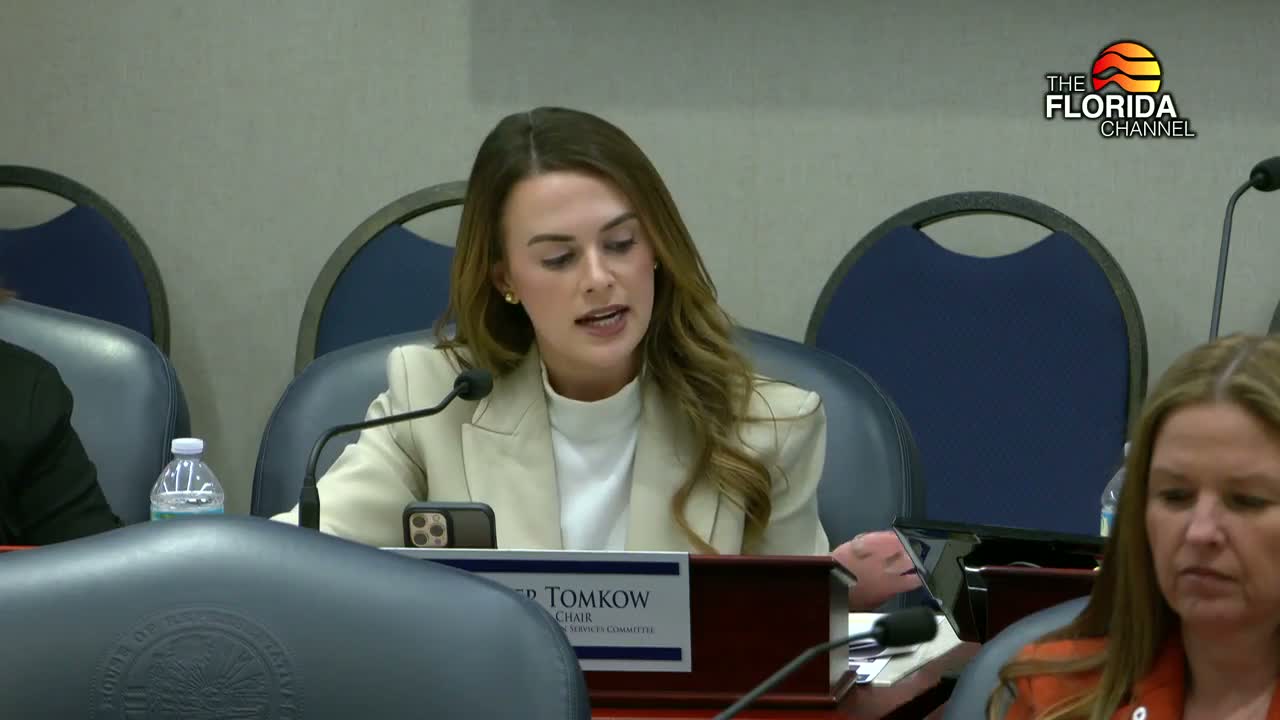
A substantial strike‑all for HB 693, presented by Representative Redondo, was advanced out of the Health & Human Services Committee after extended testimony from advocates, provider organizations and citizens.
Representative Redondo described the bill as an effort to align certain Florida policies with federal HR 1 provisions and to adopt a range of health‑policy changes intended to improve access and competition — including joining interstate compacts, authorizing independent practice for advanced practice registered nurses, removing numeric caps on physician assistant supervision, expanding certain delegated dental tasks, and strengthening consumer protections around referrals and out‑of‑network billing.
Opponents and some stakeholders pressed the committee on several points: Cindy Huddleston of the Florida Policy Institute and representatives of the Southern Poverty Law Center noted provisions that they said would impose additional SNAP employment and training requirements beyond federal law and would tighten verification of shelter costs in ways that could harm families. The Florida chapter of the American College of Physicians and other provider groups objected to the removal of physician involvement in some practice settings and flagged operational burdens (for example, expecting primary care physicians to guarantee whether a referral is in‑network).
Public testimony also included a heated comment from an outside speaker who used inflammatory language about Planned Parenthood; committee members later noted decorum concerns. Supporters urged the committee to consider the bill a compilation of negotiated priorities and signaled willingness to refine language as it moves forward.
The committee adopted amendments to address some concerns and reported HB 693 favorably as amended (roll-call: 17 yeas, 7 nays). Several members said they supported parts of the bill while reserving the right to press for further changes before floor consideration.
The transcript records detailed stakeholder concerns about SNAP verification, work‑requirement age ranges, and scope‑of‑practice expansions; those points are likely to be the focus of floor and cross‑committee negotiations.
Representative Redondo described the bill as an effort to align certain Florida policies with federal HR 1 provisions and to adopt a range of health‑policy changes intended to improve access and competition — including joining interstate compacts, authorizing independent practice for advanced practice registered nurses, removing numeric caps on physician assistant supervision, expanding certain delegated dental tasks, and strengthening consumer protections around referrals and out‑of‑network billing.
Opponents and some stakeholders pressed the committee on several points: Cindy Huddleston of the Florida Policy Institute and representatives of the Southern Poverty Law Center noted provisions that they said would impose additional SNAP employment and training requirements beyond federal law and would tighten verification of shelter costs in ways that could harm families. The Florida chapter of the American College of Physicians and other provider groups objected to the removal of physician involvement in some practice settings and flagged operational burdens (for example, expecting primary care physicians to guarantee whether a referral is in‑network).
Public testimony also included a heated comment from an outside speaker who used inflammatory language about Planned Parenthood; committee members later noted decorum concerns. Supporters urged the committee to consider the bill a compilation of negotiated priorities and signaled willingness to refine language as it moves forward.
The committee adopted amendments to address some concerns and reported HB 693 favorably as amended (roll-call: 17 yeas, 7 nays). Several members said they supported parts of the bill while reserving the right to press for further changes before floor consideration.
The transcript records detailed stakeholder concerns about SNAP verification, work‑requirement age ranges, and scope‑of‑practice expansions; those points are likely to be the focus of floor and cross‑committee negotiations.
Don't Miss a Word: See the Full Meeting!
Go beyond summaries. Unlock every video, transcript, and key insight with a Founder Membership.
✓
Get instant access to full meeting videos
✓
Search and clip any phrase from complete transcripts
✓
Receive AI-powered summaries & custom alerts
✓
Enjoy lifetime, unrestricted access to government data
30-day money-back guarantee
