Oklahoma House approves bill letting dentists set prices for services insurers don’t cover
February 24, 2026 | 2026 Legislature OK, Oklahoma
This article was created by AI summarizing key points discussed. AI makes mistakes, so for full details and context, please refer to the video of the full meeting. Please report any errors so we can fix them. Report an error »
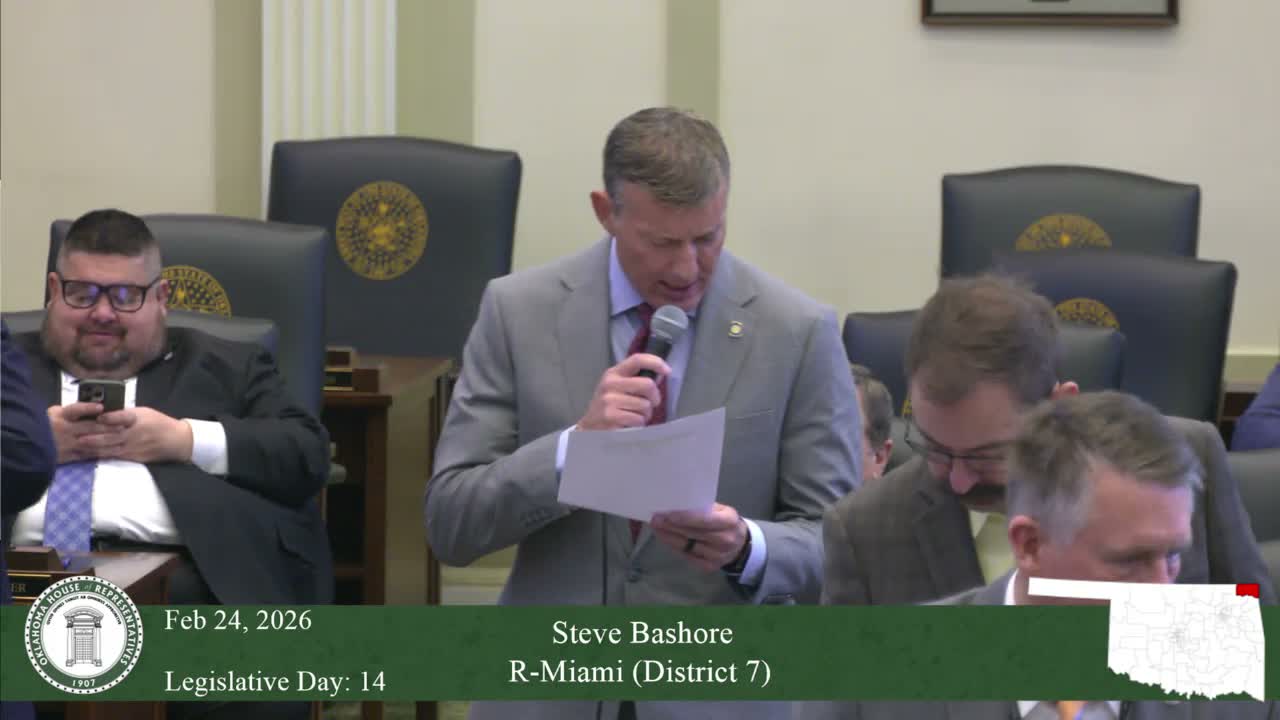
Pro Tem Moore Anthony brought House Bill 43 29 to the floor, calling it “a common sense fix to restore fairness in dental insurance” and describing the measure as effectively changing one word—from “reimbursable” to “reimbursed”—so that insurers cannot control pricing for services they do not pay for. He urged final passage.
The bill’s supporters said the change would let dentists negotiate directly with patients for services outside a plan’s covered benefits. Pro Tem Moore Anthony argued that “no other industry in the state allows a third party to control pricing for services it doesn't pay for,” and that allowing dentists to set prices would protect rural providers and prevent insurers from dictating charges for uncovered services.
Opponents and questioners—including Representative Blansett, Representative Snee and Representative Tedford—pressed sponsors on practical effects. Representative Blansett asked whether negotiated network rates would still apply when a consumer has exhausted benefits or is paying out of pocket. Representative Tedford and others raised whether freeing dentists to set post‑benefit prices could undercut the value of network participation, which brings patients to providers. Pro Tem Moore Anthony responded that dentists “absolutely can” choose not to participate in networks but that the current practice limits their ability to discount services when insurance does not cover them. Representative Marty and Representative Hayes highlighted concerns about patients traveling long distances to find providers who will accept reasonable terms; supporters cited examples of patients traveling multiple hours because of low insurer reimbursements.
The sponsor told members there was no fiscal impact to the state budget. After debate the bill was advanced to final passage. The transcript records the roll-call tally as “91 I, 5 nay,” and the chair declared the bill passed.
The House moved on to other calendar items after the vote; the chamber adjourned to the next scheduled session the following day.
The bill’s supporters said the change would let dentists negotiate directly with patients for services outside a plan’s covered benefits. Pro Tem Moore Anthony argued that “no other industry in the state allows a third party to control pricing for services it doesn't pay for,” and that allowing dentists to set prices would protect rural providers and prevent insurers from dictating charges for uncovered services.
Opponents and questioners—including Representative Blansett, Representative Snee and Representative Tedford—pressed sponsors on practical effects. Representative Blansett asked whether negotiated network rates would still apply when a consumer has exhausted benefits or is paying out of pocket. Representative Tedford and others raised whether freeing dentists to set post‑benefit prices could undercut the value of network participation, which brings patients to providers. Pro Tem Moore Anthony responded that dentists “absolutely can” choose not to participate in networks but that the current practice limits their ability to discount services when insurance does not cover them. Representative Marty and Representative Hayes highlighted concerns about patients traveling long distances to find providers who will accept reasonable terms; supporters cited examples of patients traveling multiple hours because of low insurer reimbursements.
The sponsor told members there was no fiscal impact to the state budget. After debate the bill was advanced to final passage. The transcript records the roll-call tally as “91 I, 5 nay,” and the chair declared the bill passed.
The House moved on to other calendar items after the vote; the chamber adjourned to the next scheduled session the following day.
View the Full Meeting & All Its Details
This article offers just a summary. Unlock complete video, transcripts, and insights as a Founder Member.
✓
Watch full, unedited meeting videos
✓
Search every word spoken in unlimited transcripts
✓
AI summaries & real-time alerts (all government levels)
✓
Permanent access to expanding government content
30-day money-back guarantee
