Witness urges expansion of public‑comment rights as committee advances bill clarifying 'jurisdiction'
February 24, 2026 | 2026 Legislature TN, Tennessee
This article was created by AI summarizing key points discussed. AI makes mistakes, so for full details and context, please refer to the video of the full meeting. Please report any errors so we can fix them. Report an error »
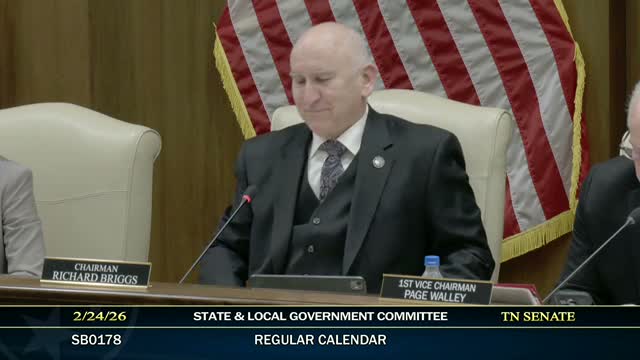
A Nashville witness told the Senate State and Local Government Committee that local officials sometimes use agenda rules to prevent constituents from speaking on issues that are within the governing body's jurisdiction, and she urged passage of SB0178 to restore broader public comment rights.
Britney Seymour, who identified herself as vice secretary of the Cumberland County Young Republicans, told the committee she had sought to speak about a student‑safety and administrative‑transparency matter in her county and was denied by a board attorney citing agenda rules. “When local governing bodies are allowed to choose who gets to speak based on their own comfort levels, they are no longer operating as a representative government,” Seymour said in testimony.
SB0178, as amended, reserves a public comment period to allow the public to comment on any matter germane to the jurisdiction of the governing body regardless of whether the matter is listed on the meeting agenda. Sponsor and supporters characterized the bill as a response to “agenda gatekeeping,” and proponents called it a narrow, jurisdiction‑based expansion designed to prevent bad‑faith exclusions while preserving reasonable procedural limits (time limits, restriction on repetitive comments) that local bodies may establish.
Chairman Briggs and several senators praised the witness’s preparation and timing; committee members discussed how germaneness would be determined in practice, noting that the meeting parliamentarian or chair typically rules on matters of germaneness and may consult county attorneys for legal questions.
The committee adopted the amendment that rewrote parts of the bill and recorded a roll call in which the amended SB0178 passed the committee and will move to the calendar.
Next steps: The bill will proceed to the Senate calendar; the committee asked the sponsor and staff to confirm drafting and to provide contact information for anecdotal cases raised during testimony.
Britney Seymour, who identified herself as vice secretary of the Cumberland County Young Republicans, told the committee she had sought to speak about a student‑safety and administrative‑transparency matter in her county and was denied by a board attorney citing agenda rules. “When local governing bodies are allowed to choose who gets to speak based on their own comfort levels, they are no longer operating as a representative government,” Seymour said in testimony.
SB0178, as amended, reserves a public comment period to allow the public to comment on any matter germane to the jurisdiction of the governing body regardless of whether the matter is listed on the meeting agenda. Sponsor and supporters characterized the bill as a response to “agenda gatekeeping,” and proponents called it a narrow, jurisdiction‑based expansion designed to prevent bad‑faith exclusions while preserving reasonable procedural limits (time limits, restriction on repetitive comments) that local bodies may establish.
Chairman Briggs and several senators praised the witness’s preparation and timing; committee members discussed how germaneness would be determined in practice, noting that the meeting parliamentarian or chair typically rules on matters of germaneness and may consult county attorneys for legal questions.
The committee adopted the amendment that rewrote parts of the bill and recorded a roll call in which the amended SB0178 passed the committee and will move to the calendar.
Next steps: The bill will proceed to the Senate calendar; the committee asked the sponsor and staff to confirm drafting and to provide contact information for anecdotal cases raised during testimony.
Don't Miss a Word: See the Full Meeting!
Go beyond summaries. Unlock every video, transcript, and key insight with a Founder Membership.
✓
Get instant access to full meeting videos
✓
Search and clip any phrase from complete transcripts
✓
Receive AI-powered summaries & custom alerts
✓
Enjoy lifetime, unrestricted access to government data
30-day money-back guarantee
