Senate committee advances bill to limit victims’ phone data handed to defense, adopts compromise substitute
February 24, 2026 | 2026 Utah Legislature, Utah Legislature, Utah Legislative Branch, Utah
This article was created by AI summarizing key points discussed. AI makes mistakes, so for full details and context, please refer to the video of the full meeting. Please report any errors so we can fix them. Report an error »
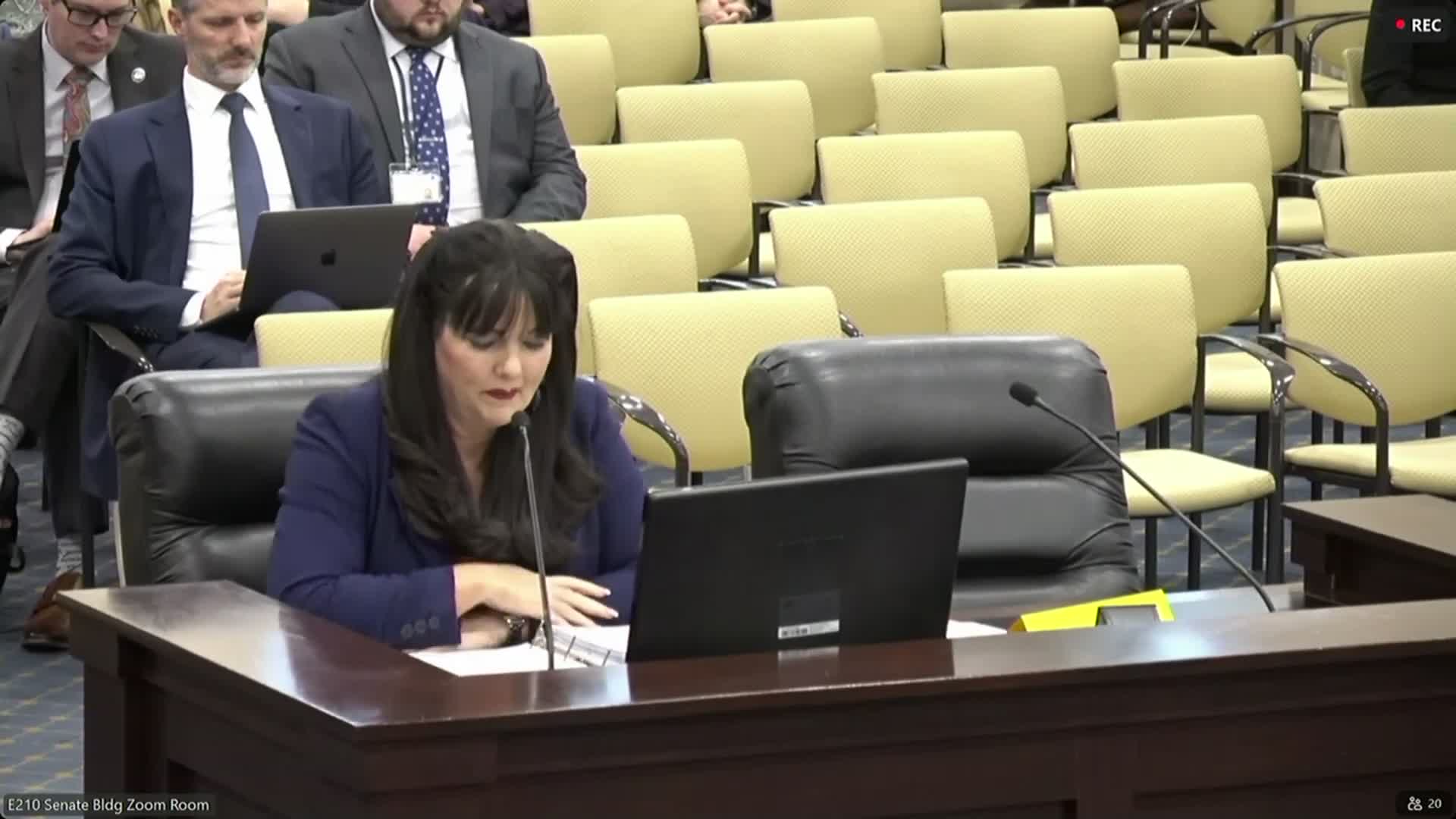
Senators on the Senate Judiciary, Law Enforcement and Criminal Justice Committee voted to advance SB 290, a measure that would restrict automatic disclosure of victims’ nonpublic electronic data in criminal discovery and require prosecutors to turn over only data relevant and necessary to a case while providing defense counsel controlled access under court supervision.
Sponsor Senator Baldry said the measure responds to cases where broad “phone dumps” of private information have led to secondary trauma for victims, citing the 2018 University of Utah case discussed in the presentation. Stuart Young, criminal deputy attorney general, told the committee some versions and a negotiated substitute align with federal practice but shift responsibility onto prosecutors to identify relevant material and create controlled review mechanisms.
Defense groups and criminal-defense attorneys urged safeguards to preserve due process. Steve Burton of the Utah Defense Attorney Association said a mandatory protective-order approach (sub 1) would allow defense counsel to review evidence while protecting victims under court orders. Seth Stewart and others warned the proposal should not presuppose victim status before findings of fact and urged clear processes for challenges.
Victim advocates and the Victim Services Commission said protective orders offer higher privacy protections and argued that current practice can deter reporting when victims fear their entire digital lives will be exposed. Libertas and other stakeholders supported a middle ground—sub 1 as negotiated—to preserve privacy while allowing effective defense preparation.
After extended debate and roll-call votes on competing substitutes, the committee adopted and recommended the first substitute to the Senate floor, signaling the committee’s desire to move the negotiations forward while noting further adjustments will likely occur on the Senate floor.
The committee’s action does not change the underlying Supreme Court obligations (Brady/Giglio) that require prosecutors to disclose exculpatory material; it instead modifies the procedures for handling large amounts of nonpublic electronic data. The sponsor said the work will continue in conference with defense counsel, prosecutors and victim advocates as the bill proceeds.
Sponsor Senator Baldry said the measure responds to cases where broad “phone dumps” of private information have led to secondary trauma for victims, citing the 2018 University of Utah case discussed in the presentation. Stuart Young, criminal deputy attorney general, told the committee some versions and a negotiated substitute align with federal practice but shift responsibility onto prosecutors to identify relevant material and create controlled review mechanisms.
Defense groups and criminal-defense attorneys urged safeguards to preserve due process. Steve Burton of the Utah Defense Attorney Association said a mandatory protective-order approach (sub 1) would allow defense counsel to review evidence while protecting victims under court orders. Seth Stewart and others warned the proposal should not presuppose victim status before findings of fact and urged clear processes for challenges.
Victim advocates and the Victim Services Commission said protective orders offer higher privacy protections and argued that current practice can deter reporting when victims fear their entire digital lives will be exposed. Libertas and other stakeholders supported a middle ground—sub 1 as negotiated—to preserve privacy while allowing effective defense preparation.
After extended debate and roll-call votes on competing substitutes, the committee adopted and recommended the first substitute to the Senate floor, signaling the committee’s desire to move the negotiations forward while noting further adjustments will likely occur on the Senate floor.
The committee’s action does not change the underlying Supreme Court obligations (Brady/Giglio) that require prosecutors to disclose exculpatory material; it instead modifies the procedures for handling large amounts of nonpublic electronic data. The sponsor said the work will continue in conference with defense counsel, prosecutors and victim advocates as the bill proceeds.
Don't Miss a Word: See the Full Meeting!
Go beyond summaries. Unlock every video, transcript, and key insight with a Founder Membership.
✓
Get instant access to full meeting videos
✓
Search and clip any phrase from complete transcripts
✓
Receive AI-powered summaries & custom alerts
✓
Enjoy lifetime, unrestricted access to government data
30-day money-back guarantee
