Committee backs narrow judge discretion for housing some 17-year capital-murder defendants, adopts recidivism metric changes
February 24, 2026 | 2026 Utah Legislature, Utah Legislature, Utah Legislative Branch, Utah
This article was created by AI summarizing key points discussed. AI makes mistakes, so for full details and context, please refer to the video of the full meeting. Please report any errors so we can fix them. Report an error »
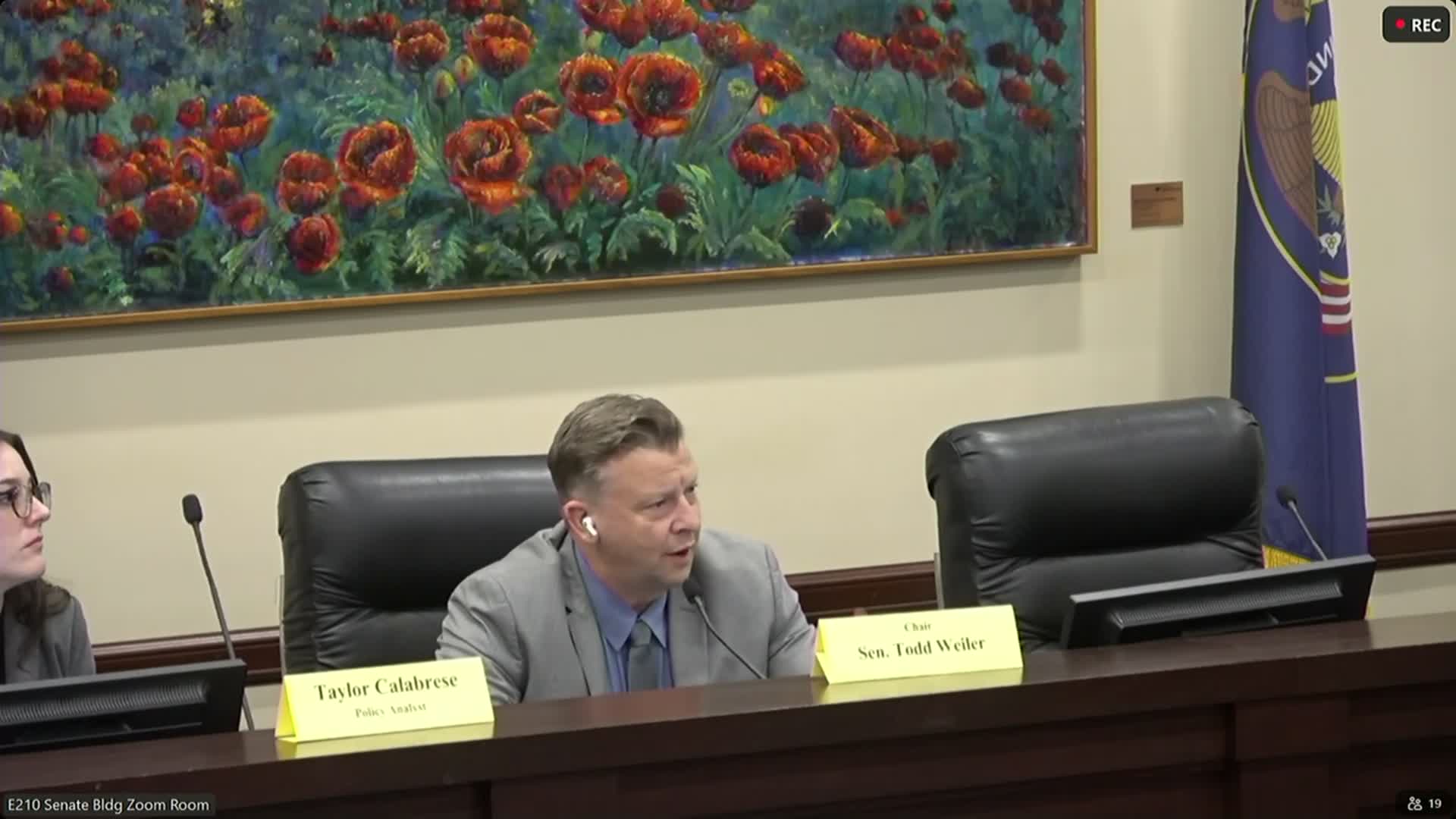
The Senate committee voted to recommend House Bill 48 to the Senate floor after hearing testimony about two distinct elements: (1) establishing a definition and statutory code for juvenile recidivism metrics; and (2) a narrow provisional-housing provision that would permit a sentencing judge — in cases where the defendant was 17 when the crime occurred but 18 or older at sentencing and only for capital murder — to decide whether the person will be placed in juvenile secure care or adult prison.
Representative Lisonbee said the recidivism metric language helps the state maintain consistent, measurable data and noted the secure care age span (13–25) that prompted the narrow carve-out. Dan Strong of CCJJ praised the recidivism metric work. Public commenters included criminal-defense attorney Lacey Singleton, who urged rejection of the provisional-housing piece citing due-process strain and safety concerns; Jesse Martinez described personal experience with prison placement harms; and Kelty Littrell raised mental-health and education access concerns for youth moved to adult prison.
Committee members asked whether code should specify factors a judge must consider; the sponsor agreed to consider adding explicit factors. After public comment and debate the committee voted to favorably recommend the third substitute of HB 48 to the Senate on a roll-call that concluded with a 6–2 tally in committee.
Representative Lisonbee said the recidivism metric language helps the state maintain consistent, measurable data and noted the secure care age span (13–25) that prompted the narrow carve-out. Dan Strong of CCJJ praised the recidivism metric work. Public commenters included criminal-defense attorney Lacey Singleton, who urged rejection of the provisional-housing piece citing due-process strain and safety concerns; Jesse Martinez described personal experience with prison placement harms; and Kelty Littrell raised mental-health and education access concerns for youth moved to adult prison.
Committee members asked whether code should specify factors a judge must consider; the sponsor agreed to consider adding explicit factors. After public comment and debate the committee voted to favorably recommend the third substitute of HB 48 to the Senate on a roll-call that concluded with a 6–2 tally in committee.
Don't Miss a Word: See the Full Meeting!
Go beyond summaries. Unlock every video, transcript, and key insight with a Founder Membership.
✓
Get instant access to full meeting videos
✓
Search and clip any phrase from complete transcripts
✓
Receive AI-powered summaries & custom alerts
✓
Enjoy lifetime, unrestricted access to government data
30-day money-back guarantee
