Committee hears a string of smaller bills on predesigns, property tax exemptions, SNAP forecasting and wildfire funding
February 24, 2026 | Legislative Sessions, Washington
This article was created by AI summarizing key points discussed. AI makes mistakes, so for full details and context, please refer to the video of the full meeting. Please report any errors so we can fix them. Report an error »
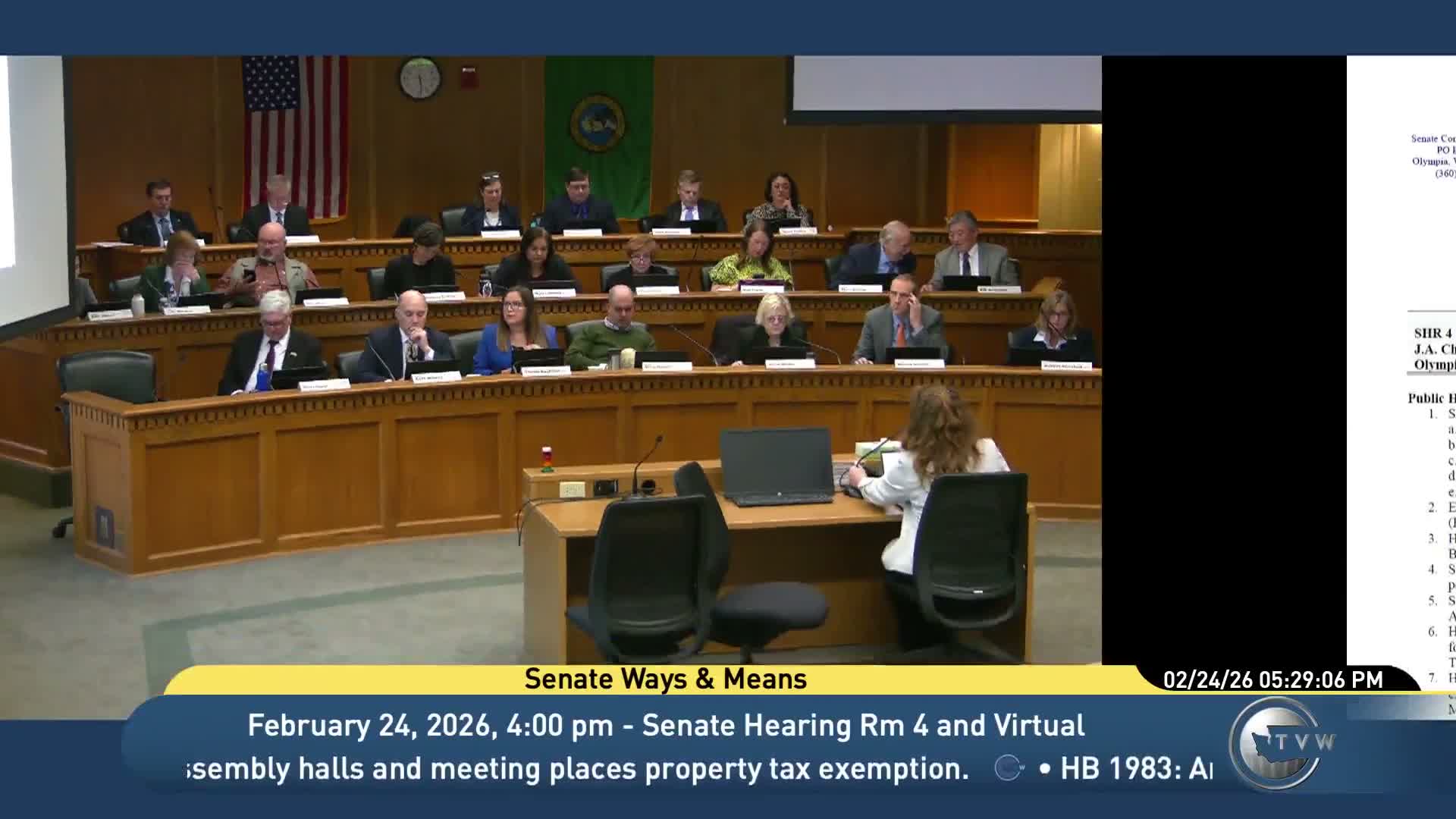
Following the capital budget and CCA discussions, the Senate Ways and Means Committee took up a sequence of bills covering predesign thresholds, tax exemptions and forecasting:
HB 2353 (predesign thresholds). Committee staff summarized a bill to raise the predesign threshold for state capital construction projects from $10 million to $15 million and require annual inflation adjustments. Steve DuPont of Central Washington University testified in support, calling the change an efficiency improvement that reduces unnecessary predesign costs for smaller projects.
HB 2133 (senior center property tax exemption). Staff explained the bill would make permanent a property‑tax exemption for multipurpose nonprofit senior centers now scheduled to expire on Jan. 1, 2028; staff said there is no revenue impact to the state property‑tax levy.
HB 2714 (SNAP and state FAP forecasting). The bill would require the Caseload Forecast Council to project two basic food programs — SNAP and Washington's Food Assistance Program — to help the state anticipate potential costs tied to upcoming federal changes. OFM and hunger‑relief groups testified in support.
HB 2431 (nonprofit public assembly hall exemption). The bill increases the allowable number of regularly scheduled fundraising days for qualifying nonprofit assembly halls from 15 to 50 annually. Representatives of the Washington State Grange said the change gives community halls needed flexibility to raise funds.
HB 2089 (first‑mortgage B&O deduction and wildfire funding). The measure would target an existing B&O tax deduction by excluding high‑volume mortgage lenders and direct additional revenue to a wildfire response, restoration and community resilience account. The Department of Natural Resources and wildfire advocacy groups supported the bill as a revenue source for prevention, while community bank groups urged careful tailoring to protect local lenders.
Committee status: Each bill received staff briefings and public testimony during the Feb. 24 hearing; no final votes were recorded at the session’s end. Committee staff reiterated amendment deadlines and next steps.
HB 2353 (predesign thresholds). Committee staff summarized a bill to raise the predesign threshold for state capital construction projects from $10 million to $15 million and require annual inflation adjustments. Steve DuPont of Central Washington University testified in support, calling the change an efficiency improvement that reduces unnecessary predesign costs for smaller projects.
HB 2133 (senior center property tax exemption). Staff explained the bill would make permanent a property‑tax exemption for multipurpose nonprofit senior centers now scheduled to expire on Jan. 1, 2028; staff said there is no revenue impact to the state property‑tax levy.
HB 2714 (SNAP and state FAP forecasting). The bill would require the Caseload Forecast Council to project two basic food programs — SNAP and Washington's Food Assistance Program — to help the state anticipate potential costs tied to upcoming federal changes. OFM and hunger‑relief groups testified in support.
HB 2431 (nonprofit public assembly hall exemption). The bill increases the allowable number of regularly scheduled fundraising days for qualifying nonprofit assembly halls from 15 to 50 annually. Representatives of the Washington State Grange said the change gives community halls needed flexibility to raise funds.
HB 2089 (first‑mortgage B&O deduction and wildfire funding). The measure would target an existing B&O tax deduction by excluding high‑volume mortgage lenders and direct additional revenue to a wildfire response, restoration and community resilience account. The Department of Natural Resources and wildfire advocacy groups supported the bill as a revenue source for prevention, while community bank groups urged careful tailoring to protect local lenders.
Committee status: Each bill received staff briefings and public testimony during the Feb. 24 hearing; no final votes were recorded at the session’s end. Committee staff reiterated amendment deadlines and next steps.
Don't Miss a Word: See the Full Meeting!
Go beyond summaries. Unlock every video, transcript, and key insight with a Founder Membership.
✓
Get instant access to full meeting videos
✓
Search and clip any phrase from complete transcripts
✓
Receive AI-powered summaries & custom alerts
✓
Enjoy lifetime, unrestricted access to government data
30-day money-back guarantee
