Metro presents FY27 budget, urges Maryland support for regional DMV Moves funding
February 23, 2026 | Transportation and the Environment Subcommittee, Appropriations Committee, HOUSE OF REPRESENTATIVES, Committees, Legislative, Maryland
This article was created by AI summarizing key points discussed. AI makes mistakes, so for full details and context, please refer to the video of the full meeting. Please report any errors so we can fix them. Report an error »
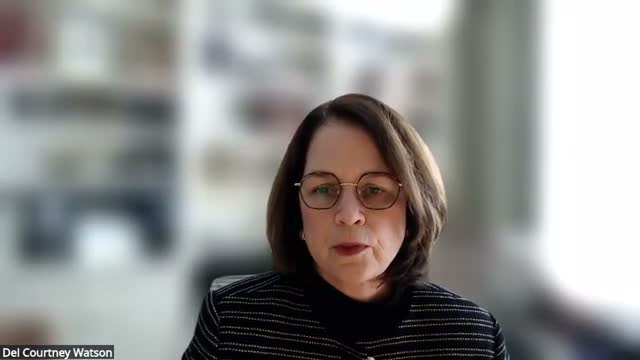
Kelly Norton, the legislative analyst for the subcommittee, opened the hearing with a summary of WMATA’s FY27 proposal and supporting exhibits, noting the FY27 operating allowance rises about 3% to roughly $700 million and the pay‑as‑you‑go capital allowance is about $356 million (a 1.3% increase). Norton told members that the Managing For Results (MFR) data used to prepare certain exhibits contained errors and that the agency should explain the cause and mitigation plan.
Metro General Manager Randy Clark told the panel that 2025 was a strong year for the system, citing industry awards and improved reliability. “We were able to launch … 90% on‑time performance on Metro Rail,” Clark said, and reported roughly 270 million trips in 2025. Clark also said Metro recorded its lowest crime year in its history in 2025, crediting transit police and partners.
Clark and Norton both addressed a data timing issue raised by lawmakers: WMATA submits preliminary MFR numbers in late August and final audited figures to the National Transit Database around Nov. 1, which can make the initial materials appear inconsistent with later federal submissions. Clark committed to working with legislative analysts to reconcile the datasets.
A central policy point in Metro’s appearance was the DMV Moves regional funding proposal. Clark described the task force recommendation for a $460 million annual regional capital program growing 3% a year to reduce deferred maintenance, modernize rail, and boost bus investments. He said Maryland’s initial contribution would be approximately $152 million per year and that the package is designed to improve the authority’s standing to compete for federal discretionary grants, including Capital Investment Grants. “Once we have the money, it gives us the opportunity to then go leverage federal money,” Clark said, while warning that federal awards remain competitive and are not guaranteed.
Members probed how additional Maryland funds would translate into federal matches and whether reclassifying preventive maintenance as capital was sustainable. Clark said classification choices are within FTA rules and that the WMATA board will set final priorities; he cautioned that inflation has reduced purchasing power and could slow capital progress.
On paratransit, delegates raised a seeming decline in agency‑delivered MetroAccess trips and growth of third‑party 'Abilities Ride' trips. Clark explained those two categories are tracked separately—agency‑staffed trips versus third‑party contractor trips—and agreed to provide reconciled ridership charts and the final MFR/NTD numbers to legislative staff.
The subcommittee asked for several follow‑ups: reconciled MFR/NTD data, detailed exhibit figures (including farebox recovery percentages), and clarification on proposed deficiency appropriations noted in the analyst’s appendix. The WMATA portion of the hearing concluded with the agency promising to coordinate with legislative analysts on these items.
Metro General Manager Randy Clark told the panel that 2025 was a strong year for the system, citing industry awards and improved reliability. “We were able to launch … 90% on‑time performance on Metro Rail,” Clark said, and reported roughly 270 million trips in 2025. Clark also said Metro recorded its lowest crime year in its history in 2025, crediting transit police and partners.
Clark and Norton both addressed a data timing issue raised by lawmakers: WMATA submits preliminary MFR numbers in late August and final audited figures to the National Transit Database around Nov. 1, which can make the initial materials appear inconsistent with later federal submissions. Clark committed to working with legislative analysts to reconcile the datasets.
A central policy point in Metro’s appearance was the DMV Moves regional funding proposal. Clark described the task force recommendation for a $460 million annual regional capital program growing 3% a year to reduce deferred maintenance, modernize rail, and boost bus investments. He said Maryland’s initial contribution would be approximately $152 million per year and that the package is designed to improve the authority’s standing to compete for federal discretionary grants, including Capital Investment Grants. “Once we have the money, it gives us the opportunity to then go leverage federal money,” Clark said, while warning that federal awards remain competitive and are not guaranteed.
Members probed how additional Maryland funds would translate into federal matches and whether reclassifying preventive maintenance as capital was sustainable. Clark said classification choices are within FTA rules and that the WMATA board will set final priorities; he cautioned that inflation has reduced purchasing power and could slow capital progress.
On paratransit, delegates raised a seeming decline in agency‑delivered MetroAccess trips and growth of third‑party 'Abilities Ride' trips. Clark explained those two categories are tracked separately—agency‑staffed trips versus third‑party contractor trips—and agreed to provide reconciled ridership charts and the final MFR/NTD numbers to legislative staff.
The subcommittee asked for several follow‑ups: reconciled MFR/NTD data, detailed exhibit figures (including farebox recovery percentages), and clarification on proposed deficiency appropriations noted in the analyst’s appendix. The WMATA portion of the hearing concluded with the agency promising to coordinate with legislative analysts on these items.
View the Full Meeting & All Its Details
This article offers just a summary. Unlock complete video, transcripts, and insights as a Founder Member.
✓
Watch full, unedited meeting videos
✓
Search every word spoken in unlimited transcripts
✓
AI summaries & real-time alerts (all government levels)
✓
Permanent access to expanding government content
30-day money-back guarantee
