San Mateo council funds $70,000 for Central El Camino study as SamTrans outlines multimodal plan
February 23, 2026 | San Mateo City, San Mateo County, California
This article was created by AI summarizing key points discussed. AI makes mistakes, so for full details and context, please refer to the video of the full meeting. Please report any errors so we can fix them. Report an error »
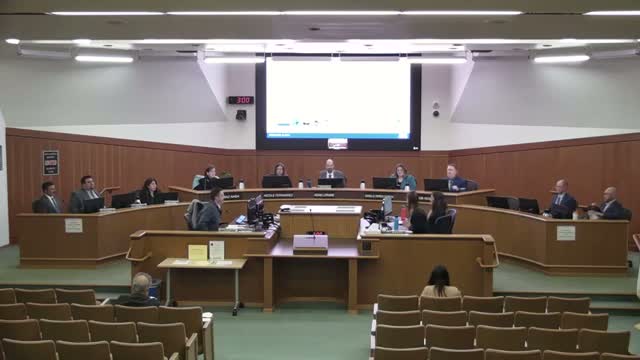
SamTrans and city staff on Feb. 20 presented a countywide vision to remake El Camino Real into a safer, multimodal corridor and asked the City of San Mateo to appropriate $70,000 to pay for additional local outreach and parking studies.
The presentation, given by Cassie Halls, manager of major corridors at SamTrans, described the Central El Camino plan as part of the Grand Boulevard Initiative: a coordinated program across 15 jurisdictions to modernize State Route 82. Halls said the full corridor effort could cost up to $1 billion and stressed that Caltrans — which owns and maintains El Camino Real — will be a required partner in the design and delivery process. “El Camino Real is San Mateo’s main street,” Halls said, framing the project as a long‑term redesign to improve safety, transit, walking and biking.
Why it matters: the corridor carries high vehicle volumes and has recorded recent serious collisions; council members repeatedly emphasized the need for near‑term safety fixes alongside long‑range planning. SamTrans presented three high‑level alternatives — transit‑focused, pedestrian‑focused and bicycle‑focused — for the northern and southern segments of San Mateo, and outlined tradeoffs such as parking loss and potential vehicle travel delays.
Public commenters and council members pressed SamTrans on who will make final decisions and how community priorities will be reflected. SamTrans officials said Caltrans is ultimately the decision maker within the state process but that SamTrans and participating cities will narrow the alternatives presented to Caltrans. Halls and consultant Ingrid Ballas Armand described ongoing engagement: pop‑ups, walk audits, business mailers to roughly 1,300 businesses and an online survey that SamTrans said had more than 500 responses as of the presentation. Halls estimated bus‑priority lanes could yield roughly 15–20% travel‑time savings for buses.
Council questions focused on: how Caltrans’ role constrains local choices; how many parking spaces might be removed under various alternatives; what outreach and language access would be provided for businesses and non‑English speakers; and whether transit and separated bike facilities can coexist given available right‑of‑way. SamTrans said some combinations are infeasible on large portions of the corridor and recommended using parallel streets for bicycle continuity where needed.
The council voted to appropriate $70,000 of the city’s Measure A funds to support additional San Mateo‑specific studies and targeted community engagement, including a detailed parking‑occupancy study and additional business outreach. The motion carried on a 5–0 roll call vote.
What’s next: SamTrans said the Central El Camino plan will proceed through a multi‑phase Caltrans Project Development process (PA/ED) in which San Mateo would select a preferred alternative, with decision windows in 2027–2028. Staff said the city will work with SamTrans to scope the additional outreach funded by the appropriation and to keep council briefed on analysis and community input.
The presentation, given by Cassie Halls, manager of major corridors at SamTrans, described the Central El Camino plan as part of the Grand Boulevard Initiative: a coordinated program across 15 jurisdictions to modernize State Route 82. Halls said the full corridor effort could cost up to $1 billion and stressed that Caltrans — which owns and maintains El Camino Real — will be a required partner in the design and delivery process. “El Camino Real is San Mateo’s main street,” Halls said, framing the project as a long‑term redesign to improve safety, transit, walking and biking.
Why it matters: the corridor carries high vehicle volumes and has recorded recent serious collisions; council members repeatedly emphasized the need for near‑term safety fixes alongside long‑range planning. SamTrans presented three high‑level alternatives — transit‑focused, pedestrian‑focused and bicycle‑focused — for the northern and southern segments of San Mateo, and outlined tradeoffs such as parking loss and potential vehicle travel delays.
Public commenters and council members pressed SamTrans on who will make final decisions and how community priorities will be reflected. SamTrans officials said Caltrans is ultimately the decision maker within the state process but that SamTrans and participating cities will narrow the alternatives presented to Caltrans. Halls and consultant Ingrid Ballas Armand described ongoing engagement: pop‑ups, walk audits, business mailers to roughly 1,300 businesses and an online survey that SamTrans said had more than 500 responses as of the presentation. Halls estimated bus‑priority lanes could yield roughly 15–20% travel‑time savings for buses.
Council questions focused on: how Caltrans’ role constrains local choices; how many parking spaces might be removed under various alternatives; what outreach and language access would be provided for businesses and non‑English speakers; and whether transit and separated bike facilities can coexist given available right‑of‑way. SamTrans said some combinations are infeasible on large portions of the corridor and recommended using parallel streets for bicycle continuity where needed.
The council voted to appropriate $70,000 of the city’s Measure A funds to support additional San Mateo‑specific studies and targeted community engagement, including a detailed parking‑occupancy study and additional business outreach. The motion carried on a 5–0 roll call vote.
What’s next: SamTrans said the Central El Camino plan will proceed through a multi‑phase Caltrans Project Development process (PA/ED) in which San Mateo would select a preferred alternative, with decision windows in 2027–2028. Staff said the city will work with SamTrans to scope the additional outreach funded by the appropriation and to keep council briefed on analysis and community input.
View the Full Meeting & All Its Details
This article offers just a summary. Unlock complete video, transcripts, and insights as a Founder Member.
✓
Watch full, unedited meeting videos
✓
Search every word spoken in unlimited transcripts
✓
AI summaries & real-time alerts (all government levels)
✓
Permanent access to expanding government content
30-day money-back guarantee
