Committee endorses time-limited veterans PTSD research trial with legislative guardrails (HB 390)
February 24, 2026 | 2026 Utah Legislature, Utah Legislature, Utah Legislative Branch, Utah
This article was created by AI summarizing key points discussed. AI makes mistakes, so for full details and context, please refer to the video of the full meeting. Please report any errors so we can fix them. Report an error »
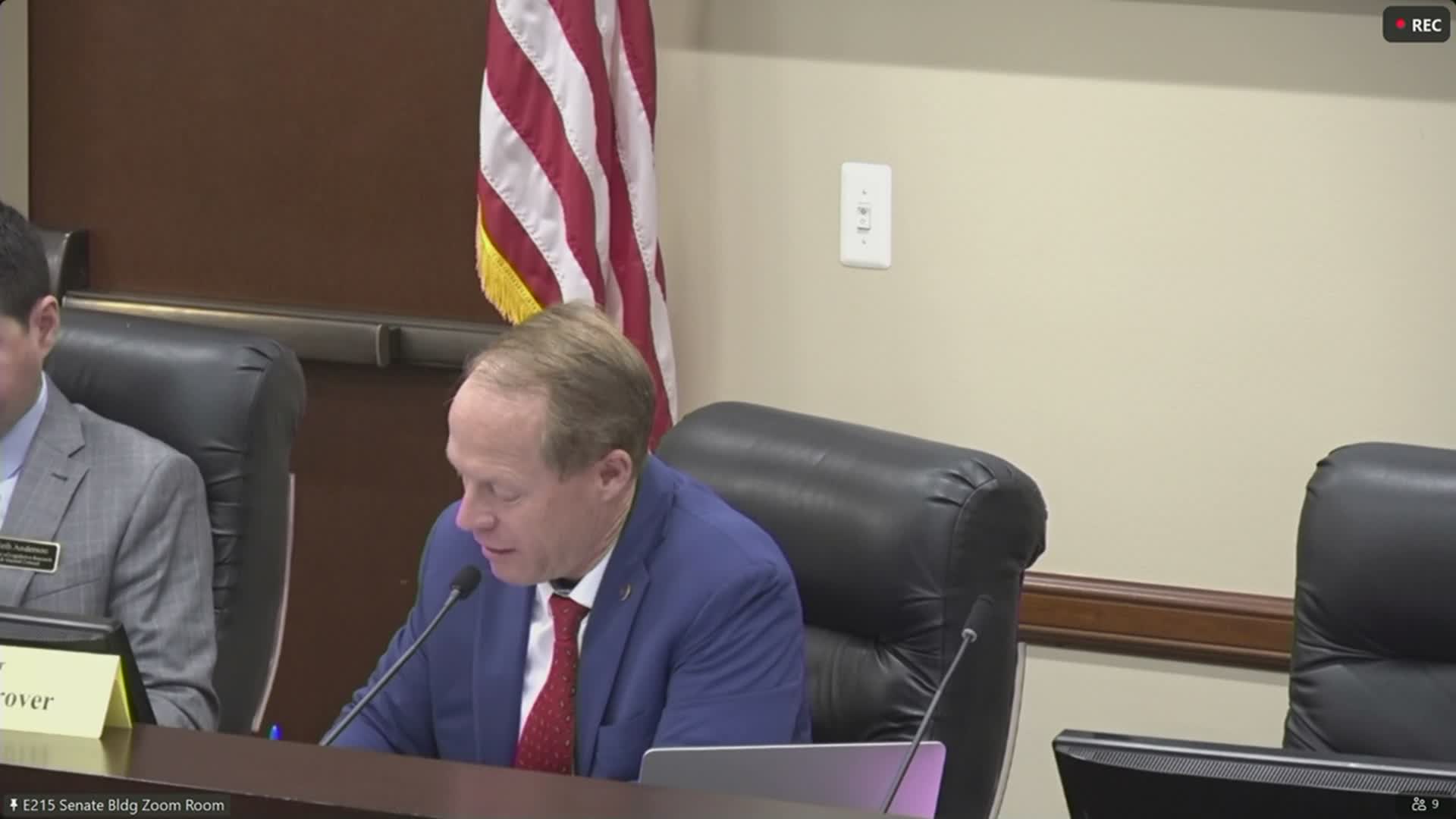
The Health and Human Services Committee on Feb. 19 favorably recommended first substitute HB 390, which would authorize a tightly scoped, time-limited clinical research trial to study psychedelic-assisted therapy for treatment-resistant post-traumatic stress disorder (PTSD) in veterans.
Retired Lt. Col. Matthew Butler, a veteran, gave emotional testimony describing personal recovery after seeking psychedelic-assisted care abroad. “I can say with absolute certainty that I owe my life, my happiness, my sobriety, my happy marriage… all to that Ayahuasca ceremony weekend,” Butler said, urging the legislature to provide a regulated pathway for research. Butler and other veterans’ advocates said many service members seek treatment overseas because a safe, regulated option is not available in the U.S.
Dr. Benjamin Lewis, associate professor of psychiatry at the Huntsman Mental Health Institute, framed the bill as a research-first approach with high levels of regulatory oversight. He said the proposal authorizes a time-limited trial at Huntsman with strict inclusion and exclusion criteria, safety monitoring, stopping rules for serious adverse events and regular reporting to the state: “This is not about public access, legalization, clinical rollout, or commercialization,” Lewis said; rather, it is a tightly controlled research pathway intended to generate Utah-specific safety and outcomes data.
Committee members questioned fiscal and scalability issues. Sponsors said the study has a fiscal note but is not dependent on state funding; private donations and existing grants are part of the funding plan, and the study is scalable based on available funds.
Multiple public witnesses, including a veteran working in alternative medicine and representatives of a psychedelic research center, voiced support. After discussion the sponsor moved that the committee favorably recommend the first substitute and the committee approved the motion by voice vote.
What’s next: The substitute will go to the full Senate. The committee record shows voice approval; no roll-call tally was recorded in the hearing transcript.
Retired Lt. Col. Matthew Butler, a veteran, gave emotional testimony describing personal recovery after seeking psychedelic-assisted care abroad. “I can say with absolute certainty that I owe my life, my happiness, my sobriety, my happy marriage… all to that Ayahuasca ceremony weekend,” Butler said, urging the legislature to provide a regulated pathway for research. Butler and other veterans’ advocates said many service members seek treatment overseas because a safe, regulated option is not available in the U.S.
Dr. Benjamin Lewis, associate professor of psychiatry at the Huntsman Mental Health Institute, framed the bill as a research-first approach with high levels of regulatory oversight. He said the proposal authorizes a time-limited trial at Huntsman with strict inclusion and exclusion criteria, safety monitoring, stopping rules for serious adverse events and regular reporting to the state: “This is not about public access, legalization, clinical rollout, or commercialization,” Lewis said; rather, it is a tightly controlled research pathway intended to generate Utah-specific safety and outcomes data.
Committee members questioned fiscal and scalability issues. Sponsors said the study has a fiscal note but is not dependent on state funding; private donations and existing grants are part of the funding plan, and the study is scalable based on available funds.
Multiple public witnesses, including a veteran working in alternative medicine and representatives of a psychedelic research center, voiced support. After discussion the sponsor moved that the committee favorably recommend the first substitute and the committee approved the motion by voice vote.
What’s next: The substitute will go to the full Senate. The committee record shows voice approval; no roll-call tally was recorded in the hearing transcript.
View the Full Meeting & All Its Details
This article offers just a summary. Unlock complete video, transcripts, and insights as a Founder Member.
✓
Watch full, unedited meeting videos
✓
Search every word spoken in unlimited transcripts
✓
AI summaries & real-time alerts (all government levels)
✓
Permanent access to expanding government content
30-day money-back guarantee
