House advances wide range of bills on water, housing, taxes and public safety; one funding amendment fails
February 24, 2026 | 2026 Utah Legislature, Utah Legislature, Utah Legislative Branch, Utah
This article was created by AI summarizing key points discussed. AI makes mistakes, so for full details and context, please refer to the video of the full meeting. Please report any errors so we can fix them. Report an error »
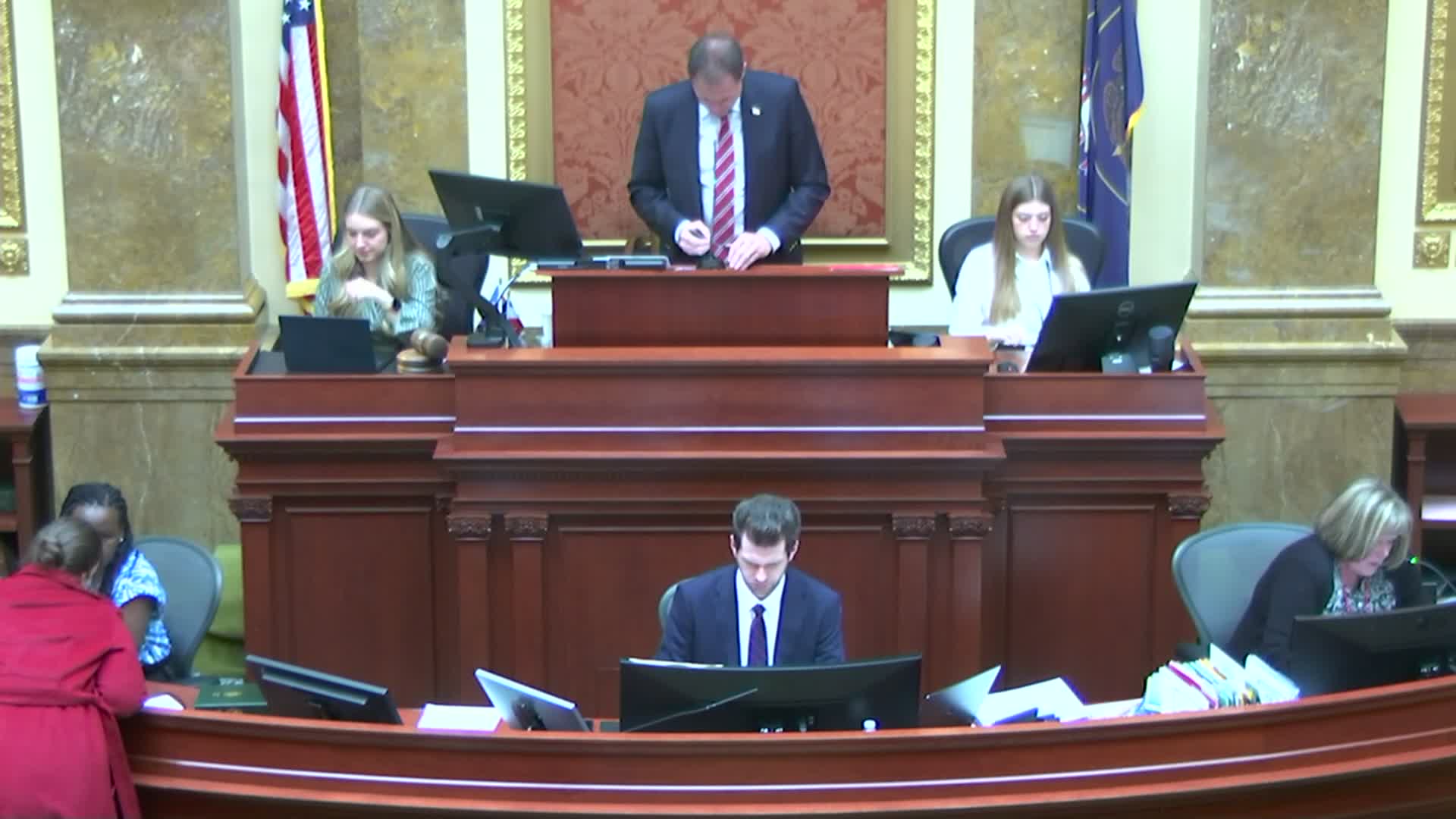
The Utah House advanced a broad slate of measures on Tuesday during day 35 of the 2026 general session, approving bills on water planning, wetlands study, price-protection penalties, state facilities and fuel tax relief while rejecting a proposal to capture unspent agency funds.
Key floor outcomes included the House’s concurrence and final passage of third substitute House Bill 274 (sentencing amendments), which passed 69–0 after sponsors said it restores juvenile prosecutors as voting members of the sentencing commission, moves the JJOC chair to nonvoting status and adds a rural representation requirement.
On water policy, Second Substitute House Bill 439 (water planning amendments) passed 59–8. Sponsor Representative Shallenberger said the bill directs the state water engineer to provide a 40‑year planning template so municipalities, counties and special districts show long‑term water availability or use exactions during development review.
Second Substitute House Bill 509, a wetlands study bill prompted by the U.S. Supreme Court’s Sackett v. EPA decision, passed 58–10. Representative Owens said the measure directs the Division of Natural Resources to study regulatory gaps and does not impose new regulatory controls.
House members adopted consumer‑protection changes in House Bill 493, increasing penalties for repeated price‑tag inaccuracies; the bill passed 65–1. House Bill 508 (state facilities modifications) passed 65–1 after sponsors described changes to project thresholds and transparency rules for the Department of Facilities and Construction Management.
Major fiscal and infrastructure measures included First Substitute House Bill 575 (fuel tax and supply amendments), which passed 66–2; sponsors described a 15% reduction in the gas tax (estimated at roughly $45 million) paired with efforts to streamline permitting and expand supply. Third Substitute House Bill 492 (transportation infrastructure and housing) passed 61–8; sponsors said it establishes a $100 million revolving loan facility to fund capacity infrastructure for entitled housing.
One high‑profile fiscal proposal failed: Representative Matthews’ First Substitute House Bill 453, which would have captured 50% of lapsing agency funds into a restricted account to support behavioral health and child‑care priorities, failed 23–42 after members raised concerns about shifting general‑fund resources and overlap with other child‑care measures.
Several bills that passed the House will be transmitted to the Senate for further consideration. The House recessed until 2:00 p.m.
Votes recorded on the floor are the official actions of the House; bill texts and fiscal notes provide full programmatic detail.
Key floor outcomes included the House’s concurrence and final passage of third substitute House Bill 274 (sentencing amendments), which passed 69–0 after sponsors said it restores juvenile prosecutors as voting members of the sentencing commission, moves the JJOC chair to nonvoting status and adds a rural representation requirement.
On water policy, Second Substitute House Bill 439 (water planning amendments) passed 59–8. Sponsor Representative Shallenberger said the bill directs the state water engineer to provide a 40‑year planning template so municipalities, counties and special districts show long‑term water availability or use exactions during development review.
Second Substitute House Bill 509, a wetlands study bill prompted by the U.S. Supreme Court’s Sackett v. EPA decision, passed 58–10. Representative Owens said the measure directs the Division of Natural Resources to study regulatory gaps and does not impose new regulatory controls.
House members adopted consumer‑protection changes in House Bill 493, increasing penalties for repeated price‑tag inaccuracies; the bill passed 65–1. House Bill 508 (state facilities modifications) passed 65–1 after sponsors described changes to project thresholds and transparency rules for the Department of Facilities and Construction Management.
Major fiscal and infrastructure measures included First Substitute House Bill 575 (fuel tax and supply amendments), which passed 66–2; sponsors described a 15% reduction in the gas tax (estimated at roughly $45 million) paired with efforts to streamline permitting and expand supply. Third Substitute House Bill 492 (transportation infrastructure and housing) passed 61–8; sponsors said it establishes a $100 million revolving loan facility to fund capacity infrastructure for entitled housing.
One high‑profile fiscal proposal failed: Representative Matthews’ First Substitute House Bill 453, which would have captured 50% of lapsing agency funds into a restricted account to support behavioral health and child‑care priorities, failed 23–42 after members raised concerns about shifting general‑fund resources and overlap with other child‑care measures.
Several bills that passed the House will be transmitted to the Senate for further consideration. The House recessed until 2:00 p.m.
Votes recorded on the floor are the official actions of the House; bill texts and fiscal notes provide full programmatic detail.
Don't Miss a Word: See the Full Meeting!
Go beyond summaries. Unlock every video, transcript, and key insight with a Founder Membership.
✓
Get instant access to full meeting videos
✓
Search and clip any phrase from complete transcripts
✓
Receive AI-powered summaries & custom alerts
✓
Enjoy lifetime, unrestricted access to government data
30-day money-back guarantee
