House passes a batch of education, public-safety and social-services bills; dozens advance to the Senate
February 24, 2026 | 2026 Utah Legislature, Utah Legislature, Utah Legislative Branch, Utah
This article was created by AI summarizing key points discussed. AI makes mistakes, so for full details and context, please refer to the video of the full meeting. Please report any errors so we can fix them. Report an error »
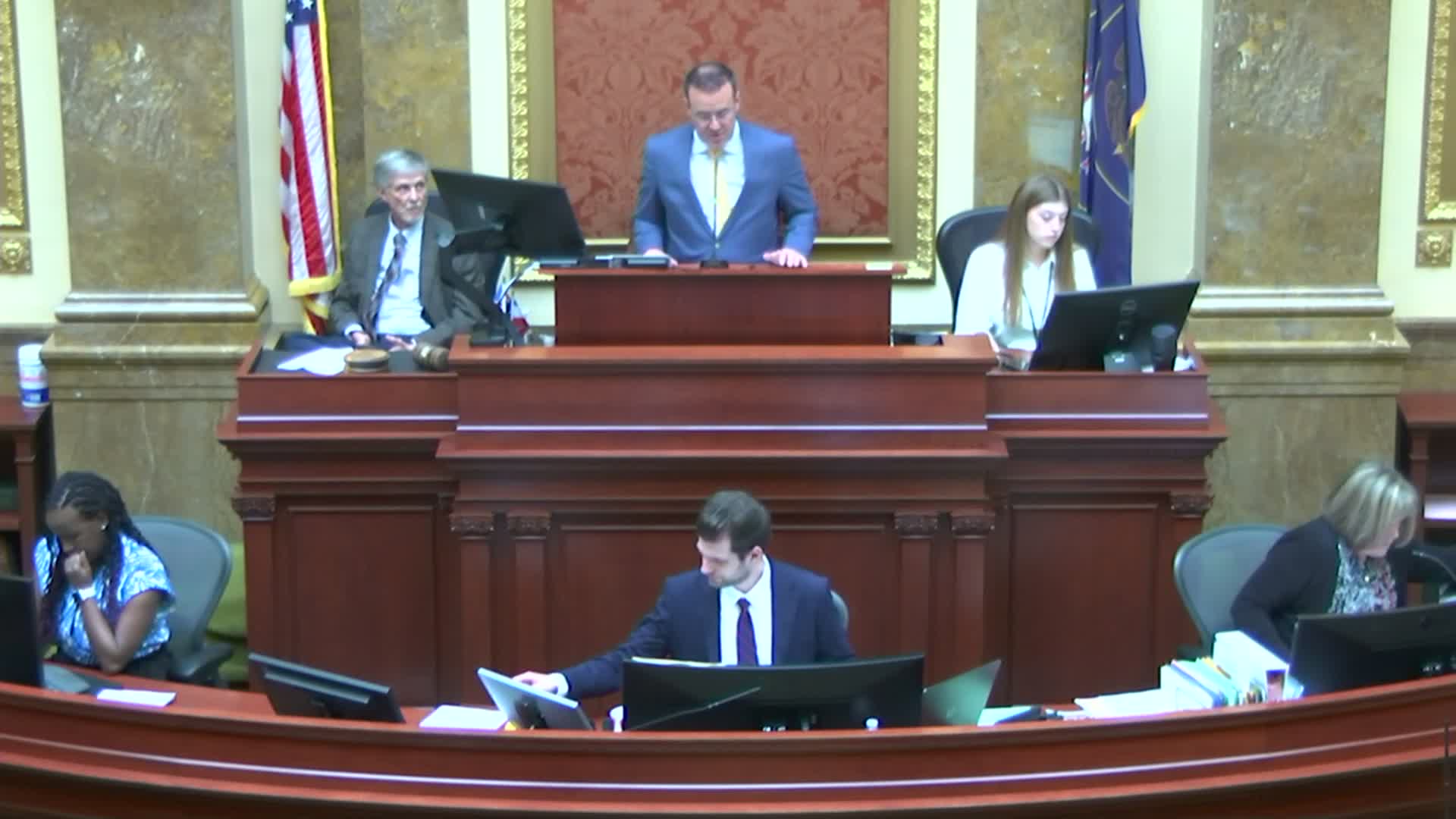
The Utah House of Representatives met Feb. 24 and voted on a broad set of measures that the speaker placed on the third-reading calendar or sent to the Senate.
Lawmakers adopted multiple committee reports early in the session and approved or "circled/uncircled" numerous bills for further consideration. On the floor the House passed dozens of bills and substitutes, including measures on online-education oversight, school-bus internet access, program-integrity changes for Medicaid and SNAP, EMS emergency medication licensing and rules for third-party litigation funding.
Key outcomes recorded on the floor included: the first substitute of HB 498 (App Store accountability cleanup) passed 60–5; first substitute HB 426 (online education service provider amendments) passed 65–1; first substitute HB 4 62 (school-bus internet access) was amended and passed (transcript shows 59–6); HB 524 (public education financial officers) passed 58–9; first substitute HB 471 (social-services amendments) passed 55–13; first substitute HB 531 (scarification amendments) passed 67–1; first substitute HB 402 (EMS controlled substance licensing amendments) passed 66–1; third substitute HB 539 (public safety modifications) passed unanimously 66–0; third substitute HB 280 (third-party litigation funding amendments) passed 67–1; and first substitute HB 559 (pregnancy and infant loss awareness and provider training) passed 68–1. Several other bills were circled for later work or assigned to committees by the Rules Committee.
Many floor presentations emphasized policy intent rather than creating new benefit categories. Rep. Sam Monson, sponsor of HB 471, repeatedly said the measure "does not remove eligibility" and aims to align state code with federal rules to strengthen confidence in benefits administration. Rep. Walter, sponsor of school and education bills, described HB 426 as intended to preserve academic standards and require LEAs to set policies that ensure course objectives and teacher interaction. Sponsors of other bills described amendments as technical or clarifying, and the attorney general’s office was cited in multiple instances as prompting statutory clarifications to ensure constitutional compliance.
What’s next: Passed bills will be transmitted to the Senate for consideration; several circled bills remain in committee for possible substitutes or additional amendments. The House adjourned until Feb. 25 at 10:00 a.m.
Lawmakers adopted multiple committee reports early in the session and approved or "circled/uncircled" numerous bills for further consideration. On the floor the House passed dozens of bills and substitutes, including measures on online-education oversight, school-bus internet access, program-integrity changes for Medicaid and SNAP, EMS emergency medication licensing and rules for third-party litigation funding.
Key outcomes recorded on the floor included: the first substitute of HB 498 (App Store accountability cleanup) passed 60–5; first substitute HB 426 (online education service provider amendments) passed 65–1; first substitute HB 4 62 (school-bus internet access) was amended and passed (transcript shows 59–6); HB 524 (public education financial officers) passed 58–9; first substitute HB 471 (social-services amendments) passed 55–13; first substitute HB 531 (scarification amendments) passed 67–1; first substitute HB 402 (EMS controlled substance licensing amendments) passed 66–1; third substitute HB 539 (public safety modifications) passed unanimously 66–0; third substitute HB 280 (third-party litigation funding amendments) passed 67–1; and first substitute HB 559 (pregnancy and infant loss awareness and provider training) passed 68–1. Several other bills were circled for later work or assigned to committees by the Rules Committee.
Many floor presentations emphasized policy intent rather than creating new benefit categories. Rep. Sam Monson, sponsor of HB 471, repeatedly said the measure "does not remove eligibility" and aims to align state code with federal rules to strengthen confidence in benefits administration. Rep. Walter, sponsor of school and education bills, described HB 426 as intended to preserve academic standards and require LEAs to set policies that ensure course objectives and teacher interaction. Sponsors of other bills described amendments as technical or clarifying, and the attorney general’s office was cited in multiple instances as prompting statutory clarifications to ensure constitutional compliance.
What’s next: Passed bills will be transmitted to the Senate for consideration; several circled bills remain in committee for possible substitutes or additional amendments. The House adjourned until Feb. 25 at 10:00 a.m.
Don't Miss a Word: See the Full Meeting!
Go beyond summaries. Unlock every video, transcript, and key insight with a Founder Membership.
✓
Get instant access to full meeting videos
✓
Search and clip any phrase from complete transcripts
✓
Receive AI-powered summaries & custom alerts
✓
Enjoy lifetime, unrestricted access to government data
30-day money-back guarantee
