House approves HB 426 requiring LEAs to set policies for online education providers
February 24, 2026 | 2026 Utah Legislature, Utah Legislature, Utah Legislative Branch, Utah
This article was created by AI summarizing key points discussed. AI makes mistakes, so for full details and context, please refer to the video of the full meeting. Please report any errors so we can fix them. Report an error »
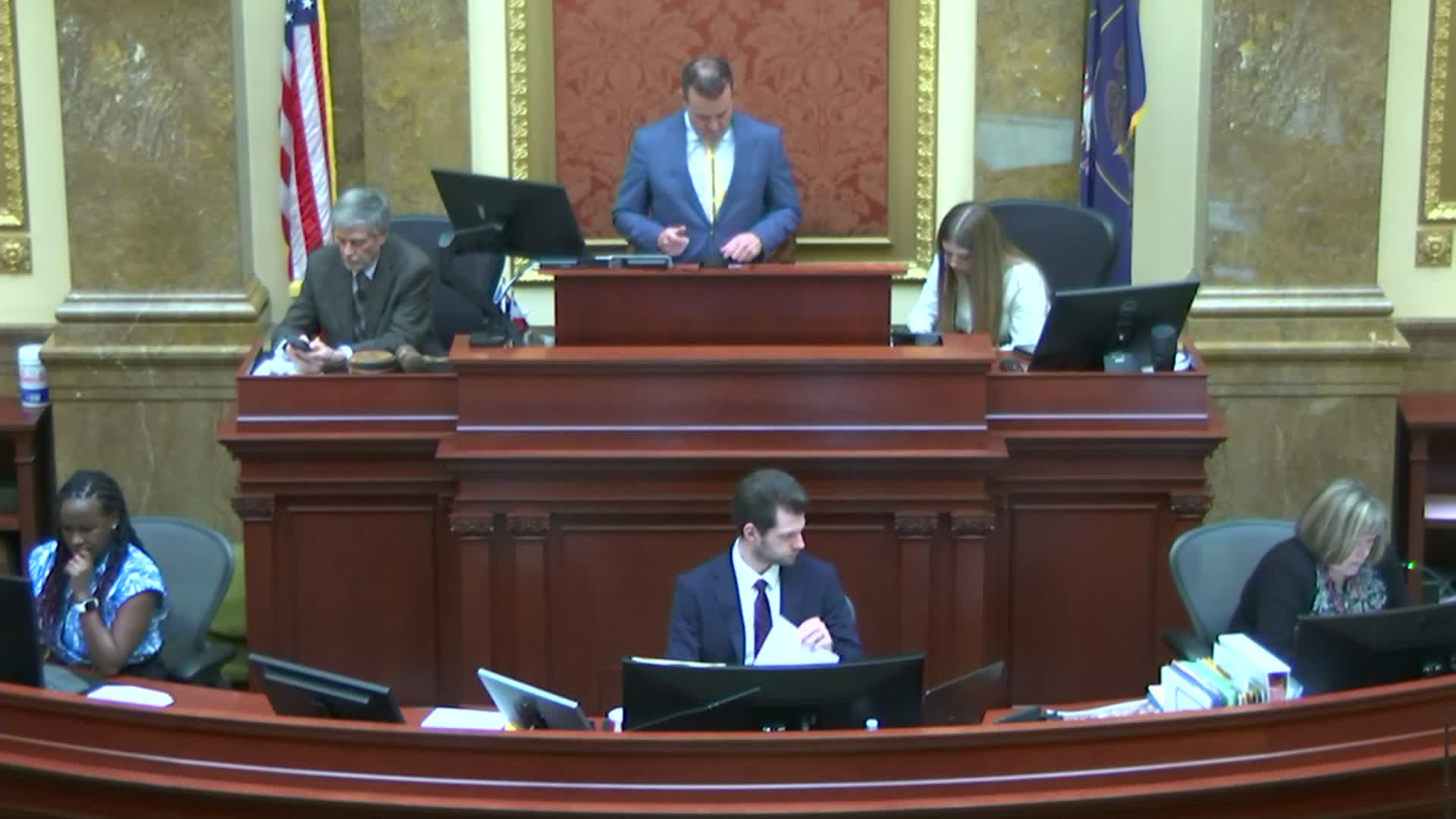
The House passed first substitute HB 426 on Feb. 24, a bill sponsors described as the Legislature’s response to a legislative audit of online education providers. Representative Walter, sponsor of the bill, told the House the measure requires local education agencies (LEAs) — charter schools or districts — to craft policies covering pacing, minimum teacher-of-record interactions, alignment of course objectives to state standards and safeguards against automated work (e.g., inappropriate use of AI).
Walter said the bill is aimed at protecting more than 10,000 students participating in alternative learning models and will require LEAs and online providers to coordinate on pacing and measurable course objectives. The bill also requires LEAs to ensure students complete their own work and to provide at least minimum interactions with a licensed teacher of record.
After presentation and a waived summation, the first substitute passed the House on a recorded vote of 65 yes and 1 no, and the measure will go to the Senate. Sponsors said the bill is a compromise that preserves alternative models while adding accountability where course objectives and time-on-task were unclear.
What’s next: HB 426 proceeds to the Senate for its consideration. If enacted, school districts and charter LEAs will be responsible for adopting and implementing the mandated policies.
Walter said the bill is aimed at protecting more than 10,000 students participating in alternative learning models and will require LEAs and online providers to coordinate on pacing and measurable course objectives. The bill also requires LEAs to ensure students complete their own work and to provide at least minimum interactions with a licensed teacher of record.
After presentation and a waived summation, the first substitute passed the House on a recorded vote of 65 yes and 1 no, and the measure will go to the Senate. Sponsors said the bill is a compromise that preserves alternative models while adding accountability where course objectives and time-on-task were unclear.
What’s next: HB 426 proceeds to the Senate for its consideration. If enacted, school districts and charter LEAs will be responsible for adopting and implementing the mandated policies.
Don't Miss a Word: See the Full Meeting!
Go beyond summaries. Unlock every video, transcript, and key insight with a Founder Membership.
✓
Get instant access to full meeting videos
✓
Search and clip any phrase from complete transcripts
✓
Receive AI-powered summaries & custom alerts
✓
Enjoy lifetime, unrestricted access to government data
30-day money-back guarantee
