Utah committee adopts substitute to allow civil suits over child sexual abuse material
February 24, 2026 | 2026 Utah Legislature, Utah Legislature, Utah Legislative Branch, Utah
This article was created by AI summarizing key points discussed. AI makes mistakes, so for full details and context, please refer to the video of the full meeting. Please report any errors so we can fix them. Report an error »
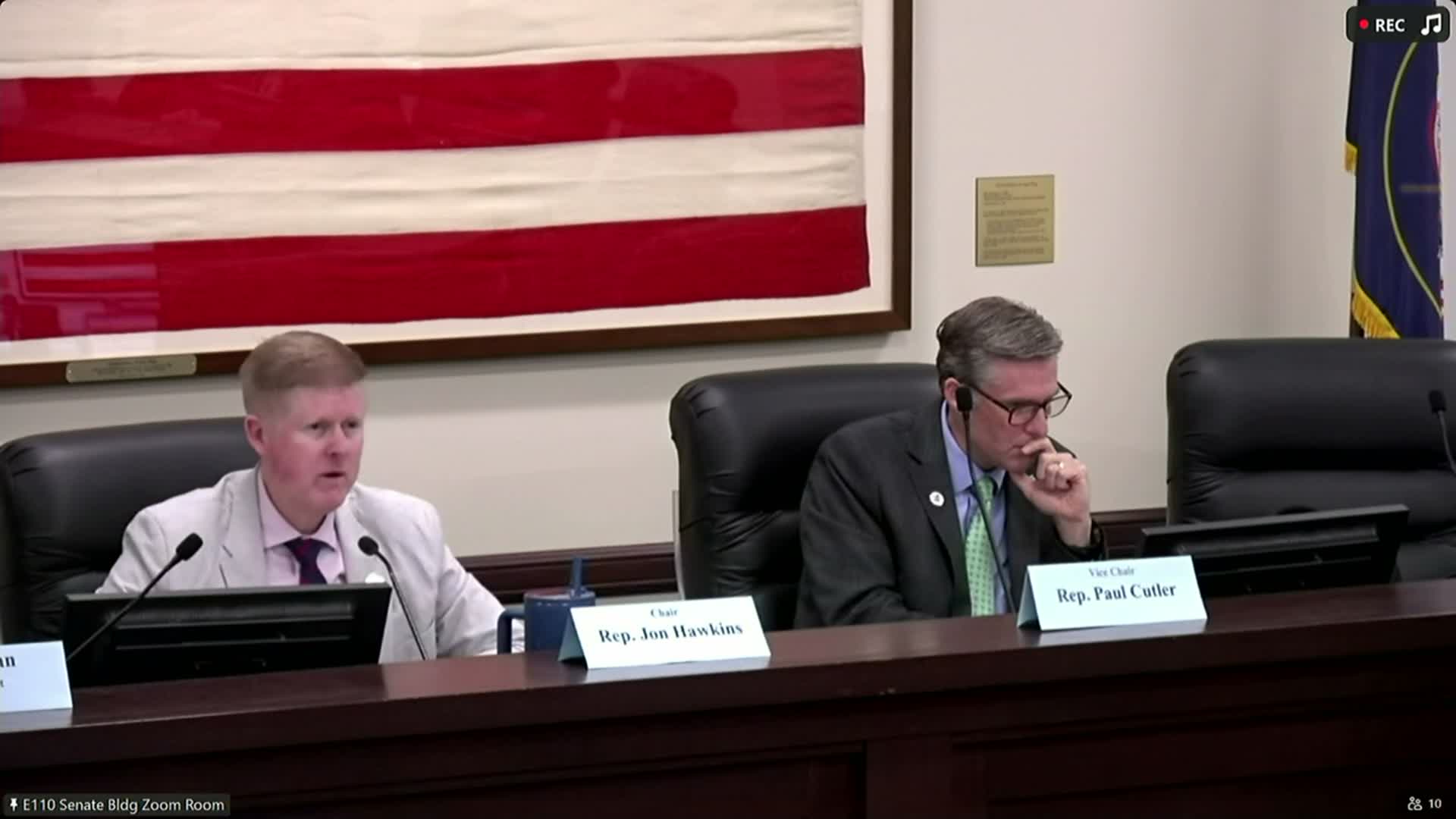
Representative Peck brought the third substitute of HB149 to the committee, saying the bill fills a gap between Utah code and federal law to give victims a private civil remedy for child sexual abuse material (CSAM). The sponsor cited state-level reporting: "in 2024, over 8,324 reports of CSAM in Utah were reported," and argued the law would let victims recover therapy costs and other remedies even when criminal prosecutions do not follow.
Trey Dellinger, a senior legal fellow with AFA Action, urged passage, calling CSAM "the worst of the worst material" and arguing the bill raises private enforcement without implicating free‑speech protections: "This is not protected speech," he told committee members. Dellinger also cited national estimates and industry figures to emphasize the scale of online exploitation.
Industry and advocacy groups offered mixed-but‑largely supportive comments. Matt Holton, representing Comcast, said earlier drafts had unintentionally swept in Internet service providers and that the substitute language clarifies ISPs are not creators or storage hosts of illegal content: "Internet service providers purely are making a connection just like a phone call," he said, thanking the sponsor for clarifying protections. Other public commenters representing Utah Moms for America, CitizenGo USA and local advocacy groups urged the committee to pass the measure so families and survivors can seek civil remedies.
Committee members questioned the bill's incorporation of existing obscenity language; Representative Miller asked whether the obscenity definition could sweep in non‑criminal speech. The sponsor and witnesses said the bill relies on the longstanding Miller obscenity test and criminal definitions in Utah code, and that the measure is narrowly targeted at illegal CSAM.
Representative Jack moved and the committee adopted the third substitute; the committee then favorably recommended HB149 and placed it on the consent calendar. The committee recorded unanimous support for adoption and recommendation.
The bill directs Utah law toward private civil actions for publication or distribution of CSAM and includes safe‑harbor language to avoid unintentionally pulling in intermediaries that only provide connectivity. Next steps: HB149, placed on the consent calendar, will move forward for floor consideration per legislative scheduling.
Trey Dellinger, a senior legal fellow with AFA Action, urged passage, calling CSAM "the worst of the worst material" and arguing the bill raises private enforcement without implicating free‑speech protections: "This is not protected speech," he told committee members. Dellinger also cited national estimates and industry figures to emphasize the scale of online exploitation.
Industry and advocacy groups offered mixed-but‑largely supportive comments. Matt Holton, representing Comcast, said earlier drafts had unintentionally swept in Internet service providers and that the substitute language clarifies ISPs are not creators or storage hosts of illegal content: "Internet service providers purely are making a connection just like a phone call," he said, thanking the sponsor for clarifying protections. Other public commenters representing Utah Moms for America, CitizenGo USA and local advocacy groups urged the committee to pass the measure so families and survivors can seek civil remedies.
Committee members questioned the bill's incorporation of existing obscenity language; Representative Miller asked whether the obscenity definition could sweep in non‑criminal speech. The sponsor and witnesses said the bill relies on the longstanding Miller obscenity test and criminal definitions in Utah code, and that the measure is narrowly targeted at illegal CSAM.
Representative Jack moved and the committee adopted the third substitute; the committee then favorably recommended HB149 and placed it on the consent calendar. The committee recorded unanimous support for adoption and recommendation.
The bill directs Utah law toward private civil actions for publication or distribution of CSAM and includes safe‑harbor language to avoid unintentionally pulling in intermediaries that only provide connectivity. Next steps: HB149, placed on the consent calendar, will move forward for floor consideration per legislative scheduling.
Don't Miss a Word: See the Full Meeting!
Go beyond summaries. Unlock every video, transcript, and key insight with a Founder Membership.
✓
Get instant access to full meeting videos
✓
Search and clip any phrase from complete transcripts
✓
Receive AI-powered summaries & custom alerts
✓
Enjoy lifetime, unrestricted access to government data
30-day money-back guarantee
