Panel backs sweeping justice-involved mental-health bill after lengthy privacy debate
February 24, 2026 | 2026 Utah Legislature, Utah Legislature, Utah Legislative Branch, Utah
This article was created by AI summarizing key points discussed. AI makes mistakes, so for full details and context, please refer to the video of the full meeting. Please report any errors so we can fix them. Report an error »
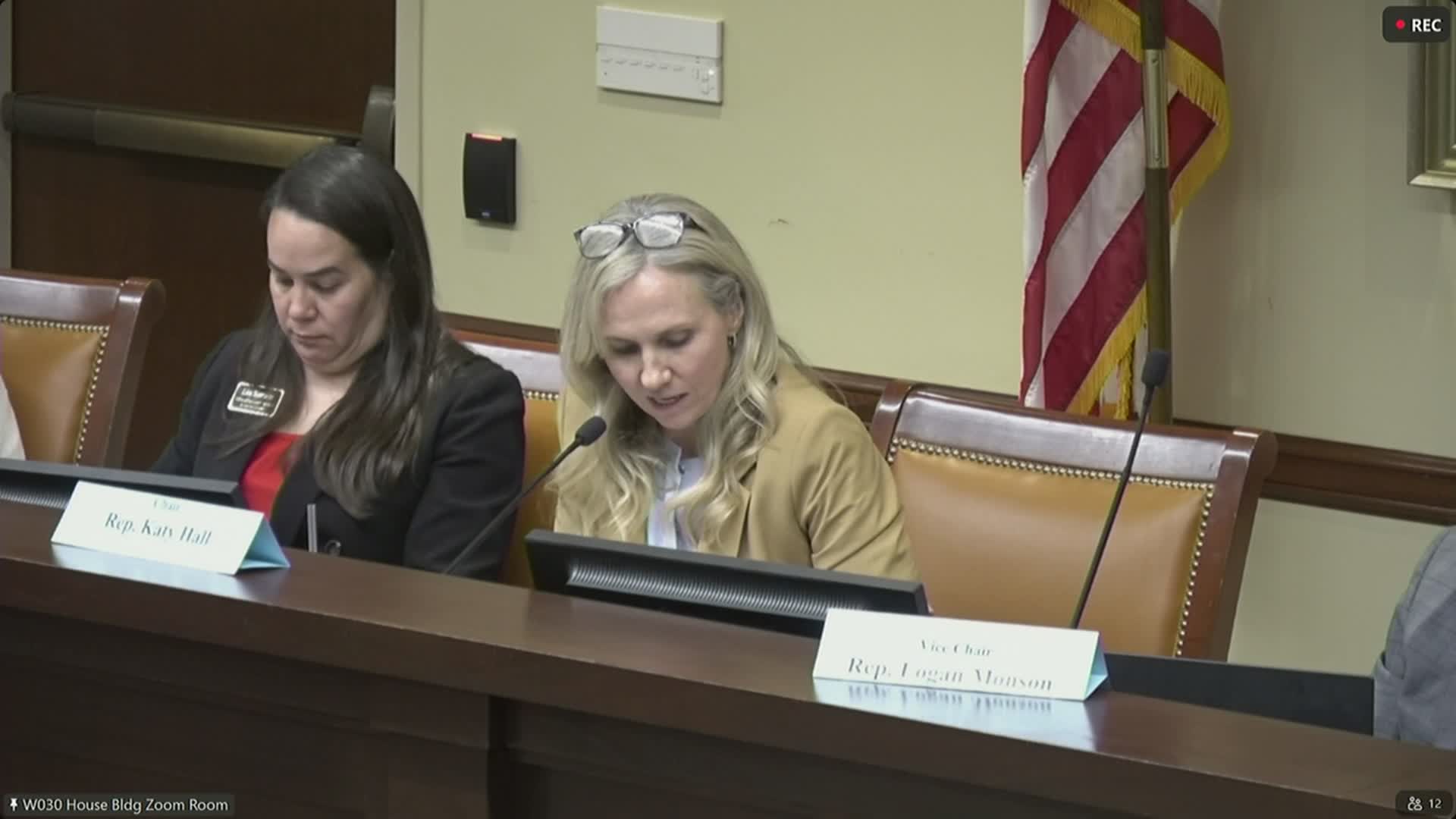
The House Health and Human Services Committee voted 12–1 to favorably recommend House Bill 572 (second substitute), a package of behavioral-health commission recommendations and justice-involved diversion reforms that sponsors said would create pre‑ and post‑arrest pathways to treatment and improve coordination across courts, law enforcement and behavioral-health providers.
Representative Lisonbee, the sponsor, said the bill bundles recommendations from the legislatively created Behavioral Health Commission and work with local stakeholders to establish diversion mechanisms modeled on Miami‑Dade County’s approach. “The diversion component of this bill…we're now connecting the dots with accountability,” Lisonbee told the committee.
Judge Steve Leifman, the Miami‑Dade judge credited with developing that model, told lawmakers the county’s pre‑arrest and post‑arrest redesign reduced annual arrests from about 118,000 to 53,000, lowered jail census, closed a major jail facility and delivered substantial taxpayer savings — figures he cited in support of creating integrated pathways to treatment rather than repeated criminalization.
Ally Isom, chair of the Utah Behavioral Health Commission, summarized prioritized recommendations including relief for state hospital capacity (a phased build for 60 beds with funding requested for the first 30), mobile crisis outreach teams, rural behavioral-health receiving centers, peer-recovery services, and crisis transport pilots. She said the commission’s recommendations were developed through multi‑sector analysis and stakeholder input.
A broad slate of stakeholders — legal defenders, district attorneys, county officials, recovery advocates, NAMI, and families — testified in support, calling the bill a balanced approach to protect rights while expanding treatment opportunities and accountability mechanisms for diversions.
A central point of debate was a proposed HHS-managed database to track civil commitments, temporary orders and diversion contacts. Several committee members warned the draft lacked detail on retention, query access, use by law enforcement, and long-term stigma for individuals temporarily committed. Representative Abbott said he would vote against the bill unless database concerns were tightened; sponsor Lisonbee replied that rulemaking and public process would set guardrails and compared the design to existing controlled prescription databases.
After adopting the second substitute and a subsequent motion to pass the bill with a favorable recommendation, the committee approved HB 572 on a roll call of 12 to 1, with Representative Abbott the lone 'no.' The sponsor and stakeholders said legislative work would continue on privacy, data access, and prioritization of requested funding.
Representative Lisonbee, the sponsor, said the bill bundles recommendations from the legislatively created Behavioral Health Commission and work with local stakeholders to establish diversion mechanisms modeled on Miami‑Dade County’s approach. “The diversion component of this bill…we're now connecting the dots with accountability,” Lisonbee told the committee.
Judge Steve Leifman, the Miami‑Dade judge credited with developing that model, told lawmakers the county’s pre‑arrest and post‑arrest redesign reduced annual arrests from about 118,000 to 53,000, lowered jail census, closed a major jail facility and delivered substantial taxpayer savings — figures he cited in support of creating integrated pathways to treatment rather than repeated criminalization.
Ally Isom, chair of the Utah Behavioral Health Commission, summarized prioritized recommendations including relief for state hospital capacity (a phased build for 60 beds with funding requested for the first 30), mobile crisis outreach teams, rural behavioral-health receiving centers, peer-recovery services, and crisis transport pilots. She said the commission’s recommendations were developed through multi‑sector analysis and stakeholder input.
A broad slate of stakeholders — legal defenders, district attorneys, county officials, recovery advocates, NAMI, and families — testified in support, calling the bill a balanced approach to protect rights while expanding treatment opportunities and accountability mechanisms for diversions.
A central point of debate was a proposed HHS-managed database to track civil commitments, temporary orders and diversion contacts. Several committee members warned the draft lacked detail on retention, query access, use by law enforcement, and long-term stigma for individuals temporarily committed. Representative Abbott said he would vote against the bill unless database concerns were tightened; sponsor Lisonbee replied that rulemaking and public process would set guardrails and compared the design to existing controlled prescription databases.
After adopting the second substitute and a subsequent motion to pass the bill with a favorable recommendation, the committee approved HB 572 on a roll call of 12 to 1, with Representative Abbott the lone 'no.' The sponsor and stakeholders said legislative work would continue on privacy, data access, and prioritization of requested funding.
View the Full Meeting & All Its Details
This article offers just a summary. Unlock complete video, transcripts, and insights as a Founder Member.
✓
Watch full, unedited meeting videos
✓
Search every word spoken in unlimited transcripts
✓
AI summaries & real-time alerts (all government levels)
✓
Permanent access to expanding government content
30-day money-back guarantee
