Committee advances HB 136 after debate over impoundment, rapid fingerprinting and equity
February 24, 2026 | 2026 Utah Legislature, Utah Legislature, Utah Legislative Branch, Utah
This article was created by AI summarizing key points discussed. AI makes mistakes, so for full details and context, please refer to the video of the full meeting. Please report any errors so we can fix them. Report an error »
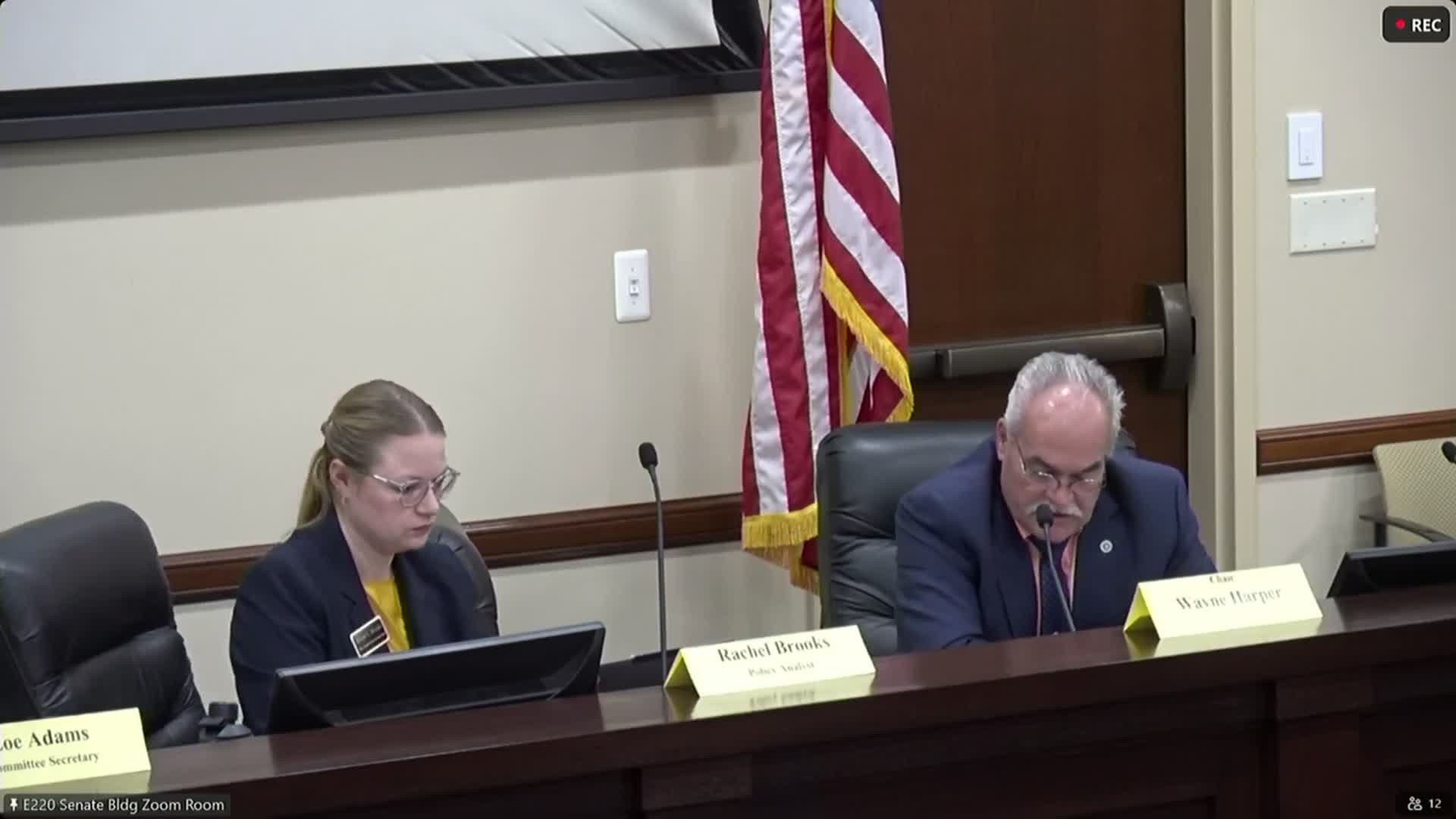
Representative McPherson presented House Bill 136 (fourth substitute), which keeps driving without a license an infraction while expanding law‑enforcement tools such as discretionary vehicle impoundment for repeat unlicensed drivers and rapid fingerprint scanning to identify warrants. He said the changes are intended to prevent repeated offenders from returning to the road and to provide alternatives to arrest in identification checks.
Jane Nelson, a Delta resident, gave emotional testimony describing how a man ticketed three times for driving without a license struck and killed her husband 25 minutes after the last stop: "If our laws had required impoundment or mandatory no‑drive order for unlicensed individuals, that car would have been towed, that driver would have been off the road, and my husband would be alive today." Her testimony framed the sponsor’s public‑safety rationale for expanded impound authority.
Law‑enforcement witnesses, including Nate Mudder of the law enforcement legislative committee and the Statewide Association of Prosecutors, urged support, saying impound authority and limited fingerprint checks would help keep repeat offenders off the road. Prosecutors and some police also described collection of crash statistics and enforcement experience where unlicensed driving is associated with serious crashes.
Opponents and civil‑liberties advocates warned the bill could unduly burden low‑income and rural residents and raised privacy concerns about biometric collection. Lori Cartwright of Mormon Women for Ethical Government argued mandatory impound and biometric requirements could be financially devastating in areas with limited public transportation. Committee members also questioned whether the bill did enough to remove barriers for residents to obtain driver‑privilege cards (DPCs); Representative McPherson said that reintegration into licensing was outside the current bill’s scope.
The committee substituted the fourth substitute, adopted the house amendment, and voted to send HB 136 to the Senate floor with a favorable recommendation; the recorded committee tally was 5–2 (Senators Riebe and Kwan recorded as nay).
Jane Nelson, a Delta resident, gave emotional testimony describing how a man ticketed three times for driving without a license struck and killed her husband 25 minutes after the last stop: "If our laws had required impoundment or mandatory no‑drive order for unlicensed individuals, that car would have been towed, that driver would have been off the road, and my husband would be alive today." Her testimony framed the sponsor’s public‑safety rationale for expanded impound authority.
Law‑enforcement witnesses, including Nate Mudder of the law enforcement legislative committee and the Statewide Association of Prosecutors, urged support, saying impound authority and limited fingerprint checks would help keep repeat offenders off the road. Prosecutors and some police also described collection of crash statistics and enforcement experience where unlicensed driving is associated with serious crashes.
Opponents and civil‑liberties advocates warned the bill could unduly burden low‑income and rural residents and raised privacy concerns about biometric collection. Lori Cartwright of Mormon Women for Ethical Government argued mandatory impound and biometric requirements could be financially devastating in areas with limited public transportation. Committee members also questioned whether the bill did enough to remove barriers for residents to obtain driver‑privilege cards (DPCs); Representative McPherson said that reintegration into licensing was outside the current bill’s scope.
The committee substituted the fourth substitute, adopted the house amendment, and voted to send HB 136 to the Senate floor with a favorable recommendation; the recorded committee tally was 5–2 (Senators Riebe and Kwan recorded as nay).
Don't Miss a Word: See the Full Meeting!
Go beyond summaries. Unlock every video, transcript, and key insight with a Founder Membership.
✓
Get instant access to full meeting videos
✓
Search and clip any phrase from complete transcripts
✓
Receive AI-powered summaries & custom alerts
✓
Enjoy lifetime, unrestricted access to government data
30-day money-back guarantee
