Tualatin council opens path for Honeybucket to seek zoning change after staff compliance steps
February 23, 2026 | Tualatin, Washington County, Oregon
This article was created by AI summarizing key points discussed. AI makes mistakes, so for full details and context, please refer to the video of the full meeting. Please report any errors so we can fix them. Report an error »
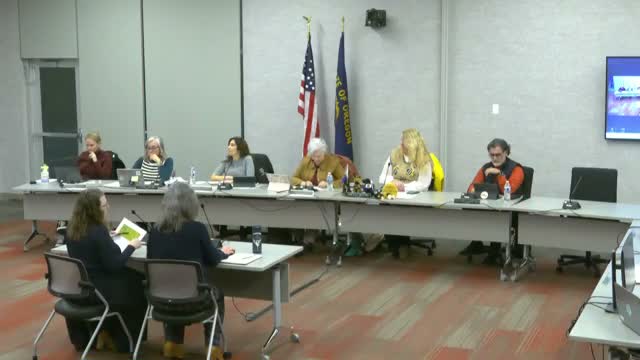
City staff and the Tualatin City Council spent the second half of Wednesday's work session considering next steps for Honeybucket (Northwest Cascade DBA Honeybucket), a portable restroom service operating on a property zoned Light Manufacturing.
Staff told the council it first became aware of Honeybucket's operations in October 2024 and subsequently completed a code interpretation this year that concluded the business fits the city's "solid waste treatment and recycling" use category— a category not allowed in the Light Manufacturing zone. "If Honeybucket does not leave that location, citations will be issued. Those can be issued daily at $1,000 per day, for the underlying violations of, operating in a non permitted use at this location," City Attorney Kevin Connell said.
The owners appealed the interpretation to council earlier; the council upheld staff's determination. Staff then negotiated a voluntary compliance agreement that holds enforcement in abeyance while council considers a path forward. Staff presented two main legislative options: (1) a plan text amendment to allow solid waste and related uses in Light Manufacturing as conditional uses, with spacing and other restrictions to limit impacts; or (2) a rezoning or applicant-initiated zone change to General Manufacturing for this property (or an extension of the adjacent General Manufacturing zone north) so the business could seek a conditional use or comparable approval.
Jason Perry, Honeybucket's chief operating officer, told council the earlier on-site holding tank has been removed and that trucks now dispose of waste directly at Clean Water Services (CWS). "It was gone 2 days after the last time we met. We now dump directly at CWS," Perry said. He added that most processing takes place inside the building and that outdoor washing uses fresh water that drains off as trucks are prepared.
Several council members said they were reluctant to broadly change the Light Manufacturing code and emphasized potential impacts on adjacent residential areas, schools and wetlands. Councilor Hilliard and others suggested the city could tailor spacing or other conditions within a conditional use framework; Councilor Brooks and Councilor Sacco urged caution about establishing new precedents that could lead to other industrial uses near homes.
Mayor Bubenick floated a pragmatic alternative: ask the applicant to initiate a zone change or explore extending the adjacent General Manufacturing zone to include the Honeybucket property and adjacent lots, which would place outreach and the application burden on the property owner. Staff told council they will research both options and work with Honeybucket and its counsel on next steps; the voluntary compliance agreement will remain in effect while the process proceeds.
No final legislative action was taken; council reported a general consensus to have staff and the applicant pursue possible rezoning or other code paths and to return with findings and recommendations.
Staff told the council it first became aware of Honeybucket's operations in October 2024 and subsequently completed a code interpretation this year that concluded the business fits the city's "solid waste treatment and recycling" use category— a category not allowed in the Light Manufacturing zone. "If Honeybucket does not leave that location, citations will be issued. Those can be issued daily at $1,000 per day, for the underlying violations of, operating in a non permitted use at this location," City Attorney Kevin Connell said.
The owners appealed the interpretation to council earlier; the council upheld staff's determination. Staff then negotiated a voluntary compliance agreement that holds enforcement in abeyance while council considers a path forward. Staff presented two main legislative options: (1) a plan text amendment to allow solid waste and related uses in Light Manufacturing as conditional uses, with spacing and other restrictions to limit impacts; or (2) a rezoning or applicant-initiated zone change to General Manufacturing for this property (or an extension of the adjacent General Manufacturing zone north) so the business could seek a conditional use or comparable approval.
Jason Perry, Honeybucket's chief operating officer, told council the earlier on-site holding tank has been removed and that trucks now dispose of waste directly at Clean Water Services (CWS). "It was gone 2 days after the last time we met. We now dump directly at CWS," Perry said. He added that most processing takes place inside the building and that outdoor washing uses fresh water that drains off as trucks are prepared.
Several council members said they were reluctant to broadly change the Light Manufacturing code and emphasized potential impacts on adjacent residential areas, schools and wetlands. Councilor Hilliard and others suggested the city could tailor spacing or other conditions within a conditional use framework; Councilor Brooks and Councilor Sacco urged caution about establishing new precedents that could lead to other industrial uses near homes.
Mayor Bubenick floated a pragmatic alternative: ask the applicant to initiate a zone change or explore extending the adjacent General Manufacturing zone to include the Honeybucket property and adjacent lots, which would place outreach and the application burden on the property owner. Staff told council they will research both options and work with Honeybucket and its counsel on next steps; the voluntary compliance agreement will remain in effect while the process proceeds.
No final legislative action was taken; council reported a general consensus to have staff and the applicant pursue possible rezoning or other code paths and to return with findings and recommendations.
Don't Miss a Word: See the Full Meeting!
Go beyond summaries. Unlock every video, transcript, and key insight with a Founder Membership.
✓
Get instant access to full meeting videos
✓
Search and clip any phrase from complete transcripts
✓
Receive AI-powered summaries & custom alerts
✓
Enjoy lifetime, unrestricted access to government data
30-day money-back guarantee
