Committee hears bill to let transit authorities apply for permits before land acquisition
February 24, 2026 | Legislative Sessions, Washington
This article was created by AI summarizing key points discussed. AI makes mistakes, so for full details and context, please refer to the video of the full meeting. Please report any errors so we can fix them. Report an error »
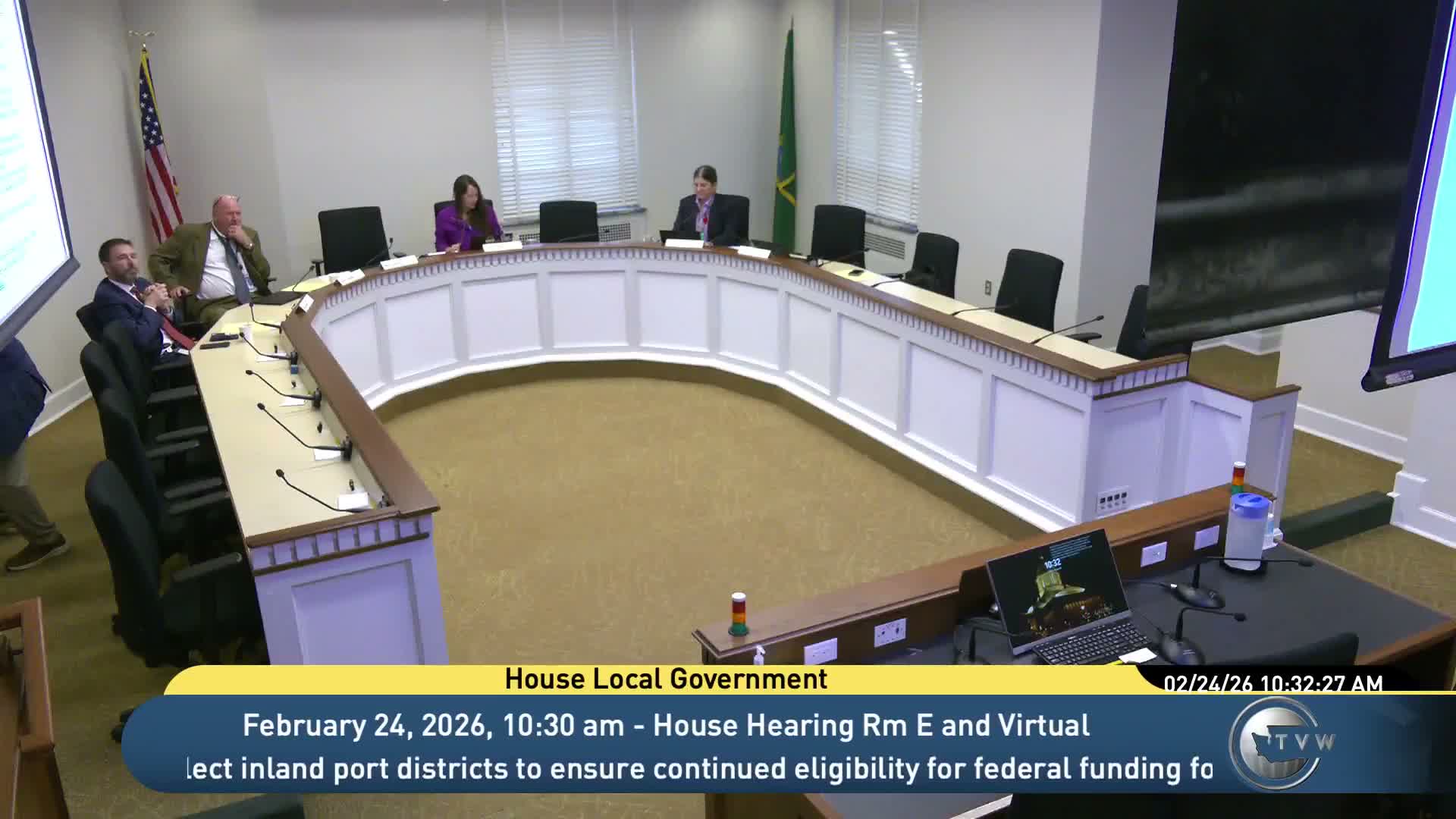
A state Senate Local Government Committee on Tuesday heard substitute Senate Bill 6,309, which would allow a regional transit authority to apply for land-use and construction permits for high-capacity transit projects before it acquires the underlying property.
Elizabeth Ren, staff to the committee, told members the bill lets a regional transit authority submit permit applications before owning property so long as the authority provides proof of notice to the property owner. The measure also would allow construction of fixed-guideway transit facilities that exceed local height or setback limits when the authority complies with development regulations "to the extent practical," and it exempts certain land divisions tied to essential public facilities from subdivision laws.
The changes are intended to let permitting proceed concurrently with land-acquisition steps, reducing the time projects spend waiting for approvals, proponents said.
"Time is money in transportation," said Mark O'Lia, state senator from the 21st District and chair of the Senate Transportation Committee, who described the bill as a way to speed delivery of light rail in the Puget Sound region. He said the bill had been developed in coordination with local governments and that an amendment offered by Representative Doerr—which would let a local government issue permits for property not owned by a transit authority provided the authority remains responsible for securing property rights—was "fantastic."
Christina Walker, a member of the Tacoma City Council and of the Sound Transit board of directors, testified in support of the substitute bill. "This legislation provides additional flexibility and certainty in the planning and permitting of high-capacity transit projects, allowing us to deliver light rail and bus rapid transit faster and more efficiently," Walker said, adding that Sound Transit and several cities had worked on the bill and that an agreed amendment addressed remaining concerns.
Supporters told the committee the proposal is not intended to strip local control but to create tools and predictable processes for regional investments that cross multiple jurisdictions. Committee members asked staff and proponents about the notice provisions and how the amendment would interact with local development standards.
The committee closed the public hearing on SB 6,309 with no vote recorded during the session. Sponsors and staff said they will accept and circulate amendments ahead of an executive session scheduled for the next day.
The measure is a companion to House Bill 2,517, which the committee previously considered.
Elizabeth Ren, staff to the committee, told members the bill lets a regional transit authority submit permit applications before owning property so long as the authority provides proof of notice to the property owner. The measure also would allow construction of fixed-guideway transit facilities that exceed local height or setback limits when the authority complies with development regulations "to the extent practical," and it exempts certain land divisions tied to essential public facilities from subdivision laws.
The changes are intended to let permitting proceed concurrently with land-acquisition steps, reducing the time projects spend waiting for approvals, proponents said.
"Time is money in transportation," said Mark O'Lia, state senator from the 21st District and chair of the Senate Transportation Committee, who described the bill as a way to speed delivery of light rail in the Puget Sound region. He said the bill had been developed in coordination with local governments and that an amendment offered by Representative Doerr—which would let a local government issue permits for property not owned by a transit authority provided the authority remains responsible for securing property rights—was "fantastic."
Christina Walker, a member of the Tacoma City Council and of the Sound Transit board of directors, testified in support of the substitute bill. "This legislation provides additional flexibility and certainty in the planning and permitting of high-capacity transit projects, allowing us to deliver light rail and bus rapid transit faster and more efficiently," Walker said, adding that Sound Transit and several cities had worked on the bill and that an agreed amendment addressed remaining concerns.
Supporters told the committee the proposal is not intended to strip local control but to create tools and predictable processes for regional investments that cross multiple jurisdictions. Committee members asked staff and proponents about the notice provisions and how the amendment would interact with local development standards.
The committee closed the public hearing on SB 6,309 with no vote recorded during the session. Sponsors and staff said they will accept and circulate amendments ahead of an executive session scheduled for the next day.
The measure is a companion to House Bill 2,517, which the committee previously considered.
View the Full Meeting & All Its Details
This article offers just a summary. Unlock complete video, transcripts, and insights as a Founder Member.
✓
Watch full, unedited meeting videos
✓
Search every word spoken in unlimited transcripts
✓
AI summaries & real-time alerts (all government levels)
✓
Permanent access to expanding government content
30-day money-back guarantee
