Committee hears bid-threshold changes for consumer-owned utilities to speed clean-energy projects
February 24, 2026 | Legislative Sessions, Washington
This article was created by AI summarizing key points discussed. AI makes mistakes, so for full details and context, please refer to the video of the full meeting. Please report any errors so we can fix them. Report an error »
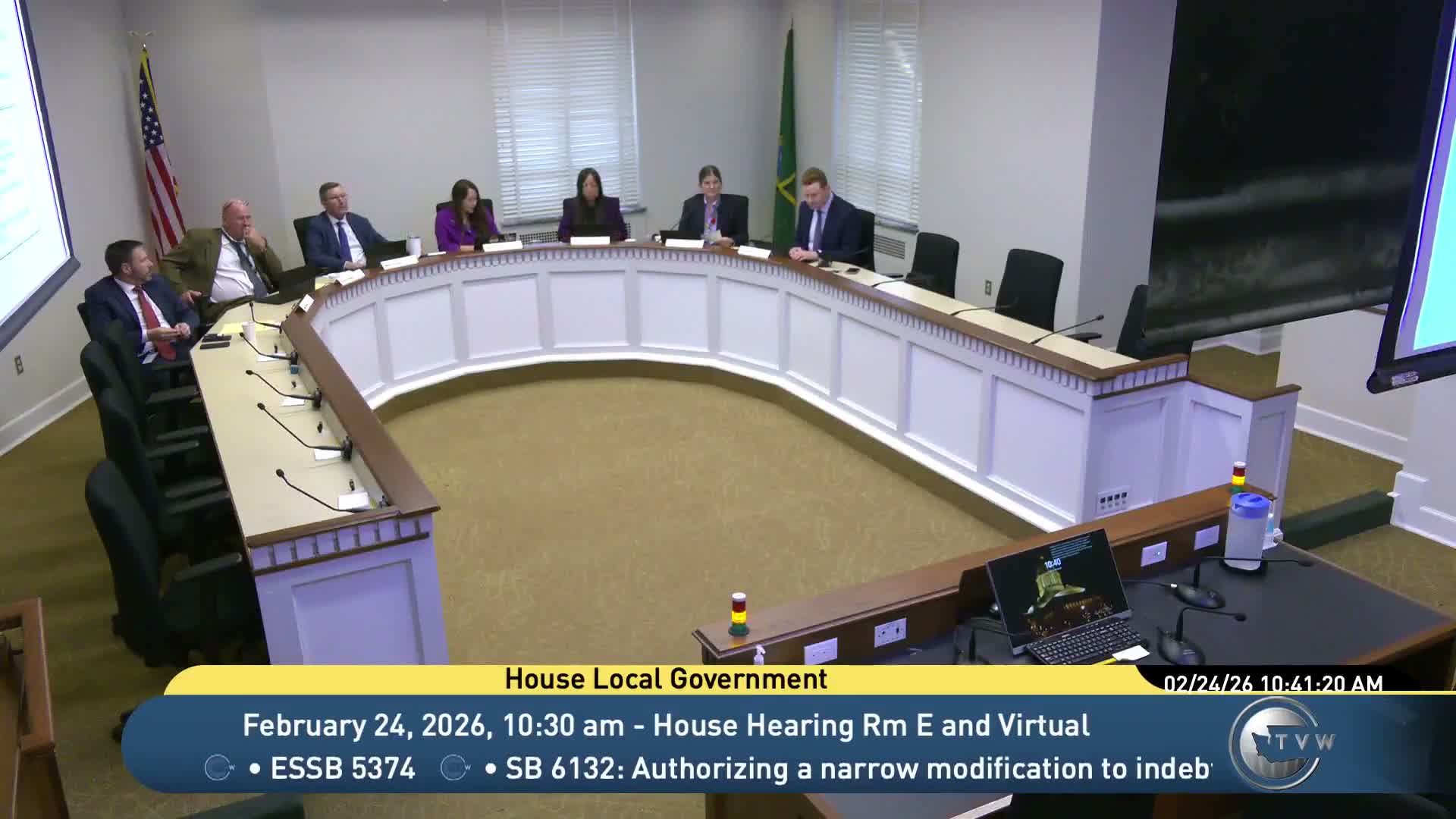
A state Senate committee on Tuesday heard substitute Senate Bill 6,076, which would raise procurement and self-performance thresholds for public utility districts (PUDs) and create a narrow waiver process intended to accelerate construction of generation, transmission and distribution projects.
Elizabeth Ren, committee staff, said the bill would, until Jan. 1, 2045, require contracts for PUD work on certain nonemitting energy projects estimated to cost more than $500,000 while increasing the permissible self-performance (prudent utility management) threshold to $1,000,000 and raising allowable contract overage limits from 15% to 25% in some cases.
Senator Keith Gaynor (12th District) said the changes respond to rising costs and long lead times for critical components and to the need to get new generation and grid work completed to meet growing demand. "There is the pressure to get energy sources online and also the fact that costs have just gone up considerably," Gaynor said.
Witnesses from utilities, labor and business organizations supported the bill. Nicholas Garcia of the Washington Public Utility Districts Association said utilities face significant near-term needs and cited large increases in transformer and materials prices since 2020 as part of the rationale for updated thresholds. "These inflationary pressures mean utilities can build less at a time when we need to build more," Garcia said.
Patrick Bishop, a utility supply-chain manager, said the state has more than 250 clean-energy projects planned but that outdated transmission and distribution systems and long lead times for specialty equipment are causing delays.
Jason Hudson, government affairs director for IBEW Local 77, testified that union workers back the bill as a way to clear a backlog of upgrades while keeping the grid reliable.
Several committee members, including Vice Chair Zahn, questioned the risk that allowing noncompetitive procurement or higher waiver authority could create favoritism or reduce public accountability. Staff and witnesses repeatedly described the exception as narrow, saying it would apply where proprietary specialized technologies or grid-reliability imperatives make the standard procurement timeline impractical. The committee requested sponsors and testifiers to provide additional guardrail language and data on how thresholds were determined.
No formal vote was taken; the committee closed the public hearing and directed staff and sponsors to circulate any amendments before an executive session.
Elizabeth Ren, committee staff, said the bill would, until Jan. 1, 2045, require contracts for PUD work on certain nonemitting energy projects estimated to cost more than $500,000 while increasing the permissible self-performance (prudent utility management) threshold to $1,000,000 and raising allowable contract overage limits from 15% to 25% in some cases.
Senator Keith Gaynor (12th District) said the changes respond to rising costs and long lead times for critical components and to the need to get new generation and grid work completed to meet growing demand. "There is the pressure to get energy sources online and also the fact that costs have just gone up considerably," Gaynor said.
Witnesses from utilities, labor and business organizations supported the bill. Nicholas Garcia of the Washington Public Utility Districts Association said utilities face significant near-term needs and cited large increases in transformer and materials prices since 2020 as part of the rationale for updated thresholds. "These inflationary pressures mean utilities can build less at a time when we need to build more," Garcia said.
Patrick Bishop, a utility supply-chain manager, said the state has more than 250 clean-energy projects planned but that outdated transmission and distribution systems and long lead times for specialty equipment are causing delays.
Jason Hudson, government affairs director for IBEW Local 77, testified that union workers back the bill as a way to clear a backlog of upgrades while keeping the grid reliable.
Several committee members, including Vice Chair Zahn, questioned the risk that allowing noncompetitive procurement or higher waiver authority could create favoritism or reduce public accountability. Staff and witnesses repeatedly described the exception as narrow, saying it would apply where proprietary specialized technologies or grid-reliability imperatives make the standard procurement timeline impractical. The committee requested sponsors and testifiers to provide additional guardrail language and data on how thresholds were determined.
No formal vote was taken; the committee closed the public hearing and directed staff and sponsors to circulate any amendments before an executive session.
View the Full Meeting & All Its Details
This article offers just a summary. Unlock complete video, transcripts, and insights as a Founder Member.
✓
Watch full, unedited meeting videos
✓
Search every word spoken in unlimited transcripts
✓
AI summaries & real-time alerts (all government levels)
✓
Permanent access to expanding government content
30-day money-back guarantee
