GOP leaders decry proposed income tax, point to disputed sign-in irregularities and urge referendum
February 24, 2026 | Legislative Sessions, Washington
This article was created by AI summarizing key points discussed. AI makes mistakes, so for full details and context, please refer to the video of the full meeting. Please report any errors so we can fix them. Report an error »
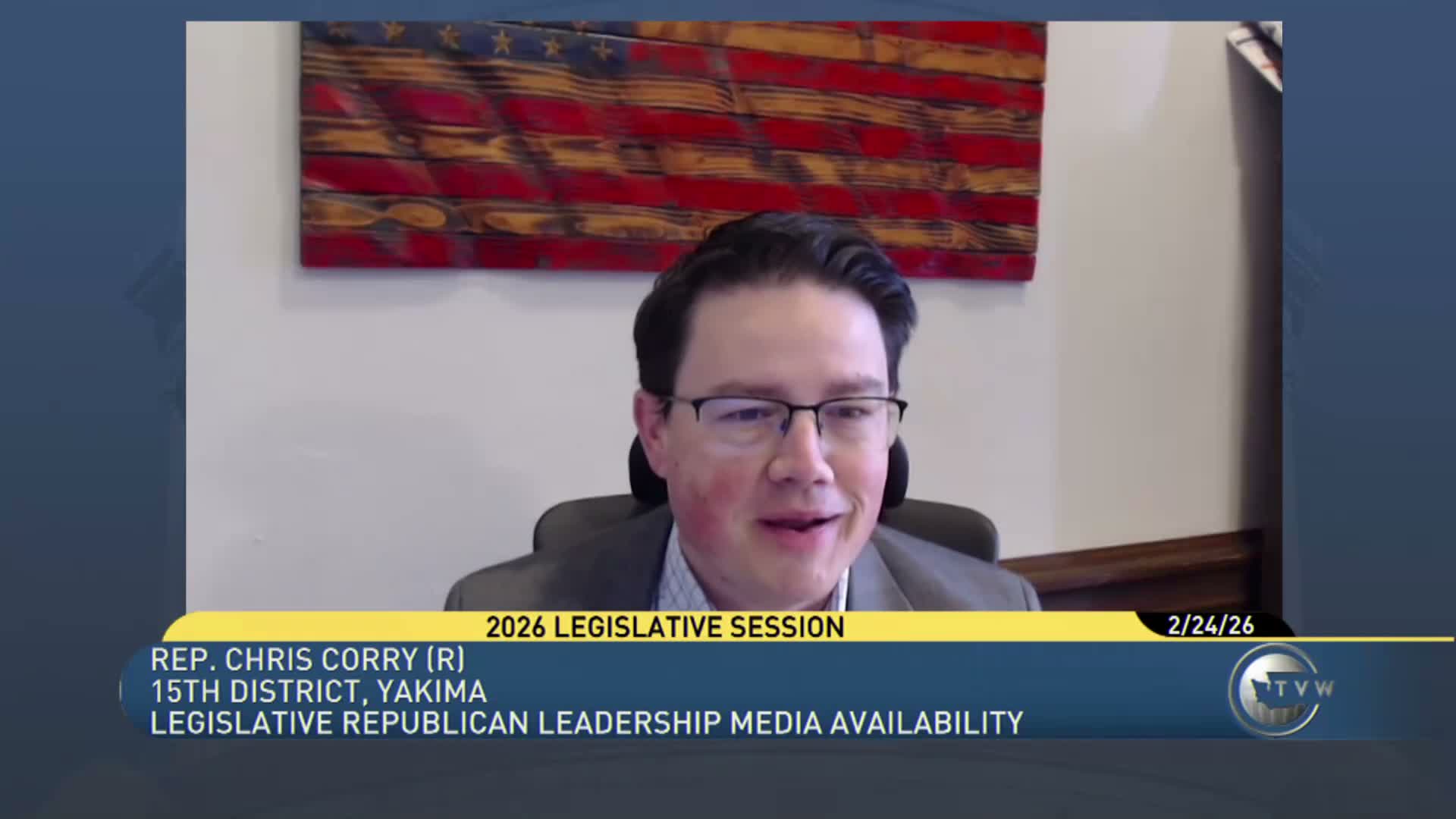
Representative Chris Corey, House Republican deputy leader, and Senate Republican members used a joint media availability to renew opposition to a proposed income tax and to cast doubt on efforts to discredit public sign-ins opposing the measure.
"There’s a hearing on an unconstitutional income tax," Corey said during opening remarks, and later told reporters the caucus had done its own checks and found "just over a 100,000 people signed in con with unique email addresses." He urged legislative administrators to strengthen verification of online testimony and suggested removing the bill’s emergency clause and sending the measure to a public referendum so voters could decide.
Reporters raised allegations by income-tax supporters, including a claim that some sign-ins were fraudulently added or the work of bots. Simone Carter asked about an ongoing House clerk investigation after supporters, the reporters said, claimed that names were "fraudulently signed in." Corey acknowledged "some duplicates" but warned against rushing to blame bots, arguing many duplicate submissions reflect ordinary user confusion or resubmission when people believe their entry did not go through.
Senate Republican leaders said their own spot checks also found duplicates. "We did random checks on about a little over 5,000 names and found that of that 5,000, there may have been 4 50 or so duplicates," Senator Judy Warnecke said, adding the duplicates were present among both pro and con sign-ins and estimating duplicate rates under 9% in the sample.
Drew McEwen, a Senate deputy leader, and other GOP members emphasized that changes in message timing (emails, texts, social posts) can create concentrated bursts of sign-ins and that any technical failures are the responsibility of House and Senate administration offices. "If there’s an issue there, the administration needs to get it taken care of," McEwen said.
The Republicans pressed the argument that even after removing duplicates the opposition remains substantial. "Even if you eliminated exactly 50% of the sign-ins, this would still be the most unpopular bill in Washington state history," one Senate Republican said. Critics on the other side have argued that rapid bursts of entries at odd hours and the speed of some submissions indicate automated activity; GOP leaders said those patterns can also be produced by mass messaging to supporters.
The caucus framed its recommendation as procedural: tighten verification, consider IT upgrades for legislative sign-in systems, and allow voters a referendum rather than immediate enactment. Republicans said they will continue to press the point as the bill moves through the final 16 days of the session.
"There’s a hearing on an unconstitutional income tax," Corey said during opening remarks, and later told reporters the caucus had done its own checks and found "just over a 100,000 people signed in con with unique email addresses." He urged legislative administrators to strengthen verification of online testimony and suggested removing the bill’s emergency clause and sending the measure to a public referendum so voters could decide.
Reporters raised allegations by income-tax supporters, including a claim that some sign-ins were fraudulently added or the work of bots. Simone Carter asked about an ongoing House clerk investigation after supporters, the reporters said, claimed that names were "fraudulently signed in." Corey acknowledged "some duplicates" but warned against rushing to blame bots, arguing many duplicate submissions reflect ordinary user confusion or resubmission when people believe their entry did not go through.
Senate Republican leaders said their own spot checks also found duplicates. "We did random checks on about a little over 5,000 names and found that of that 5,000, there may have been 4 50 or so duplicates," Senator Judy Warnecke said, adding the duplicates were present among both pro and con sign-ins and estimating duplicate rates under 9% in the sample.
Drew McEwen, a Senate deputy leader, and other GOP members emphasized that changes in message timing (emails, texts, social posts) can create concentrated bursts of sign-ins and that any technical failures are the responsibility of House and Senate administration offices. "If there’s an issue there, the administration needs to get it taken care of," McEwen said.
The Republicans pressed the argument that even after removing duplicates the opposition remains substantial. "Even if you eliminated exactly 50% of the sign-ins, this would still be the most unpopular bill in Washington state history," one Senate Republican said. Critics on the other side have argued that rapid bursts of entries at odd hours and the speed of some submissions indicate automated activity; GOP leaders said those patterns can also be produced by mass messaging to supporters.
The caucus framed its recommendation as procedural: tighten verification, consider IT upgrades for legislative sign-in systems, and allow voters a referendum rather than immediate enactment. Republicans said they will continue to press the point as the bill moves through the final 16 days of the session.
Don't Miss a Word: See the Full Meeting!
Go beyond summaries. Unlock every video, transcript, and key insight with a Founder Membership.
✓
Get instant access to full meeting videos
✓
Search and clip any phrase from complete transcripts
✓
Receive AI-powered summaries & custom alerts
✓
Enjoy lifetime, unrestricted access to government data
30-day money-back guarantee
