Committee Hears Support for Behavioral Health Framework Bill Aimed at Coordinating School Services
February 24, 2026 | Legislative Sessions, Washington
This article was created by AI summarizing key points discussed. AI makes mistakes, so for full details and context, please refer to the video of the full meeting. Please report any errors so we can fix them. Report an error »
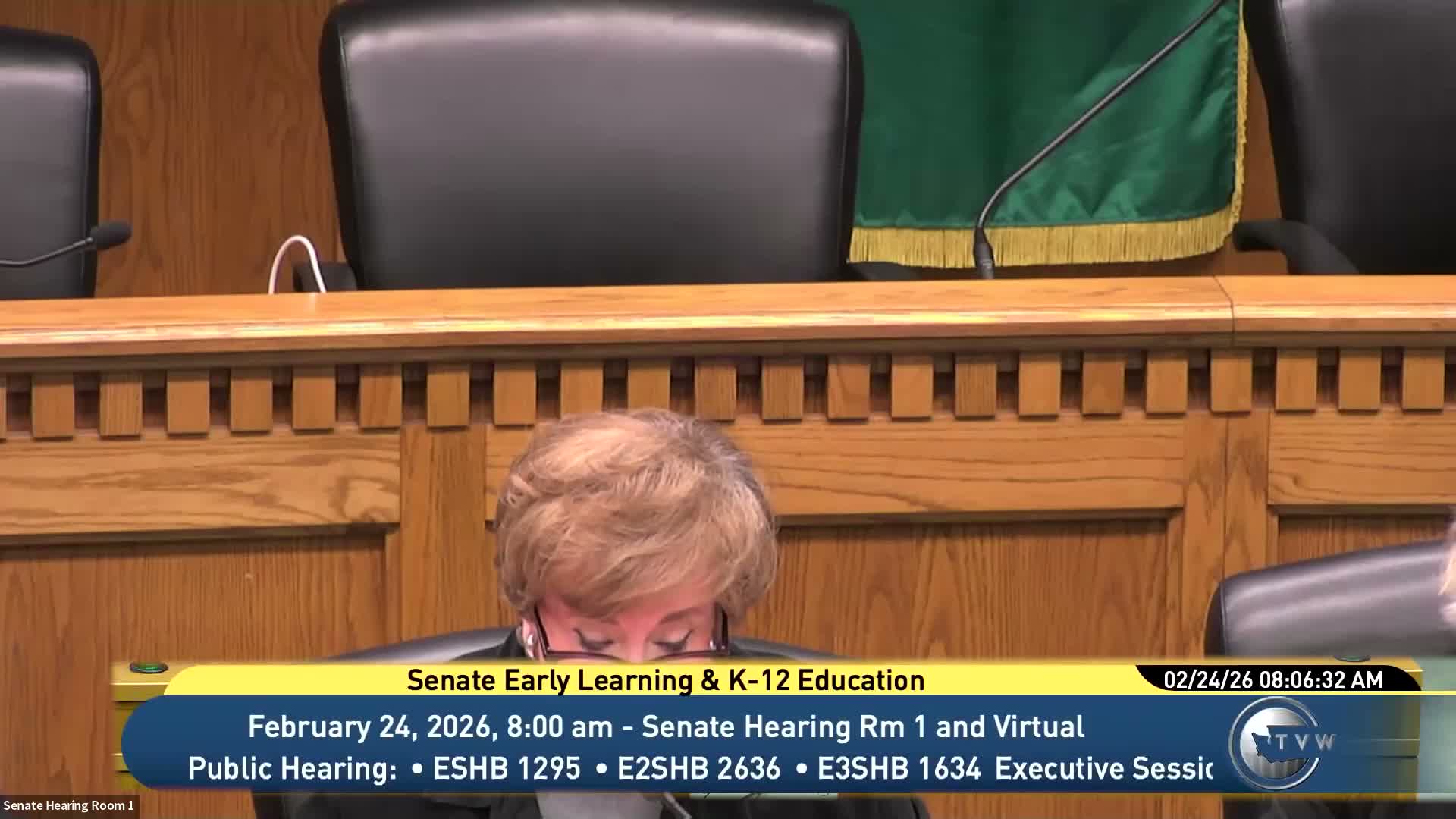
The Early Learning K–12 Education Committee heard testimony in favor of engrossed third substitute House Bill 16‑34, which directs the Office of Superintendent of Public Instruction (OSPI) and Educational Service Districts to work with state, regional and local agencies and community partners to create a technical assistance and training framework to support student behavioral health.
Elena Becker, committee staff, described the bill’s scope and said the framework must be developed with eight named stakeholder groups and meet criteria such as alignment with the Prenatal‑to‑25 behavioral health strategic plan, reliance on evidence‑based prevention and intervention practices, crisis intervention strategies, and coordination between schools and community behavioral health providers. Becker said OSPI must report development progress to appropriate legislative committees by November 2027.
Student testimony and education representatives urged timely adoption. "This bill is about prevention. It's about catching students before they fall through the cracks," said Jane Veneta, a senior at Lake Washington High School. OSPI’s representative, Misha Trunisky, said the bill builds a framework that could allow future investment in training and technical assistance and that the proposal uses an existing proviso to avoid a fiscal note in its current form.
Supporters said strengthening coordination between schools and community behavioral health partners will reduce duplication, improve early identification and allow for targeted supports before crises escalate. Erin Wick, representing the Association of Educational Service Districts and Washington Thriving, said coordinated support pathways helped a student receive timely screening and early intervention that reduced anxiety and improved engagement.
Next steps: the committee concluded public testimony on ESHB 16‑34 and moved to an executive session where it considered gubernatorial appointments and three bills; OSPI and other panelists were encouraged to submit written testimony where remote testimony was missed.
Elena Becker, committee staff, described the bill’s scope and said the framework must be developed with eight named stakeholder groups and meet criteria such as alignment with the Prenatal‑to‑25 behavioral health strategic plan, reliance on evidence‑based prevention and intervention practices, crisis intervention strategies, and coordination between schools and community behavioral health providers. Becker said OSPI must report development progress to appropriate legislative committees by November 2027.
Student testimony and education representatives urged timely adoption. "This bill is about prevention. It's about catching students before they fall through the cracks," said Jane Veneta, a senior at Lake Washington High School. OSPI’s representative, Misha Trunisky, said the bill builds a framework that could allow future investment in training and technical assistance and that the proposal uses an existing proviso to avoid a fiscal note in its current form.
Supporters said strengthening coordination between schools and community behavioral health partners will reduce duplication, improve early identification and allow for targeted supports before crises escalate. Erin Wick, representing the Association of Educational Service Districts and Washington Thriving, said coordinated support pathways helped a student receive timely screening and early intervention that reduced anxiety and improved engagement.
Next steps: the committee concluded public testimony on ESHB 16‑34 and moved to an executive session where it considered gubernatorial appointments and three bills; OSPI and other panelists were encouraged to submit written testimony where remote testimony was missed.
View the Full Meeting & All Its Details
This article offers just a summary. Unlock complete video, transcripts, and insights as a Founder Member.
✓
Watch full, unedited meeting videos
✓
Search every word spoken in unlimited transcripts
✓
AI summaries & real-time alerts (all government levels)
✓
Permanent access to expanding government content
30-day money-back guarantee
