Livingston County denies EWU Media FOIA appeal over redacted in‑car video
February 23, 2026 | Livingston County, Michigan
This article was created by AI summarizing key points discussed. AI makes mistakes, so for full details and context, please refer to the video of the full meeting. Please report any errors so we can fix them. Report an error »
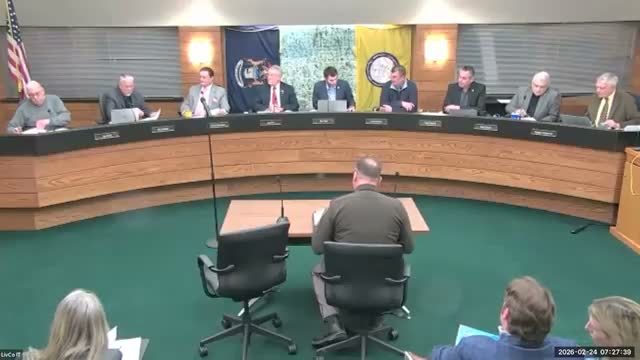
The Livingston County Board of Commissioners on Feb. 23 voted to deny a Freedom of Information Act appeal by EWU Media LLC that sought less‑redacted in‑car video in the Jerry Spalding missing‑person case.
Amy James, head of operations at EWU Media, urged the board to reverse a partial denial and release more footage and audio so journalists and search‑and‑rescue researchers could reconstruct the timeline and spatial progression of the response. James cited FOIA provisions and said extended audio muting and large black boxes on video frames removed necessary structural context for reporting and research.
Undersheriff Pless told the board the sheriff’s office redacted routinely protected data — including homeowners’ addresses, phone numbers, birth dates and health information — and provided an itemized redaction log to the requester. Pless also stated the office does not use body‑worn cameras for this incident and that unrelated radio traffic and private information from other stops were redacted.
Commissioners discussed the degree of redactions and whether the record justified broader muting of audio segments. After brief remarks the board voted to deny the appeal. Chair recorded the outcome as denial of the appeal.
The board’s denial preserves the sheriff’s redaction decisions. EWU Media asked that the county clarify the specific categories of protected health information cited and to re‑examine the scope of muting that obscured context; that request remains on the record following the decision.
Amy James, head of operations at EWU Media, urged the board to reverse a partial denial and release more footage and audio so journalists and search‑and‑rescue researchers could reconstruct the timeline and spatial progression of the response. James cited FOIA provisions and said extended audio muting and large black boxes on video frames removed necessary structural context for reporting and research.
Undersheriff Pless told the board the sheriff’s office redacted routinely protected data — including homeowners’ addresses, phone numbers, birth dates and health information — and provided an itemized redaction log to the requester. Pless also stated the office does not use body‑worn cameras for this incident and that unrelated radio traffic and private information from other stops were redacted.
Commissioners discussed the degree of redactions and whether the record justified broader muting of audio segments. After brief remarks the board voted to deny the appeal. Chair recorded the outcome as denial of the appeal.
The board’s denial preserves the sheriff’s redaction decisions. EWU Media asked that the county clarify the specific categories of protected health information cited and to re‑examine the scope of muting that obscured context; that request remains on the record following the decision.
Don't Miss a Word: See the Full Meeting!
Go beyond summaries. Unlock every video, transcript, and key insight with a Founder Membership.
✓
Get instant access to full meeting videos
✓
Search and clip any phrase from complete transcripts
✓
Receive AI-powered summaries & custom alerts
✓
Enjoy lifetime, unrestricted access to government data
30-day money-back guarantee
