Bayonne Council approves a slate of redevelopment financial agreements and new local rules; residents press parking, school impacts and safety concerns
February 22, 2026 | Bayonne City, Hudson County, New Jersey
This article was created by AI summarizing key points discussed. AI makes mistakes, so for full details and context, please refer to the video of the full meeting. Please report any errors so we can fix them. Report an error »
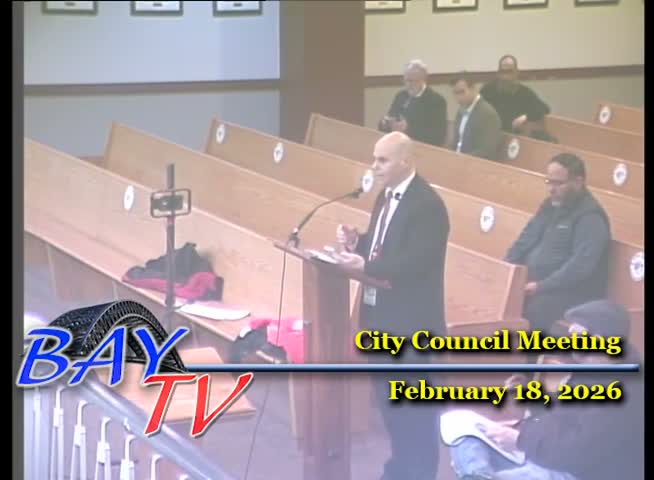
Council President Booker convened the Bayonne Municipal Council on Feb. 18 for a meeting dominated by second readings and final votes on a long series of redevelopment financial agreements and local ordinance changes. The council approved dozens of items on the agenda, including pilot tax agreements for residential and industrial projects across the city, updates to event‑permit fees and a newly updated local ordinance to mirror and extend New Jersey’s recent e‑bike rules.
At the top of the agenda were multiple financial‑agreement hearings — sometimes called “pilot” agreements — that set the tax and community‑benefit terms for new construction projects. Financial consultant Dan Banker summarized a sequence of deals: unit counts ranged from small infill projects (about 20–40 units) to large developments (one project presented as 207 units), with typical pilot terms of 20–25 years, phasing of conventional taxes and community benefit payments commonly set at $2,500 per unit. For several projects Banker gave framed examples of tax projections: “Current taxes on the site are approximately $93,000…at stabilization the annual pilot will be about $630,000,” he said. For another site he said the stabilized pilot payment is projected at about $418,000.
Why it matters: the pilot agreements are intended to make large projects financially viable while guaranteeing a stream of future tax revenue and community benefits. Residents and some council members warned the deals can bring near‑term construction impacts (traffic, parking, schoolchildren) and long‑term neighborhood change.
Parking and off‑site parking contingencies came up repeatedly. A resident who identified herself as Sharon Nijrowski asked whether a traffic signal was needed and how parking would be provided during construction; staff and the police lieutenant said the Oak Street traffic control plan was intended to ensure safe pedestrian access during the construction phase and that site plans and redevelopment plans identify off‑site parking within a quarter‑mile when the redevelopment plan allows that option. On one Broadway project the redevelopment plan requires 29 off‑site spaces; staff said certificate of occupancy cannot issue until required off‑site parking is legally secured.
School impact projections were raised by parents. Melissa Gadesky Rodriguez asked how many new public‑school children each project would generate. Banker said NW Financial’s memos include fiscal‑impact projections using bedroom‑count multipliers derived from a Rutgers study; for one 36‑unit project the memo projects about six new public‑school children. Banker said the multipliers differ by building size and bedroom mix and that those projections will be included in the financial memos.
Large warehouse project: the council also took up O23, a multi‑phase industrial project by Duke Realty on East 22nd Street. Banker described a structure of payments that is the greater of a percent of annual gross revenue (starting at 15%) or a per‑square‑foot minimum (about $3/sq ft escalating). He said current taxes on the industrial site are about $2.4 million and projected stabilized pilot revenue would be roughly $5 million, of which the city’s share would be about $3.5 million. Council members pressed developers on environmental cleanup and infrastructure. Staff said the developer cited a site‑work line item of about $85 million for remediation and related infrastructure; the council emphasized that remediation, new jobs and an estimated union‑construction component were central to their support.
Ordinances and fees: the council approved amendments to local licensing and event‑permit rules, clarifying that community cleanups, food banks and pantries remain exempt from fees while raising certain festival/carnival fees (an example cited in the discussion was an increase from $200 to $500 per day for some large events). Director Farber and other staff described the changes as administrative updates intended to ensure events are safe and insured and to reduce taxpayer subsidy of privately run festivals.
E‑bike and traffic rules: Council passed consolidated updates to police and traffic ordinances to mirror the state’s e‑bike law while adding local restrictions on operation in parks, enforcement procedures and hours. Chief of Police (on the record) described a three‑step enforcement plan: awareness, education and then enforcement, and said officers would enforce the state statute and municipal rules. Fire officials also briefed the council about safety and charging station requirements for garages and shared concerns about battery fires in enclosed parking structures.
Public comment and allegations: during public comment an attendee, identifying himself as Leroy Truth, publicly read and urged action on third‑party reports alleging workplace sexual harassment and assault by a named public figure; the remarks presented the reports’ findings as the commenter read them aloud and urged removal and criminal charges. The council did not take immediate action on those allegations in the meeting; staff indicated matters raised in public comment would be followed up through the appropriate offices. Other residents pressed the council on snow removal, a non‑ADA bridge crossing, double‑parking at school pickups and inconsistent enforcement of traffic and parking rules in residential blocks.
Process and next steps: the council introduced a bond ordinance to repair a collapsed sanitary sewer on Avenue F (24th Street) and set the hearing for March 18. It also authorized an RFP for engineering to design a traffic signal at Goldsboro Drive and approved a pool of qualified engineering firms so projects can be scoped and presented to council for project‑by‑project approvals. Multiple consent resolutions — contracts for legal, auditing and other municipal services and funding for security cameras on Broadway through the Urban Enterprise Zone — were approved by roll call.
Quotes that capture the meeting tone: Council member Carroll said he was “in favor of affordable housing” in general but voted no on some items because of neighborhood fit and parking impacts; Dan Banker, NW Financial, described pilot projections in numerical terms used by staff memos; and a public commenter, Leroy Truth, urged prosecution and removal of an alleged abuser, presenting the council with a demand for accountability.
What’s next: Several public hearings are scheduled for March 18 (bond ordinance hearing and some final‑passage items) and staff said they will supply follow‑up information requested at the meeting — including fuller unit mixes, confirmed parking easements and the fiscal‑impact memos for all projects. The council closed the meeting after completing votes on the consent agenda and other items.
At the top of the agenda were multiple financial‑agreement hearings — sometimes called “pilot” agreements — that set the tax and community‑benefit terms for new construction projects. Financial consultant Dan Banker summarized a sequence of deals: unit counts ranged from small infill projects (about 20–40 units) to large developments (one project presented as 207 units), with typical pilot terms of 20–25 years, phasing of conventional taxes and community benefit payments commonly set at $2,500 per unit. For several projects Banker gave framed examples of tax projections: “Current taxes on the site are approximately $93,000…at stabilization the annual pilot will be about $630,000,” he said. For another site he said the stabilized pilot payment is projected at about $418,000.
Why it matters: the pilot agreements are intended to make large projects financially viable while guaranteeing a stream of future tax revenue and community benefits. Residents and some council members warned the deals can bring near‑term construction impacts (traffic, parking, schoolchildren) and long‑term neighborhood change.
Parking and off‑site parking contingencies came up repeatedly. A resident who identified herself as Sharon Nijrowski asked whether a traffic signal was needed and how parking would be provided during construction; staff and the police lieutenant said the Oak Street traffic control plan was intended to ensure safe pedestrian access during the construction phase and that site plans and redevelopment plans identify off‑site parking within a quarter‑mile when the redevelopment plan allows that option. On one Broadway project the redevelopment plan requires 29 off‑site spaces; staff said certificate of occupancy cannot issue until required off‑site parking is legally secured.
School impact projections were raised by parents. Melissa Gadesky Rodriguez asked how many new public‑school children each project would generate. Banker said NW Financial’s memos include fiscal‑impact projections using bedroom‑count multipliers derived from a Rutgers study; for one 36‑unit project the memo projects about six new public‑school children. Banker said the multipliers differ by building size and bedroom mix and that those projections will be included in the financial memos.
Large warehouse project: the council also took up O23, a multi‑phase industrial project by Duke Realty on East 22nd Street. Banker described a structure of payments that is the greater of a percent of annual gross revenue (starting at 15%) or a per‑square‑foot minimum (about $3/sq ft escalating). He said current taxes on the industrial site are about $2.4 million and projected stabilized pilot revenue would be roughly $5 million, of which the city’s share would be about $3.5 million. Council members pressed developers on environmental cleanup and infrastructure. Staff said the developer cited a site‑work line item of about $85 million for remediation and related infrastructure; the council emphasized that remediation, new jobs and an estimated union‑construction component were central to their support.
Ordinances and fees: the council approved amendments to local licensing and event‑permit rules, clarifying that community cleanups, food banks and pantries remain exempt from fees while raising certain festival/carnival fees (an example cited in the discussion was an increase from $200 to $500 per day for some large events). Director Farber and other staff described the changes as administrative updates intended to ensure events are safe and insured and to reduce taxpayer subsidy of privately run festivals.
E‑bike and traffic rules: Council passed consolidated updates to police and traffic ordinances to mirror the state’s e‑bike law while adding local restrictions on operation in parks, enforcement procedures and hours. Chief of Police (on the record) described a three‑step enforcement plan: awareness, education and then enforcement, and said officers would enforce the state statute and municipal rules. Fire officials also briefed the council about safety and charging station requirements for garages and shared concerns about battery fires in enclosed parking structures.
Public comment and allegations: during public comment an attendee, identifying himself as Leroy Truth, publicly read and urged action on third‑party reports alleging workplace sexual harassment and assault by a named public figure; the remarks presented the reports’ findings as the commenter read them aloud and urged removal and criminal charges. The council did not take immediate action on those allegations in the meeting; staff indicated matters raised in public comment would be followed up through the appropriate offices. Other residents pressed the council on snow removal, a non‑ADA bridge crossing, double‑parking at school pickups and inconsistent enforcement of traffic and parking rules in residential blocks.
Process and next steps: the council introduced a bond ordinance to repair a collapsed sanitary sewer on Avenue F (24th Street) and set the hearing for March 18. It also authorized an RFP for engineering to design a traffic signal at Goldsboro Drive and approved a pool of qualified engineering firms so projects can be scoped and presented to council for project‑by‑project approvals. Multiple consent resolutions — contracts for legal, auditing and other municipal services and funding for security cameras on Broadway through the Urban Enterprise Zone — were approved by roll call.
Quotes that capture the meeting tone: Council member Carroll said he was “in favor of affordable housing” in general but voted no on some items because of neighborhood fit and parking impacts; Dan Banker, NW Financial, described pilot projections in numerical terms used by staff memos; and a public commenter, Leroy Truth, urged prosecution and removal of an alleged abuser, presenting the council with a demand for accountability.
What’s next: Several public hearings are scheduled for March 18 (bond ordinance hearing and some final‑passage items) and staff said they will supply follow‑up information requested at the meeting — including fuller unit mixes, confirmed parking easements and the fiscal‑impact memos for all projects. The council closed the meeting after completing votes on the consent agenda and other items.
Don't Miss a Word: See the Full Meeting!
Go beyond summaries. Unlock every video, transcript, and key insight with a Founder Membership.
✓
Get instant access to full meeting videos
✓
Search and clip any phrase from complete transcripts
✓
Receive AI-powered summaries & custom alerts
✓
Enjoy lifetime, unrestricted access to government data
30-day money-back guarantee
